
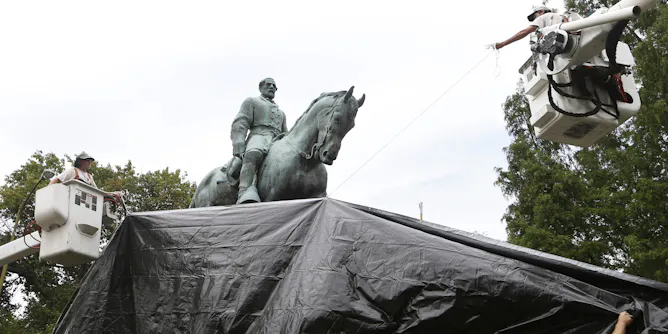
Once stripped of their symbolic power, problem monuments offer what educators call ‘teachable moments,’ helping people assess society’s current values and compare them with what mattered in the past.
Articles on Fascism
Displaying 61 - 80 of 118 articles
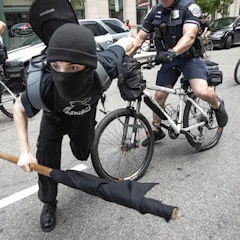
The anti-fascist movement is a decentralized collection of individual activists who mostly use nonviolent methods to achieve their ends.
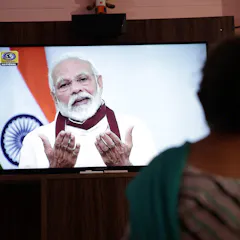
From Kashmir to a controversial citizenship bill and the supression of dissent, the first year of Narendra Modi’s second term has been busy.

Objections raised about the school syllabus by parents, schools and civil society point to a bigger problem with the state.
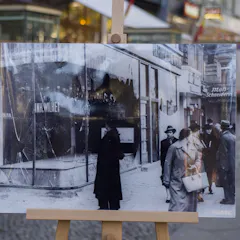
About 30,000 Jewish men were arrested and deported to concentration camps in the German Reich in the immediate aftermath after Kristallnacht, the night of the Broken Glass, in November 1938.
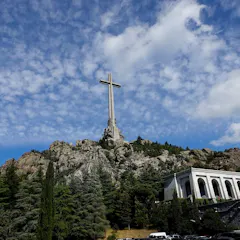
Spanish dictator Francisco Franco no longer has a place in the Valley of the Fallen.
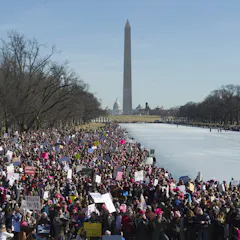
The United States is exhibiting several of the signs that have historically resulted in uprisings and revolutions. Is another American revolution looming?
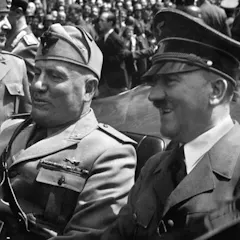
Parliaments were and remain institutions of frustrating negotiation and very often unpalatable compromise. They also represent an imperfect but significant check on the abuse of power.
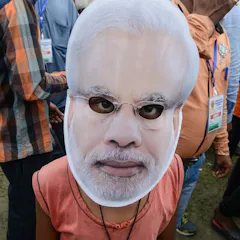
India’s elections are not about policy issues. Instead, they have zeroed in on the leadership of Narendra Modi and, through him, the legitimacy of Hinduness as India’s new dominant ideology.
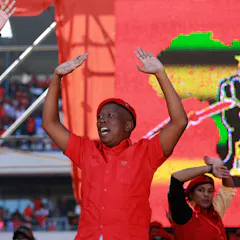
The EFF’s militarised aesthetic is more than a sideshow. It forms a key part of its spectacle-oriented brand of politics.
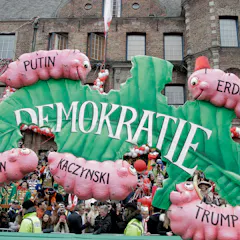
By obsessing over labels, we avoid having to confront more difficult questions.

It was 100 years ago this month that Benito Mussolini created the fascist party in Italy. Today, his life offers cautionary lessons for contemporary politics.
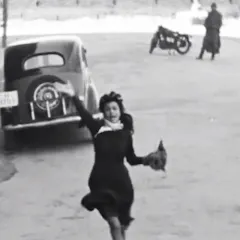
In this video, Bruce Isaacs looks at Rome, Open City. Made in 1945, it was Roberto Rossellini’s neorealist response to the end of German occupation, and Italy’s history of Fascism under Benito Mussolini.

Though best remembered for her role in the doomed German Revolution, Rosa Luxemburg’s theories on how capitalism exploits people and nature need hearing today.
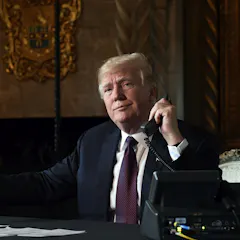
Donald Trump’s relentless nods to fascism in his rhetoric requires us to form a language of resistance, rooted in compassion for others, justice and the confrontation of the forces of tyranny.
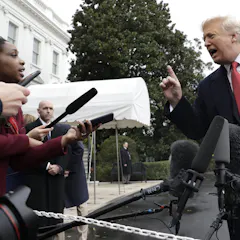
Any amateur politician can engage in lying. President Donald Trump is going further than that. He’s engaging in ‘post-truth’.
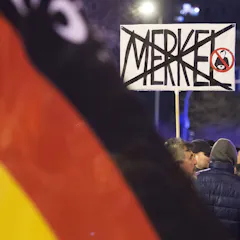
The political power of Germany’s Russian community is significant, and it’s helped fuel the rise of the right-wing, anti-immigration Alternative for Germany party known as the AfD.
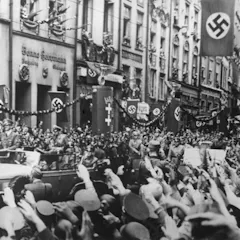
Nazi, fascist, ultra right-wing - these terms seem to be bandied about a lot these days. But what do they really mean?
Is public discourse in the UK shifting to the right? It certainly seems to be.
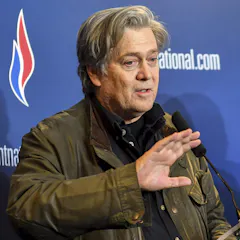
Fears about the resurgence of fascism might have seemed irrelevant during the past 70 years, when it was discredited. It doesn’t seem irrelevant today with liberal democracy on the defensive.
Top contributors
-

Chaired professor for Scholarship in the Public Interest in the Department of English and Cultural Studies, McMaster University
-
Associate Professor of History, Case Western Reserve University
-
Professor, Department of Communication Arts, University of Waterloo
-
Professor of Modern and Contemporary History, Universidade de Santiago de Compostela
-
Professor of Modern and Contemporary History, Keele University
-
Professor of Modern Italian History, University of Bristol
-
Associate Professor, Film Studies, University of Sydney
-
Research Fellow, Center for Philosophy and History of Science, Boston University
-
Head of Urbanism and Associate Professor of Urban Studies, School of Architecture, Design and Planning, University of Sydney
-
Senior Lecturer, Development Studies, SOAS, University of London
-
Associate Professor, Social Anthropology, Durham University
-
PhD Researcher, Lancaster University
-
Reader in Human Geography, UCL
-
Professor of Modern History, University of Nottingham
-
PhD Candidate, Art History, Concordia University