
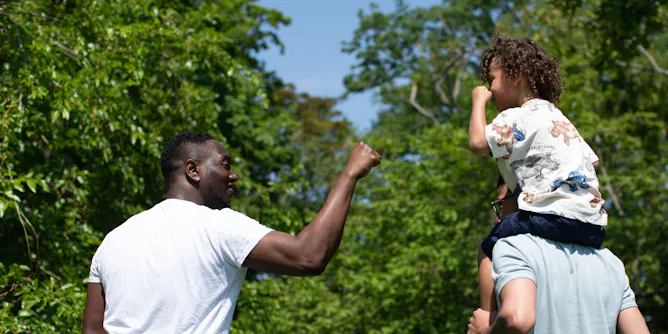
Research from Ghana, Mozambique and the United States sheds light on what a safe, healthy and nurturing environment looks like for children to grow and develop.
Articles on Family relationships
Displaying 1 - 20 of 27 articles

When adults thoughtfully pay attention to children’s curiosity and questions, they can support child development and foster the exchange of meaningful insights.

Often presented as a way to deal with narcissistic, abusive or toxic behaviour, the technique is straightforward: make yourself as uninteresting as a grey rock.

Supporting a child through intense emotions while managing your own is challenging work. Part of this is to practise identifying and validating emotions.

When a family member or friend cuts off all communication, it can feel like grief. Here’s how to cope with this surprisingly common type of ghosting.

Psychology researchers studying parent-child relationships and child mental health offer five ways parents can address public discourse around a trade war.

It is normal for an older child to behave in ways parents will find challenging when a sibling arrives, and for parents to feel upset they cannot spend as much time with their older children.

Strong, positive and supporting relationships between siblings can support people’s well-being throughout their lifetimes, and parenting approaches matter.

A parenting expert shares tips on how to celebrate moms and promote family well-being.

Chipo’s story gives the perspective of a parent forced to leave a young child behind to provide for him.
Engaging in purposeful, meaningful and strategic conversations with children can directly support children’s language comprehension, an important component of reading.
Researchers with expertise in parent-child relationships and child development offer 5 tips about how parents or caregivers can find a balance between children’s structured and unstructured time.
A project involving prisoners coming together to write a book for their children in less than a week has had encouraging results.
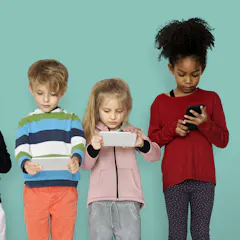
Policymakers, tech companies and schools should all be part of conversations about how our society is responsible for the new realities of tech in the home after COVID-19 lockdowns.
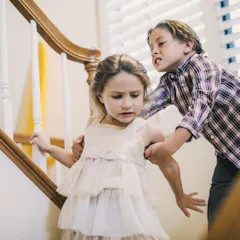
All brothers and sisters have tensions or disagreements from time to time as they jockey for position in the family. But when one sibling victimizes another, there can be serious and ongoing harms.

During adolescence the brain experiences two opposing tendencies: its capacity for control is not fully developed but the reward system is very active.
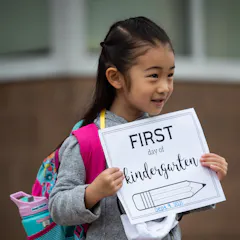
Parents and caregivers are vital partners in education, and together, educators and families can ease back-to-school jitters and help make this an exciting and positive transition for children.
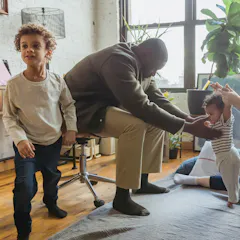
Making daily time to connect with their children is an important way of nurturing family experiences and relationships and to find restoration.
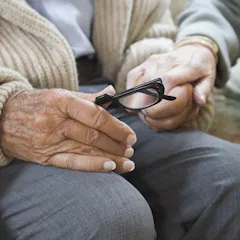
When you prepare to talk about end-of-life decisions and the legacy you want to leave behind, try thinking about them as gifts you bestow to family and friends.
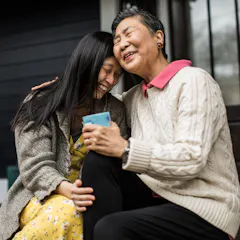
In tough conversations, show your respect for loved ones’ autonomy and dignity.
Top contributors
-

Professor, Canada Research Chair in Determinants of Child Development, Owerko Centre at the Alberta Children’s Hospital Research Institute, University of Calgary
-
Postdoctoral Research Fellow, Department of Psychology, University of Calgary
-
Sessional Instructor, Faculty of Education, University of Windsor
-
Associate Professor, School of Behavioural and Health Sciences, Australian Catholic University
-
Assistant Professor, Psychology, Simon Fraser University
-
Lecturer in Social Psychology, Loughborough University
-
Senior Project Director, Sibling Aggression and Abuse Research and Advocacy Initiative (SAARA) at the Crimes Against Children Center, University of New Hampshire
-
Phd en Psicología Aplicada, Universidad de Córdoba
-
Associate Professor of Medicine and Geriatrics, University of Virginia
-
Professor of Psychology and Assistant Dean of Research: Faculty of Humanities, University of the Witwatersrand
-
Adjunct Research Fellow, MARCS Institute BabyLab, Western Sydney University; UNSW
-
Associate Professor, Department of Educational and Counselling Psychology, Associate Member, Department of Psychiatry, and Director of Childhood Anxiety and Regulation of Emotions (C.A.R.E.) Research Group, McGill University
-
Assistant Professor,Department of Medicine, Division of Clinical Epidemiology, McGill University
-
Associate Professor of Communication Studies, and Director of the Institute for Research on Digital Literacies, York University, Canada
-
Professor, Faculty of Education;, York University, Canada