
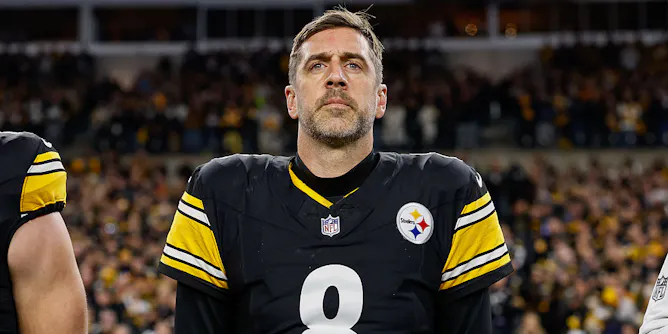
Viewing trust as behaviors, not feelings, can help explain why some heed Aaron Rodgers’ advice over Dr. Fauci’s – and what experts can do about it.
Articles on Beliefs
Displaying 1 - 20 of 60 articles
Differences in beliefs may not be what drives people apart. A belief that someone else is wrong may be the stronger force.

Practicing existential humility means learning to live with the natural tension between our desires for certainty and curiosity.

Bluey teaches us valuable life lessons, but what does it say about how we practise real-life religions, the positive and the detrimental?
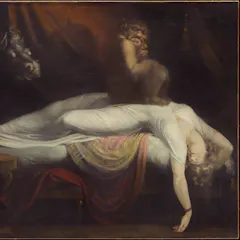
Conspiracy thinking, supernatural beliefs and pseudoscience can seem impervious to evidence. An anthropologist suggests the opposite: Extraordinary beliefs may be supported by an individual’s experience.

Cultural ideas are inextricably entwined with the people who do science, the questions they ask, the assumptions they hold and the conclusions they land on.
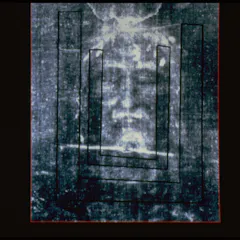
Many believe the Shroud of Turin to be the cloth used to bury Jesus after his crucifixion. Scientists have investigated the claim and here’s what they found.

Intellectual humility includes owning your own biases and the possibility that you’re wrong about your beliefs or worldview. It means being open to changing your mind in response to new information.

In rural Ghana, only 18% of patients believe elephantiasis is a disease. Some others think it is caused by curses or even rain. Only by understanding local beliefs can it be treated effectively.

Being open to the possibility you could be wrong about your beliefs is an important part of learning about the world. But this trait is not enough on its own.

People often privately feel uncomfortable about bad behavior they see around them but mistakenly believe their peers don’t share their concerns.

Investigating supernatural claims is a delicate task for the church, and Catholic leaders rarely label them as authentic.

We’ve spent ages learning about the people who think they’ve come from another planet, so you don’t have to.
We often assume misinformation leads to bad beliefs which lead to antisocial behaviour. But there’s so far little evidence for this.
A philosopher unpacks the ‘ethics of belief’ for an age awash in bad information.

The key to understanding online conspiracy theorists is to understand how the line between fantasy and reality can become blurred.

Views on death and the afterlife vary from person to person and culture to culture. This course gives US Air Force cadets a broad perspective on mortality and its effects on people and society.

Here are some reasons for the natural human tendency to avoid or reject new information that runs counter to what you already know – and some tips on how to do better.

Instead of complacent acceptance of misinformed beliefs, we need institutional moves to cultivate trust between experts and the public.
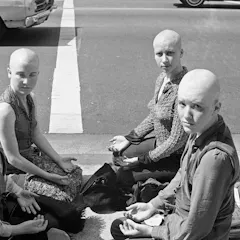
What is the appeal of cults? How do they work? And what is the damage they do? A new book, by the creator of the podcast Let’s Talk About Sects, answers these questions and more.
Top contributors
-

Senior Lecturer and Researcher in Cognitive and Parapsychology, Manchester Metropolitan University
-
Professor in Applied Cognitive Psychology, Manchester Metropolitan University
-
Professor of Psychology, Hope College
-
Professor of Religious Studies, College of the Holy Cross
-
Director, Center for Public Interest Communications, University of Florida
-
Research Scientist, UCLA Center for Behavior, Evolution, & Culture, University of California, Los Angeles
-
Professor of Philosophy of Science, King's College London
-
Research Fellow, Coventry University
-
Professor Emeritus of Cognitive NeuroImaging, Aston University
-
Senior Lecturer in Philosophy , University of Sussex
-
Assistant Professor of Psychology (Perception and Cognition), Indiana University
-
Senior Lecturer in Bioethics, Australian National University
-
Psychologist and Programme Leader, University of Salford
-
Psychologist and Programme Leader, University of Salford
-
Director of External Research for frank, College of Journalism and Communications, University of Florida