
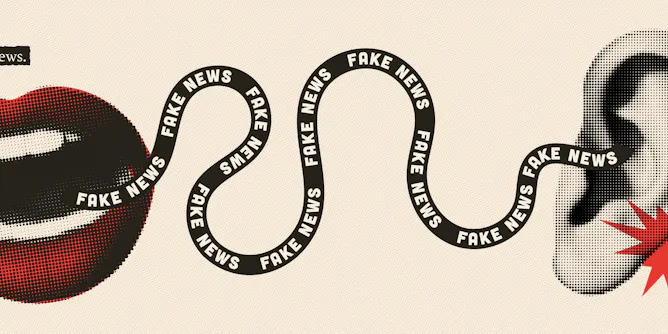
Misinformation is not just a content problem, but an emotional and structural one.
Articles on Factchecking
Displaying all articles

Behavioural science explains why and how misinformation works. Understanding some of that science can empower all of us to stop its spread.
Relying on social media users to police information accuracy could further polarise platforms and amplify extreme voices.
Providing a correction can affect how the audience feels about the journalists trying to set the record straight.

A new study unexpectedly found a way to help people assess social media posts with less bias and more care – pairing them up with partners who have a different perspective.

Generative AIs may make up information they serve you, meaning they may potentially spread science misinformation. Here’s how to check the accuracy of what you read in an AI-enhanced media landscape.
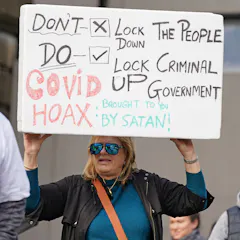
When it comes to COVID-19 misinformation, not all nations are the same. Some are peddling a larger variety of myths than others - and each seems to have its own personal favourite.

Public doubts over some government information have led to calls for more active factchecking of claims.
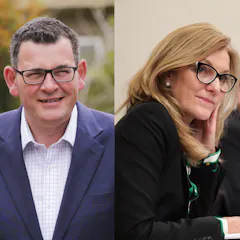
With just over four weeks to go until the Victorian state election, we’d like to know which topics matter to you, and what you’d most like to see fact-checked. Here’s how you can get involved.
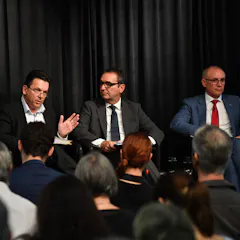
The Conversation’s FactCheck team will be in Adelaide for the next two weeks, working with academics to test politicians’ claims against the evidence as South Australians prepare to vote on March 17.
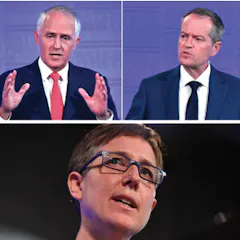
Australian leaders make claims, we ask the experts to test them. Can you tell fact from fiction? What’s spot-on and what’s spin?
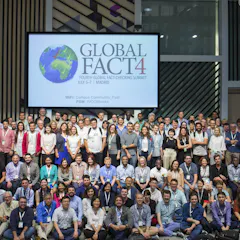
The Conversation joined media organisations from 53 countries at Global Fact 4, the fourth annual fact-checking summit hosted by the International Fact-Checking Network in Madrid.
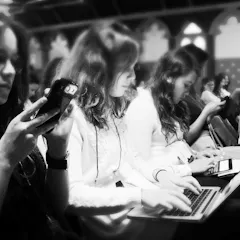
The Conversation’s FactCheck has become the first fact-checking team in Australia and one of only two worldwide accredited by the International Fact-Checking Network at the US-based Poynter Institute.
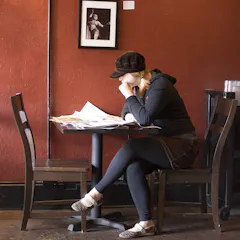
In a time of slippery weasel words and ‘alternative facts’, we are delighted to see the return of the ABC fact-checking unit in collaboration with RMIT.

Tanya Plibersek, shadow minister for education, told reporters recently that Australia is slightly below average when it comes to international funding for our schools. Is that right?
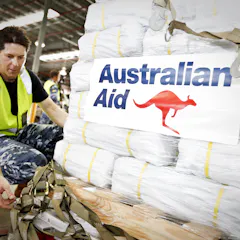
We check the facts on how Australia’s foreign aid spend has changed over time.

Bald-faced lies are fairly rare in Australian politics but, in 2016, weasel-words and cherry-picking were common. Politicians and public figures are experts at disguising opinion and ideology as fact.

There’s now a global network of factcheck units, operating in myriad different languages. However, none have a process quite like ours at The Conversation. Here’s a step-by-step guide to how we do it.
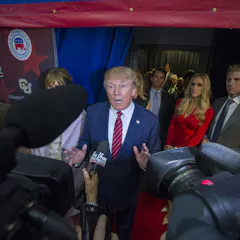
If journalism is supposed to be a force for truth, accountability and enlightenment in the political process, then it appears to be failing on the biggest of stages.
Top contributors
-

Associate Director, Development Policy Centre, Crawford School of Public Policy, Australian National University
-
School Education Program Director, Grattan Institute
-
Professor of Southeast Asian Studies, The University of Melbourne
-
Associate Professor, School of Communication, Queensland University of Technology
-
Professor of Education Futures, The University of Melbourne
-
Professor of Psychology Emerita, Middlebury College
-
Research Specialist, Princeton University
-
Professor of Politics and International Affairs, Princeton University
-
Lecturer, School of Journalism, Media and Culture, Cardiff University
-
Lecturer, UWA Business School, The University of Western Australia
-
Postdoctoral Research Associate, Cardiff University
-
Media and communications lecturer, University of Galway
-
Senior Fellow in Education and Human Development, George Washington University
-
Professor of Education and Psychology, University of Southern California
-
Lecturer, School of Journalism, Cardiff University