

Many people are feeling the urge to quit Facebook. It’s not hard to do, technically speaking. It’s a good idea, however, to pause first and look back on your digital memories.
Articles on Facebook
Displaying 241 - 260 of 1094 articles

If you don’t understand how your data is being used, and how to manage this, you’re not alone.

It’s tempting to think limits would cause teens to riot in the streets. But Facebook’s own research reveals that young people are well aware of social media’s downsides.
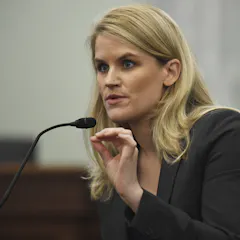
You have evolved to tap into the wisdom of the crowds. But on social media, your cognitive biases can lead you astray, something organized disinformation campaigns count on.

We explored experiences of cyberbullying among young people in the UK. This is what we found.

Facebook users no longer see the site as a confidant. They’re struggling with how to deal with a messy codependence – and whether to just break up and move on with healthier friends.
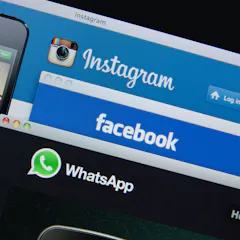
It took Facebook nearly six hours to get its services back online. In the meantime, Twitter had a field day.
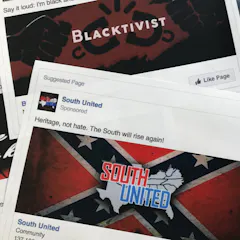
In one past example, Facebook allowed an ad targeting ‘Jew haters’. A new Australian initiative will collect data on its dubious targeted advertising practices closer to home.
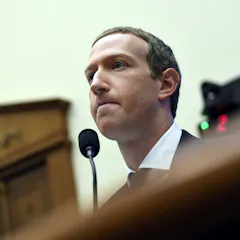
Recent reporting suggests Facebook and CEO Mark Zuckerberg presented different versions of the company’s policies in private and public. That could draw the scrutiny of regulators.

Many women use closed Facebook groups as an outlet for their fears and frustrations and stresses with life during a pandemic. But running these groups takes a lot of work, and comes with legal risks.

New information Instagram makes teens feel worse about their bodies is an opportunity for parents to start a conversation with their children about their online lives, and encourage positive habits.
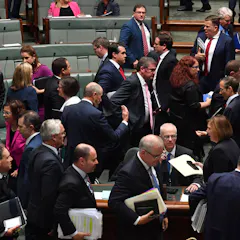
A study of Facebook’s Ad Library over the past three months, shows what federal MPs, state premiers and political parties are spending on the social media platform.

You have evolved to tap into the wisdom of the crowds. But on social media your cognitive biases can lead you astray, something organized disinformation campaigns count on.

Ample research demonstrates the harms Instagram causes teen girls, especially around body image. Meta is now facing the consequences of knowingly marketing a harmful service.
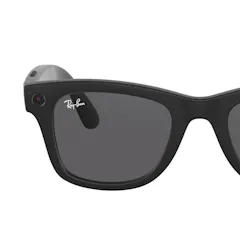
Facebook is adamant its new “smart glasses” won’t be a privacy nightmare. But it is clearly bidding to normalise the use of wearable tech. And if video Ray-Bans go mainstream, what comes next?

You have evolved to tap into the wisdom of the crowds. But on social media your cognitive biases can lead you astray.

Facebook is providing information on political ad purchases during the federal election. This data provides a glimpse into how voters are targeted by political parties using social media platforms.
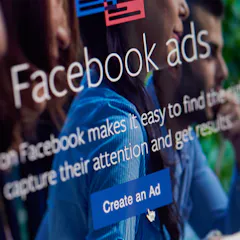
Facebook’s public attempts to combat misinformation in advance of the upcoming election are ineffective and serve to improve the company’s image.
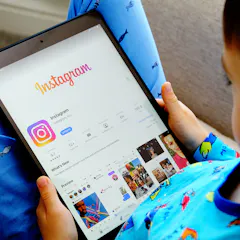
The changes do not stop Facebook itself from collecting young users’ data and keeping it.
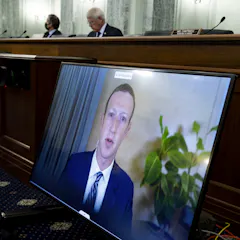
A terse piece of legislation from 1996 has been credited with creating the internet as we know it – and blamed for the flood of misinformation and other ills that have come with it.
Top contributors
-

Professor of Internet Studies, Curtin University
-
Director of UWA Centre for Software Practice, The University of Western Australia
-
Senior Research Associate in Media and Communications, University of Sydney
-
Dean of Global Business, The Fletcher School, Tufts University
-
Researcher at Microsoft Research, Cambridge UK. Previously, The University of Queensland
-
Associate Professor, Faculty of Law & Justice; Lead, UNSW Public Interest Law & Tech Initiative, UNSW
-
Professor of Information Systems, Michigan State University
-
Professor of Political Communication; Director CAJ, The University of Melbourne
-
Professor, Digital Media Research Centre, Queensland University of Technology
-
Professor of Digital Communication, Director of QUT Digital Media Research Centre, Queensland University of Technology
-
Doctoral researcher investigating governance of social media platforms, Queensland University of Technology
-
Professor of Media Studies, Queensland University of Technology
-
Associate Professor in Convergent and Online Media, University of Sydney
-
Associate Professor of Digital Communication, RMIT University
-
Professorial Fellow, University of Canberra