
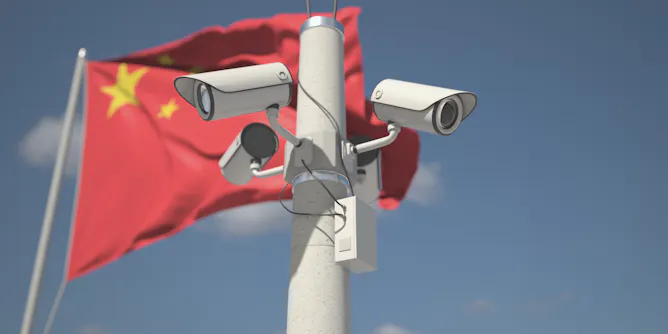
It’s pretty common to find people who are apathetic about their data being harvested and funnelled into unknown corners. But that’s usually because they don’t know what’s at stake.
Articles on Facebook
Displaying 181 - 200 of 1094 articles
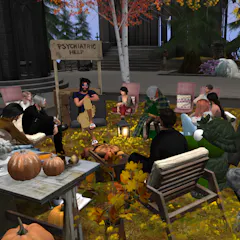
Who makes money from the metaverse, and how, comes down to what it becomes. And shaping the metaverse is, to a large degree, a matter of definitions.

Frances Haugen, Timnit Gebru and Janneke Parrish are at the forefront of a group of high-profile women calling out big tech. Is there a connection between their gender and their role as whistleblowers?

The metaverse is being hyped as a game-changing virtual platform that will transform our digital lives. But it has some inherent challenges to overcome in order to achieve mass adoption.
An expert had a confusing time trying out Facebook dating.

Elon Musk will need to tackle false information on Twitter, say researchers.
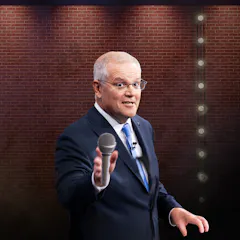
Humour is now part of the modern election campaign. Facebook and TikTok have become joke battlegrounds.
A Meta spokesperson told The Conversation non-news pages had been taken down by mistake. Whistleblower allegations contradict this.
From voting info to risqué quips, this election, online political ads are more pervasive than ever before.

The digital public sphere is constantly evolving, so we need a regulatory framework that helps to structure public discussion, and in turn guide our own public contributions as citizens.

Media ownership has consolidated around a handful of billionaires – and that might not be great for democracy.

We are connecting ourselves, our homes and our workplaces to lots of internet-enabled devices: smartwatches, smart lightbulbs, toasters, fridges … How to keep all their data private?

While many progressive movements have organised online, conservatives dominate because of better organisation, capital, and social inequality. France’s presidential elections are a case in point.

New research shows using social media can provide a much-needed boost to UK farmers’ wellbeing, connectedness and mental health, and even bank balances.
The system behind apps like Facebook, Twitter, YouTube and WhatsApp isn’t neutral. It encodes political communication, influencing what users see.
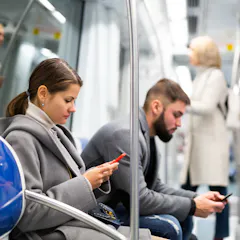
People used social media to connect with others, but after the pandemic, social media is increasingly fractured. Users adopt closed media spaces where they feel safe to express personal values.
While the ACCC failed in a similar case against Google in 2013, there are some key details in this one which could give it more leverage.
The government is proposing upheavals to online content regulation, but that won’t be enough to make the internet safer.

The mud rarely sticks.

The vacuum created by a drop in public trust in mainstream platforms has given rise to new media players who don’t always play by the rules.
Top contributors
-

Professor of Internet Studies, Curtin University
-
Director of UWA Centre for Software Practice, The University of Western Australia
-
Senior Research Associate in Media and Communications, University of Sydney
-
Dean of Global Business, The Fletcher School, Tufts University
-
Researcher at Microsoft Research, Cambridge UK. Previously, The University of Queensland
-
Associate Professor, Faculty of Law & Justice; Lead, UNSW Public Interest Law & Tech Initiative, UNSW
-
Professor of Information Systems, Michigan State University
-
Professor of Political Communication; Director CAJ, The University of Melbourne
-
Professor, Digital Media Research Centre, Queensland University of Technology
-
Professor of Digital Communication, Director of QUT Digital Media Research Centre, Queensland University of Technology
-
Doctoral researcher investigating governance of social media platforms, Queensland University of Technology
-
Professor of Media Studies, Queensland University of Technology
-
Associate Professor in Convergent and Online Media, University of Sydney
-
Associate Professor of Digital Communication, RMIT University
-
Professorial Fellow, University of Canberra