
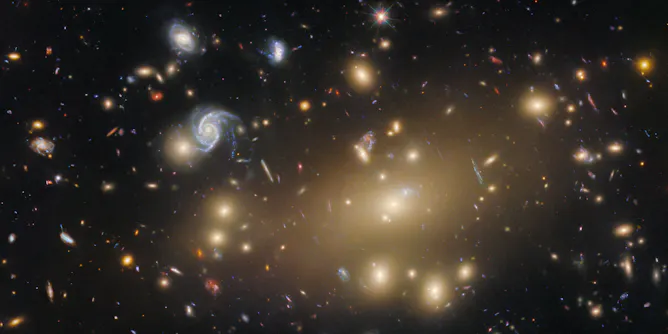
Two ways of measuring how fast the universe is expanding disagree, a puzzle known as the Hubble tension. Tiny magnetic fields from the Big Bang may offer a solution.
Articles on Expanding Universe
Displaying all articles

Most of the universe is made up of dark matter and dark energy. The majority of everything else is dispersed throughout space as tiny particles.
As the universe expands, it feels like it must be spreading out from some initial point. But a physicist explains why that’s not how it works. Hint: space-time is involved.
Scientists have conflicting theories on why the universe is expanding at an accelerating rate. New measurements from a massive collaboration complicate these ideas.
Hubble’s work pushed the field of astronomy forward, starting with his paper demonstrating that some objects exist outside our galaxy.
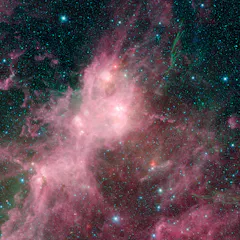
The universe is constantly expanding, but how do scientists think about what it’s expanding into?
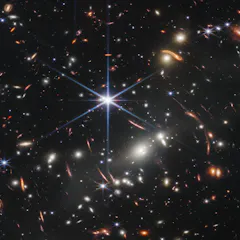
Astronomers Vicent Martínez and Bernard Jones explain the mystery of the Hubble tension, and why it matters so much for our understanding of the universe, on The Conversation Weekly podcast.
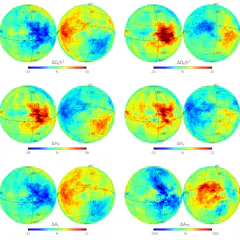
New deep-space discoveries suggest the Universe is lumpy and lopsided. But if matter is distributed unevenly, we’ll have to rethink the simple geometry used in cosmological models.
Top contributors
-

University Distinguished Professor of Astronomy, University of Arizona
-
Catedrático de Astronomía y Astrofísica de la Universitat de València, y miembro del Observatorio Astronómico de la misma institución, Universitat de València
-
Professor in Physics, Institute for Research in Fundamental Sciences
-
Professor of Theoretical Physics, University of Canterbury
-
Research Scientist in Cosmology, Bahamas Advanced Study Institute & Conferences
-
Emeritus Professor, University of Groningen
-
Assistant Lecturer in Physical Sciences, Atlantic Technological University
-
Host, The Conversation Weekly Podcast, The Conversation
-
Chercheur en Cosmologie, Université de Montpellier
-
Professor of Particle Physics and Astrophysics, Physics Department, Stanford University
-
Professor of Physics, Simon Fraser University
-
Instructor of Physics, Quinnipiac University
-
Research Assistant Professor of Physics, The Ohio State University
-
Professor of Astronomy, The Ohio State University
-
Professor of Astronomy and Physics, The Ohio State University
