

Selective schools provide a ‘best of the best’ education in the public system, but can involve added stress for young people.
Articles on Exams
Displaying 41 - 60 of 166 articles
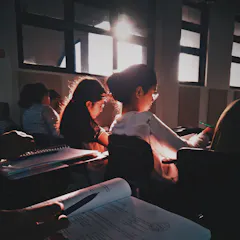
Research which shows you can reliably predict a student’s year 12 results by year 11. This suggests we don’t need a battery of stressful exams to work out what they do next.
Results are coming back for students in years, 3, 5, 7 and 9. It can seem like a very big deal to stressed students. In reality, it is only one indicator of how a child is progressing.

Proctoring software is a symptom of a bigger problem: universities see themselves as businesses and students as customers.
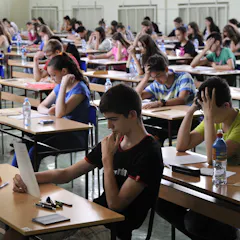
When COVID forced exams online, reports of cheating were rife and proctoring software was problematic. But in-person exams are also flawed, so now’s the time to rethink how assessment works.

The COVID-19 pandemic isn’t going away any time soon. Kenya’s universities must adapt.

Recent allegations of cheating by university students in online exams suggest the students are adapting faster than the education system itself – and that should change.

The UK government’s announcement on how students work will be graded is too little, too late.
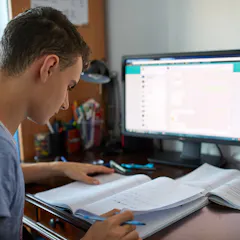
Take part in collaborative working and play to your strengths.
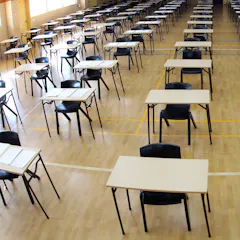
Teachers and students have been left uncertain of what to expect.
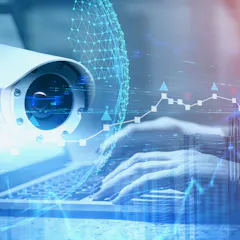
Equity and privacy problems with online proctoring reflect a larger issue: Students look to universities to set an example of integrity.

Students must not be assessed on course material that they haven’t had the opportunity to learn.

To concentrate best, we need to resist distractions. It can help to set some goals and check your progress as you study.
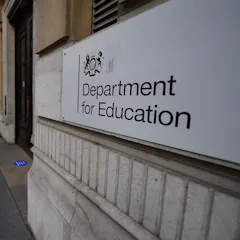
The outcry over exam results has exposed underlying problems in how we assess educational performance.

Having trust in a key public service like education is critical.

Cramming for exams can result in short-term memorisation rather than meaningful learning.

Teachers have to fight against their own subjectivity when giving grades.

Exam revision and parties are a traditional part of growing up.
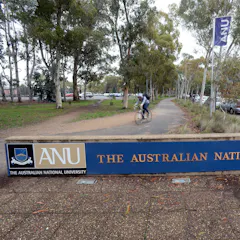
The Australian National University is turning to digital proctoring to replace the role of a walking invigilator. But who watches the proctor, what are the risks, and what data will be collected?

Exams are the currency of the education marketplace.
Top contributors
-

Professor of Educational Assessment, UCL
-
Programme Leader, MA in Educational Assessment, UCL
-
Associate Professor, Faculty of Education, Monash University
-
Director of the Oxford University Centre for Educational Assessment, University of Oxford
-
Professor of Educational Psychology, University of Wollongong
-
Professor in Physical Activity and Health, Nottingham Trent University
-
Emeritus reader in science education and communication, University of Sussex
-
Associate Professor, College of Information & Communication Technology, School of Engineering and Technology, CQUniversity Australia
-
Senior Lecturer in Educational Assessment, Macquarie University
-
Director, Nottingham Institute of Education, Nottingham Trent University
-
Thomas Lancaster, Imperial College London
-
Vice-Chancellor and Prinicipal, Brunel University of London
-
Head of Department and Senior Lecturer in Education and Social Justice, Lancaster University
-
Senior Research Fellow, Curtin University
-
PhD student studying educational foundations, policy and practice, University of Colorado Boulder