
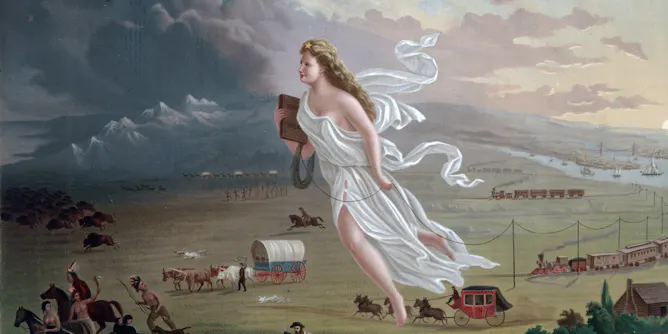
Progress, in historical terms, has so often meant clearing places of their native inhabitants – both human and non-human.
Articles on European history
Displaying 81 - 100 of 106 articles
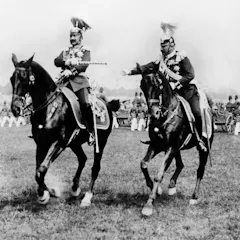
A toxic mix of wishful thinking, brinksmanship, finger-pointing, and fatalism in July 1914 bear similarities to Brexit.
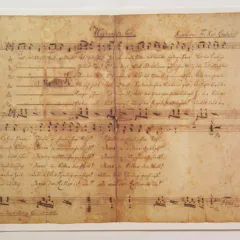
Over 200 years ago, an Austrian priest teamed up with a schoolteacher to perform the first rendition of ‘Silent Night.’ Little did they know that it would one day be sung in over 300 languages.
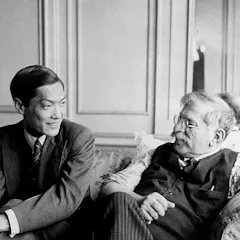
Physician Magnus Hirschfeld advocated for those he called ‘sexual intermediaries.’ His activism began before World War I – and ended only when the Nazis came to power.
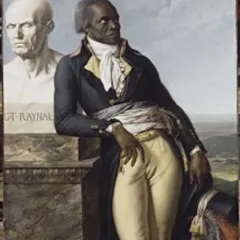
Some today declare that “Western civilisation” is something we should all be simply “for”. But the enlightenment, central to this civilisation, shows how things are rarely so simple.
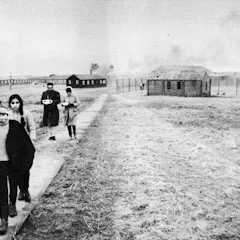
Camps of the 20th century were focused on resettlement. Today, the focus is on confining movement and deportation. What changed?
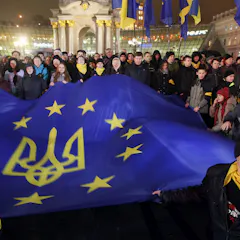
After a century of debate, Europe still hasn’t figured out how to deal with its giant of a neighbour.
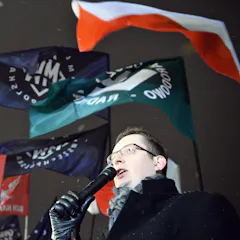
Criminalising suggestions that Poland was complicit in German atrocities during World War II denies history and will hinder scholarship.
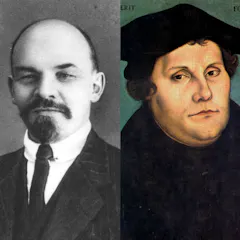
Two revolutions, 400 years apart, set in chain processes that claimed millions of lives.

In the 19th century, Russian intellectuals launched a search for historical evidence of their moral and military superiority. What they found drives what today some call “Russian aggression.”
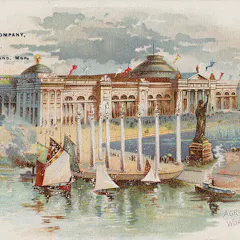
An anthropologist tells the story of how Columbus actually came close to falling into historical obscurity, until American hubris got in the way.

All men must die, so the young women have grown up to take control.
They are too well-behaved on Westeros – real-life queens often resorted to tears, temper tantrums and toilet humour.
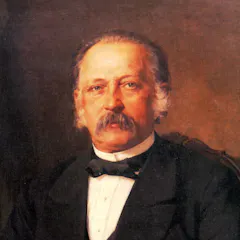
Theodor Fontane was a German newspaper’s England correspondent – who reported ‘from’ London without leaving his Berlin desk.
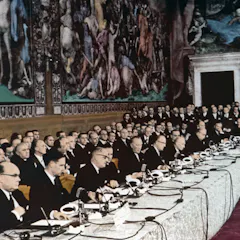
Sixty years since the Treaty of Rome was signed, the EU goal still remains clear: peace.

Two Italian scholars who fled fascism in the 1920s urgently warned that American democracy was vulnerable to the same gradual erosion as in Italy. Their message still rings true today.
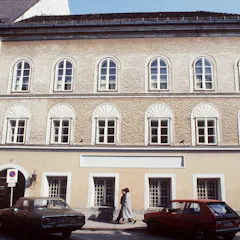
In the past, demolishing the dictator’s residences created a void exploited by Nazi sympathizers.
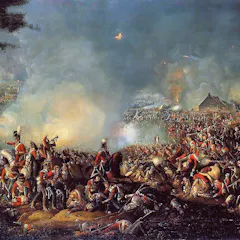
British history is deeply connected to Europe and whatever the result of its referendum, this will continue.

Often it has been Ireland’s writers and artists that have called out the hopes and failures of national politics, holding the polity to account in the culture.
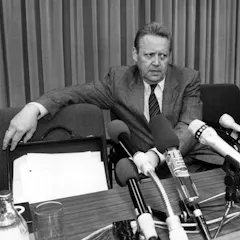
Günter Schabowski’s press conference in November 1989 helped trigger the collapse of the Berlin wall. Was it really as much of an accident as we like to think?
Top contributors
-

Professor of History, Missouri University of Science and Technology
-
Hansen Professor in History, The University of Melbourne
-
Mathematician and Ancient DNA Researcher, Adelaide University
-
Associate Professor of History, Auburn University
-
Professor of History, Australian Catholic University
-
Professor Emerita of Medieval History, University of Rhode Island
-
Associate Professor of Medieval History, University of Oxford
-
Director, Gender and Women's History Research Centre, Australian Catholic University
-
Adjunct Professor of History, University of Richmond
-
Professor of Literature and Director of Irish and Irish American Studies, College of Charleston
-
Professor of Russian Studies, Tufts University
-
Curator of Caribbean Archaeology, University of Florida
-
Assistant researcher, University of Sydney
-
Associate Professor in Modern European History, University of Leicester
-
Professor of History, University of Washington