

New research suggests Canadian companies that disclose their climate risks are winning over European investors.
Articles on Environmental, Social and Governance
Displaying all articles

Companies facing hostile takeover threats invest more in environmental, social and governance initiatives, and the effect spreads to their competitors.

Tying executive pay to ESG metrics is now standard practice at most large companies. But new research finds that when the scoring methodology becomes predictable, it becomes easier to game.

Security measures alone are insufficient to resolve resource governance challenges in the DRC.

Diversity in leadership isn’t just about ticking boxes. New research on lisetd New Zealand companies finds it’s also about making businesses stronger.

For many firms, ESG-related social media activity appears to be more about managing their public image than signaling genuine environmental commitment.

Canada has fallen behind in global SDG progress rankings. To reverse this, Canada needs better mechanisms to hold companies accountable and ensure the SDGs are actually being adhered to.

Many firms now report how they are doing along economic, environmental and social lines in what is called a sustainability report. But how effective are they, really?

Ensuring that ego and prestige of the Global North does not get in the way of on-the-ground results in the Global South will be the key to effective social impact investing in the years to come.

While incentives can enhance the environmental, social and corporate governance performance of businesses, there is a risk of executives manipulating these performance metrics to obtain bonuses.

As we confront pressing social and environmental challenges, business schools must play a big role in building momentum for sustainable investing and ignore partisan, anti-ESG sniping.

Governments and corporations must work together to transform environmental, social and governance policies.
The criticisms faced by ESG projects are indicative of the growing polarization in the future profitability of the fossil fuel sector.

We cannot leave reporting to the accounting profession and their assumptions about who and what is important. Recent proposals by the Canadian accounting profession should concern us all.

A recent survey of top executives at companies that operate at sea found environmental reporting practices were not a top priority and put the health of the marine environment at risk.

Some companies rank high on some lists that measure environmental, social and governance (ESG) initiatives, and rank near the bottom on other lists. Which rankings should we trust?

To achieve environmental sustainability, we need strong corporate standards that are quantifiably enforced, accountants trained to accurately measure sustainability — and we must all play a role.

New research shows that when companies do things like give to charity or reduce their carbon footprint, consumers perceive their products as less risky.
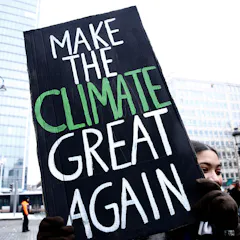
Major investors profess support for efforts against climate change but have very little to show for their promises.
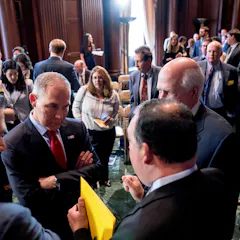
The environmental responsibility some businesses say they embrace is only a veneer.
Top contributors
-

Associate Professor, Accounting, Sprott School of Business, Carleton University
-
Director of the Conrad School of Entrepreneurship and Business, University of Waterloo
-
Professor, Haskayne School of Business and School of Public Policy, University of Calgary
-
Associate Professor, School of Professional Communication, Toronto Metropolitan University
-
Professor of Accounting, York University, Canada
-
PhD Student, Gustavson School of Business, University of Victoria
-
David Cooper is a Friend of The Conversation.
Emeritus Professor of Accounting, University of Alberta
-
Associate Professor of Innovation Finance, Faculty of Business, Athabasca University
-
Assistant Teaching Professor of Accounting, Gustavson School of Business, University of Victoria
-
BMO Professor of Sustainable and Transition Finance, University of Calgary
-
Research Associate, Institute for Sustainable Finance, Smith School of Business, Queen's University, Ontario
-
Associate Professor, Organizational Studies and Sustainable Commerce and Director, Institute for Sustainable Commerce, University of Guelph
-
Research fellow, University of Cape Town
-
Professeur et Titulaire de la Chaire de Gouvernance S.A. Jarislowsky, Concordia University
-
Assistant Professor in Accounting, University of Guelph