

To survive dry spells, trees stop the water-rich process of photosynthesis. When nature’s natural carbon capture machine grinds to a halt entire forests end up producing more CO₂ than they absorb.
Articles on Environmental science
Displaying 1 - 20 of 34 articles

Decades of pollution at Pittsburgh brownfields left bacteria that evolved to survive it – and maybe help clean up contaminated soil.
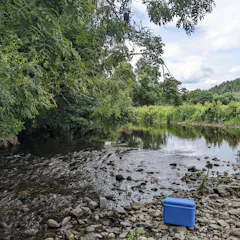
Environmental DNA contained in a small sample of water, sand or even air can reveal the presence of people, wildlife and pathogens, helping researchers track where they’ve migrated.
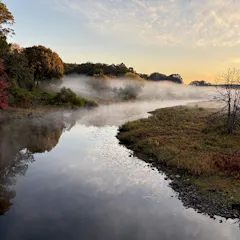
Thoreau’s work as a pioneering physical scientist is almost invisible in popular culture, according to a geologist and Thoreau historian.
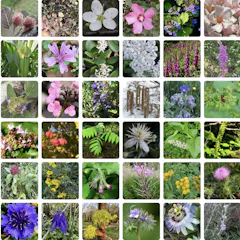
Pl@ntNet, the “shazam” for plants is a well-known app among the hiking community and nature enthusiasts, but not many know that it’s a precious resource for scientists.

For decades, ECCC research scientists have been integral to the work of the Arctic Monitoring and Assessment Programme.
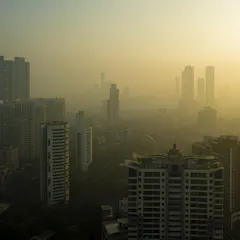
New research reveals that the adverse environmental and health impacts of atmospheric dust in the world’s rapidly growing megacities deserve far more attention.

Biosphere 2 isn’t just the site of a famous human experiment. Today, scientists there work to understand how life emerges in barren environments.

Clean air has become one of America’s best investments, returning $10 for every $1 spent on regulations, by one estimate.
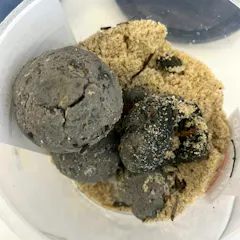
When lumps of black goop washed up Sydney’s beaches, an oil spill was the initial suspect – but a detailed chemical analysis points to sewage as the likely source.

Indigenous land management in southeastern Australia halved forest shrub cover 6,000 years ago, reducing high-intensity bushfires

New research shows carbon in soil minerals is much more important than anybody realised.
If scientists cannot freely conduct and communicate their work, the gap between evidence and policy widens, and that means Canada gets less effective laws and policies.
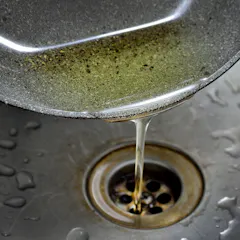
Pouring these products down the sink causes society-wide problems for the entire sewerage system and the workers who maintain it.
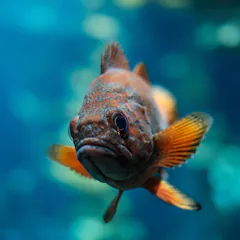
As the world gets hotter, fish are getting smaller. The future of aquatic ecosystems – and fisheries – could depend on understanding how and why it’s happening.

In secret, in the car or on napkins, we all do it. And truth be told, it is so satisfying.

Scott Morrison on Tuesday will announce $804.4 million over a decade to strengthen Australia’s strategic and scientific capabilities in the Antarctic.
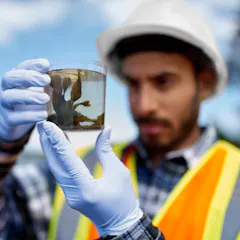
Many valuable scientific breakthroughs were originally published in a non-English language. New research shows more effort is needed to transcend language barriers to improve conservation science.
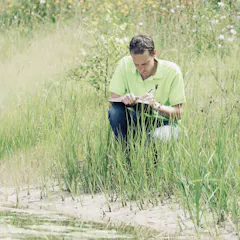
It’s one of the largest funding cuts to any university course, and will leave Australia ill-equipped to deal with the environmental challenges of the future.

About half of environmental scientists working for government had been prohibited from communicating scientific information.
Top contributors
-
Director, Oceans and Atmosphere Flagship, CSIRO
-

Professor of Landscape Architecture, University of Oregon
-
Visiting Research Fellow in Mineral Chemistry, University of Derby
-
Professor, James Cook University
-
Professor of Atmospheric Chemistry at the National Centre for Atmospheric Science, University of York
-
Adjunct Research Scientist in Marine Bioscience, University of Florida
-
Matthew Flinders Professor of Global Ecology and Node Leader in the ARC Centre of Excellence for Indigenous and Environmental Histories and Futures, Flinders University
-
Chair professor, Australian Nuclear Science and Technology Organisation
-
Associate Professor of Earth and Environment, Boston University
-
Biodiversity and climate change researcher, Alexander von Humboldt Institute for Research on Biological Resources
-
Distinguished Research Professor and Australian Laureate, James Cook University
-
Director, Climate Change Communication Research Hub, Monash University
-
Professor of Urban Management and Planning, Western Sydney University
-
Professor of Molecular Evolution, Macquarie University
-
Professor, Western Sydney University