
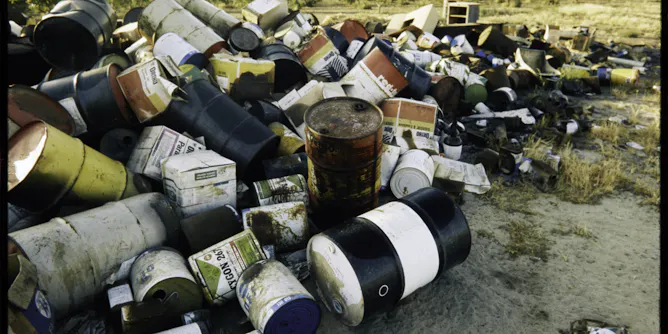
Critics of environmental protection laws may have forgotten how much progress has been made.
Articles on Environmental Protection Agency
Displaying 1 - 20 of 29 articles
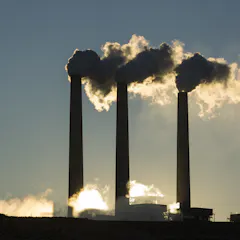
As soon as the 2018-2019 shutdown began, coal-fired power plants started emitting more particulate matter pollution. And when the inspections resumed, the levels dropped back to normal.

Careful research into public information and in-depth interviews has shown the scale of personnel cuts at the Environmental Protection Agency.
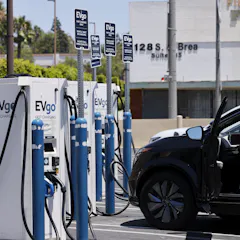
The American public agrees that vehicle emissions are harmful and should be regulated, and has indicated strong preferences for cars that pollute less.
The White House proposal represents a dramatic retreat from the national goals of clean air and clean water enacted in federal laws over the past 55 years.
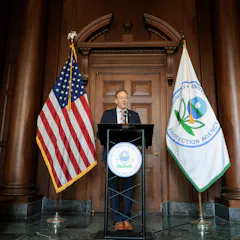
Some restrictions prevent loosening of existing environmental standards for clean air and water. Other rules can be changed – though only through a challenging and multistep democratic process.
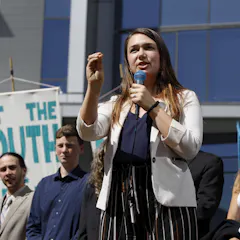
In the battle to slow climate change, local and state governments, as well as citizens, have taken to the courts. Their results have varied, but the cases keep coming.
President Trump’s national energy emergency declaration does not qualify as an emergency that would exempt energy projects from environmental laws and regulations.
The US economy has always been a mix of government regulation and market forces. The balance between those has shifted over time, but never has one side or the other been substantively removed.
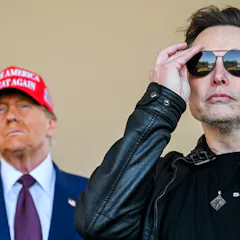
Granting tech leaders direct control over government functions fundamentally alters the relationship between private power and public governance.
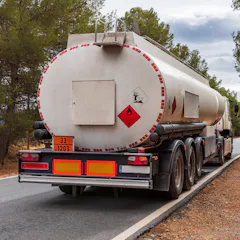
Nobody wants to see an accident involving flammable, corrosive or radioactive material. But understanding the rules put in place to prevent these accidents isn’t easy.
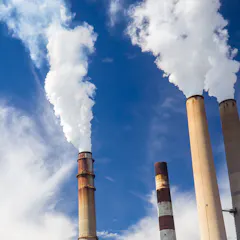
Fossil fuel power plants can avoid most emissions by capturing carbon dioxide and pumping it underground. But to be a climate solution, that carbon has to stay stored for thousands of years.

Getting that detail right could mean the difference between a species surviving, or disappearing forever.
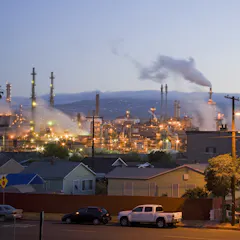
Poor communities of color have spent decades battling US industrial and agricultural pollution. A new EPA office is designed to support their struggle, but history suggests reason for caution.

HFCs keep refrigerators cool, but when these short-lived climate pollutants leak, they warm the planet.

Are health risks from air pollution less serious than we think? Mainstream scientists call this a fringe view, but it’s getting high-level attention at the Environmental Protection Agency.
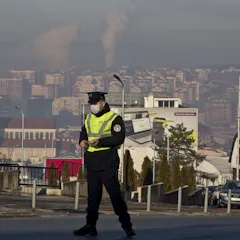
The head of the World Health Organization calls air pollution ‘the new tobacco’ because it causes millions of preventable deaths yearly. Fine particle pollution is especially deadly.
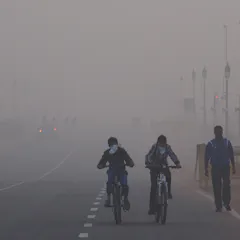
According to one study, more than 8 million people per year die early from air pollution exposure.
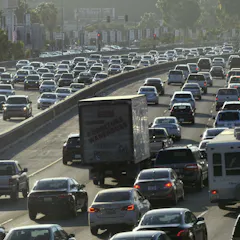
Air pollution could be the next battleground between California and the Trump administration, which is reviewing the Golden State’s special legal authority to regulate tailpipe emissions.
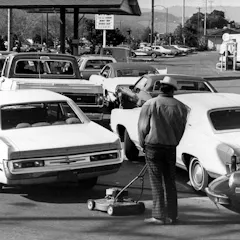
Since the federal government started setting fuel economy standards, US-built cars have doubled their fuel efficiency, saving money for consumers and reducing pollution.
Top contributors
-

Professor of Environmental Health Sciences, UMass Amherst
-
Executive Director, Sabin Center for Environment and Sustainability, Wake Forest University
-
Associate Dean for Academic Affairs, Associate Professor of Environmental and Natural Resources Law, University of Oregon
-
Professor of Advertising, University of Oregon
-
Professor of Public Health Science and Community Medicine, University of Connecticut
-
Assistant Professor of Sociology, University of California, Santa Cruz
-
Assistant Professor of Environmental Health, Boston University
-
Distinguished Professor of Practice, Trachtenberg School of Public Policy & Public Administration, and Director of the Regulatory Studies Center, George Washington University
-
Associate Professor of Atmospheric Sciences, Texas A&M University
-
Professor of Economics, College of the Holy Cross
-
Professor & Greenbaum/Ferguson/NJAR Endowed Chair in Real Estate Policy, Monmouth University
-
Lynton K. Caldwell Professor of Public Affairs, Indiana University
-
Professor of Business Analytics and Operations Management, University of Dayton
-
Professor of Environmental Management, The University of Queensland
-
Faculty of Law, The University of Western Australia