

Collecting data from sensors in remote woodlands has long required arduous treks. What if sensors could transmit data in real time?
Articles on Environmental monitoring
Displaying all articles
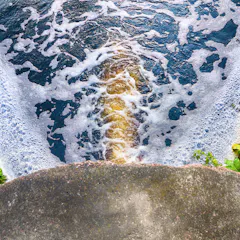
England’s event duration monitoring system records when a sewage overflow starts and stops. But duration alone tells us very little about the pollution released.

From wearable samplers to passive environmental monitoring, new research is changing how scientists observe chemical exposure – without invasive sampling.

Tiny particles bounce light around in a unique way, a property that researchers are using to detect pollutants in water and soil samples.

An ‘almost continuous’ marine heatwave state appears to be emerging around the UK.

Satellites can now track the deep ocean currents around Antarctica that could accelerate climate change.

New Zealand has a strong legacy in quantum physics. But to turn this into a thriving commercial sector will require investment in training and retaining top talent.

Conflict between coal giant Adani, the Queensland government and traditional owners over harm to groundwater ecosystems stems from a flawed interpretation of the ‘adaptive management’ approach.
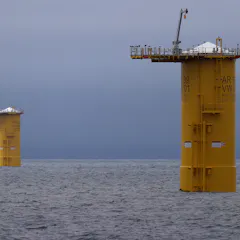
A recent study focusing on how offshore wind farms in Massachusetts waters could affect endangered right whales does not call for slowing the projects, but says monitoring will be critical.
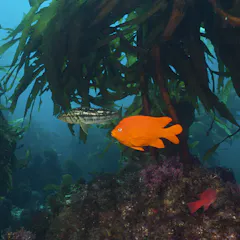
Humans rely on the ocean for food, jobs and other resources, but these systems are being stressed to the brink.
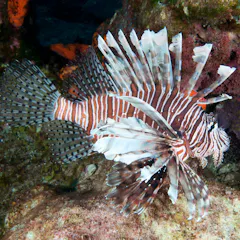
One of the most damaging invasive species in the oceans has breached a major barrier – the Amazon-Orinoco river plume – and is spreading along Brazil’s coast. Scientists are trying to catch up.

It’s important that citizen science projects engage volunteers from across society, including young people. A new Australian initiative is doing just that.

Scientists don’t know what prompts turtle hatchlings to emerge from their nests and head for the water, but vibrations appear to play a role.

Monitoring bird population trends in Nigeria is a valuable activity – but it requires trained people and commitment over the long term.
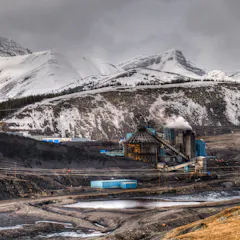
Environmental monitoring and public participation are necessary to maintain transparency and protect ecosystems and communities.

A networked array of sensors could warn drinking water utilities in real time of harmful algal blooms and prevent public health crises.
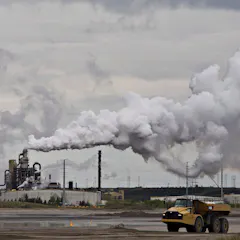
Alberta has modified its environmental rules, becoming the first to do so during the COVID-19 pandemic.
Top contributors
-

Senior Research Fellow in Aquatic Ecology, Charles Darwin University
-
Professor of Conservation Technology in Environment and Engineering, Duke University
-
Professor of Business Law and Ethics, Indiana University
-
PhD Candidate, Department of Geography, Environment and Geomatics, University of Guelph
-
Professor of Environmental Engineering, School of Engineering, Griffith University
-
Researcher in Ecosystem Dynamics, University of California, Santa Cruz
-
Assistant Professor of Earth, Ocean & Environment, University of South Carolina
-
Regents' Professor of Art and Design, Georgia State University
-
Professor of Psychology, University of Virginia
-
Professor of Law, Indiana University
-
Adjunct professor, Department of Geography, Environment and Geomatics, University of Guelph
-
Adjunct Fellow, Institute for Sustainable Futures, University of Technology Sydney
-
Research Associate, A.P. Leventis Ornithological Research Institute
-
Professor of Environmental and Energy Policy, Indiana University
-
Professor of Oceanography, Old Dominion University