
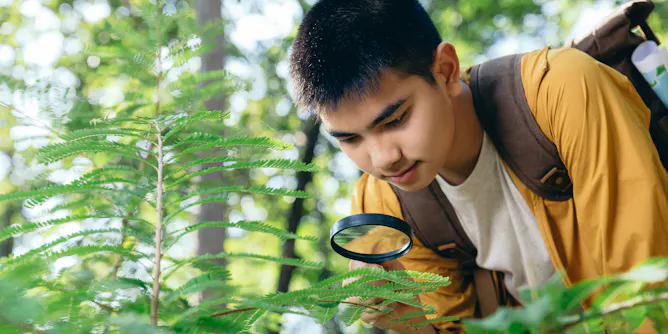
How we train the next generation is critical to nature recovery.
Articles on Environmental education
Displaying 1 - 20 of 35 articles

In the wake of the WHO’s One Health summit, a new atlas explores the interdependency between environmental, health and food security issues, and strategies for supporting sustainability and the welfare of all life forms.
A new version of Minecraft gives players the chance to make decisions about tackling coastal erosion in scenarios based on Bude in Cornwall.

A recent survey finds that many kids understand that individual action alone is not enough, and most recognize that systemic accountability is necessary to tackle the climate crisis.
It’s not only about being outdoors, but developing a connection to the Earth and attention to the spaces where outdoor activities are practised.
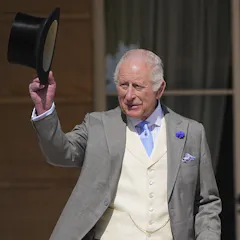
At the recent Buckingham Palace Education and Skills Garden Party, the Royal Gardens and lake set the stage to reflect on embedding sustainability into innovation.

Captain Planet, the superhero fighting pollution, corporate greed and environmental destruction, is back.
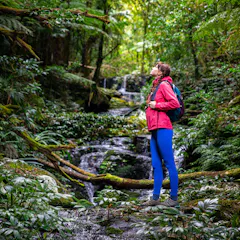
To listen deeply to nature is to become aware of behaviours, relationships and patterns of interaction between multiple species – and to learn from what we hear.

For more than three decades, Jane Goodall has inspired generations of conservationists through her youth-led action program Roots & Shoots. Now it’s time to take this approach into schools.

Sparking global momentum and energy in young people through climate education can go a long way to addressing climate change now and in the near future.
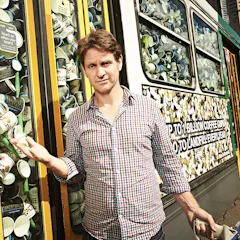
Understanding the success of the ABC’s War on Waste is a lesson in behavioural psychology. Research reveals five ways to guide other entertainment-education interventions to similar success.
For young people seeking to engage with the world’s most critical challenges, the UN Sustainable Development Goals can serve as an entry point. The arts open up possibilities to take action.
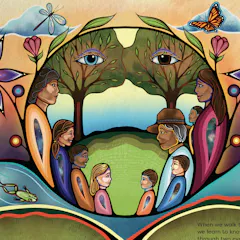
‘Etuaptmumk’ or Two-Eyed Seeing is the gift of multiple perspectives in the Mi’kmaw language. A key practice of this in an early childhood outdoor program is walking together and sharing stories.

Nigerian students can support positive environmental behaviour if they learn about the impact of solid waste management on society.
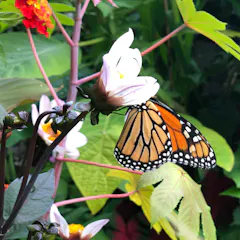
Gardens require huge labour, and outcomes like health, well-being or food security are affected by systemic barriers people face in cities and schools.
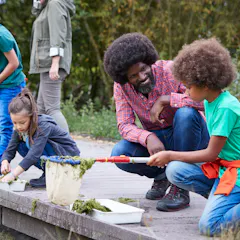
Policymakers can boost outdoor education by integrating it into strategies to enhance both student and teacher well-being and equity.
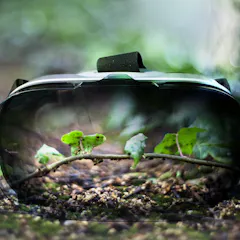
The use of virtual reality and augmented reality in environmental education is controversial, but there are clear benefits.
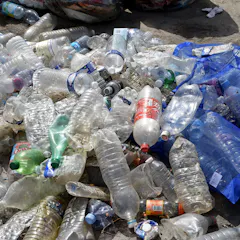
This Plastic Free July, we need to be teaching children to demand less plastic from the world’s worst producers instead of expecting change from individual recycling efforts.
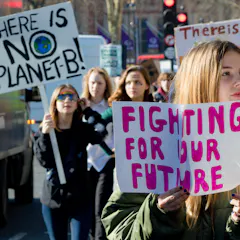
Teachers and young people told us that action was needed in classrooms, schools, communities and from the government.

Researchers and educators with the Climate Action Childhood network are generating responses to climate change alongside young children.
Top contributors
-

PhD Candidate, Doctor of Social Sciences, Royal Roads University
-
Professor of Early Childhood Education, Western University
-
Associate Professor, Department of Language and Literacy Education, University of British Columbia
-
PhD Candidate, Faculty of Education, Western University
-
Assistant professor of Indigenous Literatures, Department of English Language and Literatures, University of British Columbia
-
Associate Professor, Department of Curriculum, Teaching & Learning, Ontario Institute for Studies in Education, University of Toronto
-
Professor of Science Education, Monash University
-
Behavioural Scientist, CSIRO
-
Professor of Environmental Education and Civic Ecology, Cornell University
-
Professor in Communication Studies, Concordia University
-
Professor of Environmental Pedagogy, University of Glasgow
-
Graduate Student, University of Florida
-
Assistant professor, School of Early Childhood Studies, Toronto Metropolitan University
-
Assistant Professor, Adult Education, Concordia University
-
Sessional Lecturer, Department of Geography, University of British Columbia