
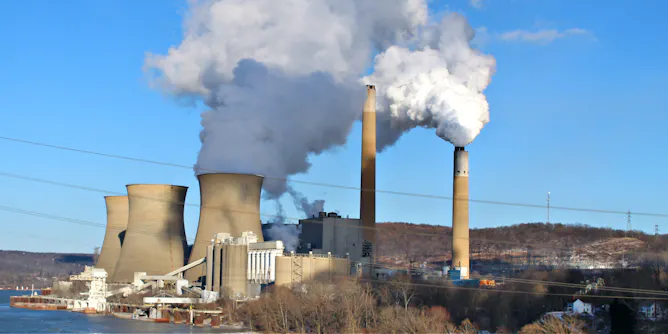
Pollution solutions start with public pressure, often in the face of industry pushback and slow-moving political responses.
Articles on Environmental
Displaying all articles

Also known as alkaline hydrolysis or aquamation, the process is much better for the environment than burial or cremation.

How much does human behavior influence climate change? Can it be changed, and how? In June, climate change experts and behavioral scientists came together to answer these important questions.

A new study puts numbers to the health and environmental benefits – or impacts – of individual foods and shows how small changes can make a significant difference.
More than most other countries, the non-profit sector in Canada relies on government funding. Yet there is a shocking lack of transparency.

The inability to curb road accidents in Ghana is tied to colonial and neocolonial legacies.
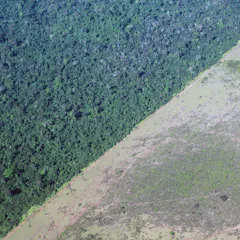
A new study estimates that $22 billion to $30 billion dollars per year needs to be spent to maintain forests and reduce the likelihood of a pathogen jumping from wildlife to humans.
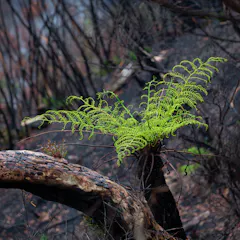
New Zealand is pumping millions of dollars into environment projects as part of its COVID-19 recovery. Australia’s recovery plan seems more destructive than reconstructive.

Companies that want to reduce their environmental footprint need to ensure their entire workforce feels a shared sense of purpose.

Hundreds of thousands of people marched through the streets in support of action on climate change, but that didn’t lead to seats for the Green Party.
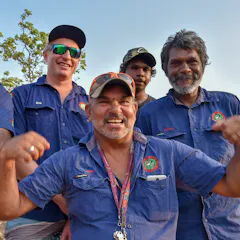
There are exciting synergies between western science and indigenous knowledge. Surprisingly, the success of our Australian predator conservation research was due entirely to its multicultural nature.

South African soldiers reported that environmental education and training programmes instilled environmentally friendly behaviour in them.

High costs, poor performance, a lack of manufacturing capabilities and local perceptions prevent biodegradable bags from taking root in Kenya.

South Africa’s mining industry is on an unsustainable trajectory and needs to undergo fundamental transformation that emphasises transparency, equity, and community participation.
Africa’s soil crisis calls for quick and creative action. This includes deepening farmers’ knowledge about soil microbes.
Top contributors
-

Associate Professor, Department of Entomology; African-American Studies, University of Illinois Urbana-Champaign
-
Senior Research Fellow, University of the Witwatersrand
-
Part-time lecturer and Director of the Africa Livelihood Innovations for Sustainable Environment Consulting Group, University of Nairobi
-
University Lecturer and President of the International Association for Military Geosciences, Stellenbosch University
-
Research Associate in Environmental Health Sciences, University of Michigan
-
Post doctoral fellow and Conservation Ecologist, Macquarie University
-
Professor, Sociology, University of Alberta
-
Postdoctoral Researcher and Honorary Lecturer | School of Environmental and Life Sciences, University of Newcastle
-
Professor of Sustainability and Ethics, University of Pittsburgh
-
Professor of Biology, Boston University, Boston University
-
Postdoctoral Research Fellow | Deakin University, Deakin University
-
Senior Research Associate, University of Oxford
-
Research Affiliate, University of Newcastle
-
Postdoctoral Research Associate, Department of Theology and Religion, Durham University; The University of Melbourne
-
Professor, Environmental and Urban Change, York University, Canada