

The world is becoming increasingly connected, but local accents still define who we are.
Articles on English language
Displaying 61 - 80 of 138 articles

Perception of truth and lies changes between languages for bilingual speakers.

It’s a multi-lingual effect.

In little more than a generation and a half we have become a more caring and inclusive society.

Do you wince at a mispronounced ‘Moet’? Do you cringe at unintentional portmanteau words, like ‘misunderestimated’ or ‘insinuendo’? You are not alone.

Using purpose-built English language tests for purposes other than what they were created to test reduces the validity of these tests.

The Mississippi is characterised in America as male, while the Indians see the Ganges as female.

Contrary to some reports, there is no new English language test for international students - the government is simply expanding standards already being met by most providers.
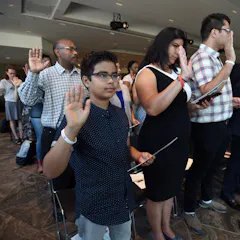
New census data provides a chance to understand why immigrants earn lower wages than Canadians who have been here for many generations. Whether immigrants speak English at home may be a clue.

Anglophones have long complained that their language and culture are marginalised. They say if this doesn’t change, they must be granted independence.

Extremists haven’t always been associated with violence, or religious views.

Whether it’s due to native language loss or unsupported high school curricula, the lack of bilingualism in the US is notable. Why can’t more Americans speak another language? How should that change?

The English language test is an unfair barrier to anyone for whom English is not their mother tongue.

Here is a handful of extremely useful expressions with political application which have fallen by the wayside, but remain apt and adept today.

Grammar pedantry recently contributed to the downfall of World Bank chief economist Paul Romer. But ‘grammonds’ are people to be celebrated not vilified.

The English language will be one of the most important things the UK leaves behind in the EU.
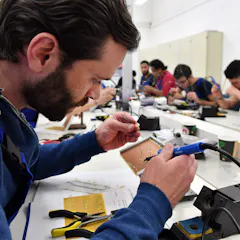
Many refugees are unable to use the skills and knowledge they have brought with them and obtain work equal to their experience.

In English and science alike, every student and teacher brings his or her own language patterns to class. But how can educators make sure that language bias doesn’t harm student achievement?

Students from South Africa’s public school system battle to cope with the rigorous demands of any university degree without genuine, committed support.

Learning is an independent activity at university. Students who don’t speak English as a mother tongue struggle to decode the content, let alone make sense of it.
Top contributors
-

Professor of English Language and Literature, University of Oxford
-
Adjunct Lecturer, School of Languages, Literatures, Cultures and Linguistics, Monash University
-
Professor of Linguistics, Monash University
-
Honorary Associate Professor in Writing, The University of Queensland
-
Senior Lecturer in Linguistics, Monash University
-
Professor of ESOL, University of South Wales
-
Associate professor, Flinders University
-
Professor of Sociolinguistics, Manchester Metropolitan University
-
Director of Slang and New Language Archive, Faculty of Arts and Humanities, King's College London
-
Associate Professor in Linguistics, Macquarie University
-
Associate Professor in Sociolinguistics, University of Cambridge
-
Associate Professor in Language, Literacy and TESL, University of Canberra
-
Associate Professor in English Language and Linguistics, University of Portsmouth
-
Distinguished Professor of Applied Linguistics, Macquarie University
-
Lecturer of English Language Teaching, The Open University