
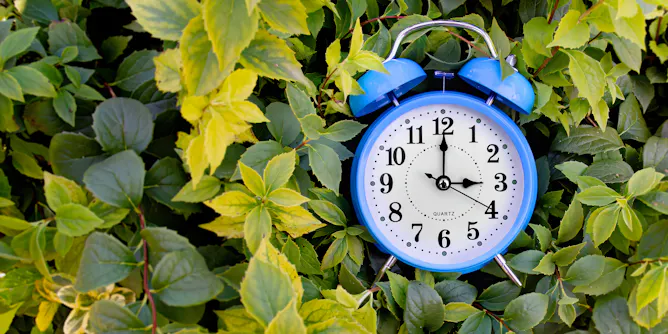
Spreading electricity demand throughout the day is much better for the environment.
Articles on Energy use
Displaying 41 - 60 of 79 articles
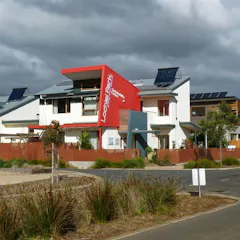
There has never been a better time for public money to go into improving the performance of Australian housing. We could have cut household bills and emissions, as well as saving construction jobs.

A long-term housing stimulus package that focuses on retrofitting to cut energy demand would also help households repay the debts being accumulated during this crisis.

Net zero energy buildings produce at least as much energy as they use. Designing whole net zero campuses and communities takes the energy and climate benefits to a higher level.
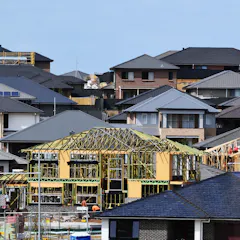
Builders compete for customers by touting the features of their homes. Some builders promote ‘six-star’ home energy ratings in ways that could mislead consumers and breach Australian Consumer Law.

After the ‘world’s biggest work-from-home experiment’, many people (and their employers) might decide they needn’t commute every day. If even a fraction do that, infrastructure needs will change.
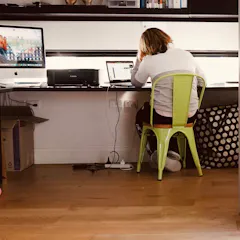
Those endless cups of tea while working from home are unlikely to add much to your electricity bill. But coronavirus poses other problems for the electricity sector.
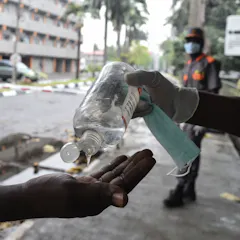
Effective public health response to a pandemic, depends on the availability of a stable power supply system.

Buyers pay more for a home they know has a good energy rating. That’s worth an extra 2.4-9.4% in the only part of Australia where energy ratings must be disclosed at the time of sale.
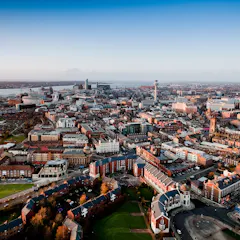
Carbon offsetting is one way of doing it – but sometimes the simplest methods work best.
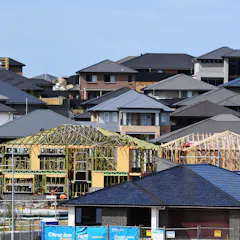
Australia requires a minimum six-star energy rating for new housing. New homes average just 6.2 stars, so builders are doing the bare minimum to comply, even as the costs of this approach are rising.
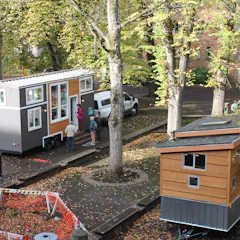
Research shows that moving from a larger dwelling to a tiny home can change behavior in surprising ways.

Air conditioning changed both building design and people’s active management of home temperatures. A return to houses designed for our climate can keep us comfortable and cut energy use and emissions.
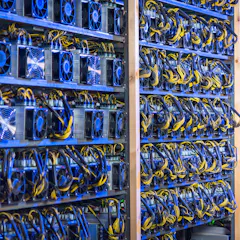
Bitcoin may have a large carbon footprint, but cleaner digital currencies aren’t going to prevent an environmental disaster.

Water and energy use are becoming more efficient, which is good news for both the economy and the environment. But Australia has yet to realise the value of national environmental accounting.
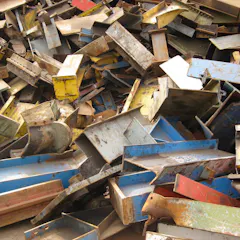
If the US were to stop dumping these valuable metals in landfills and to cease exporting them as cheap scrap, its imports could fall, and there would be less of these metals being made from scratch.

Our study found that office workers performed just the same, whether the air conditioning was set at 22°C or 25°C. But making that tweak can cut energy use by 18%.

CC BY-ND39 MB (download)
This episode is all about bitcoin. Will it be the currency of the future? Who’s trying to capitalise on the legal loopholes of cryptocurrencies? And is it possible to make mining them more green.

Advocates say daylight saving time saves energy and wins wars. But studies show that injuries and illnesses rise when the clocks change. Some states may end the practice; others could make it permanent.
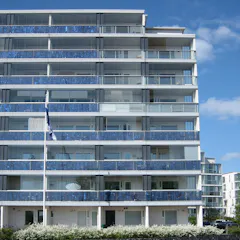
Not everyone can afford to pay for solar panels up front, but local planners can help disadvantaged households overcome energy poverty in several ways.
Top contributors
-

Associate Professor in Property, Construction and Project Management, RMIT University
-
Associate Deputy Vice Chancellor in Research & Innovation, RMIT University
-
Senior Industry Fellow, Environment and Planning, RMIT University
-
Associate Professor in Housing, School of Property, Construction and Project Management, RMIT University
-
Professor, Emerging Technologies Research Lab, Monash University, Monash University
-
Research fellow, Adelaide University
-
Associate Professor in Property, The University of Melbourne
-
Research Team Leader, CSIRO
-
Senior Lecturer in Urban and Environmental Planning, Griffith University
-
Research Director, Institute for Sustainable Futures, University of Technology Sydney
-
Professor of Economics, University of Arizona
-
Assistant Professor of Economics, Claremont McKenna College
-
Professor of Housing Research, Adelaide University
-
Research Fellow, Centre for Urban Research, RMIT University
-
Professor of Nanophysics, Lund University