

If Alberta prepares to transition from oil and gas to solar energy, the workforce will need retraining. New research shows that this will cost less than expected.
Articles on Energy transition
Displaying 121 - 140 of 291 articles
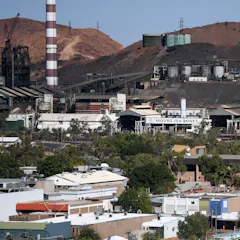
For towns built on mining, mine closures have huge impacts. Because mines inevitably close, communities should be involved from the start in planning for that time.

Support for road-user charging strengthens when people are assured that revenue goes into reducing traffic congestion, maintaining transport infrastructure, improving public transport.
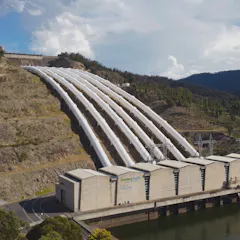
Storing energy in large pumped hydro schemes sounds simple. But engineering and terrain challenges have put Snowy 2.0 well off track – while grid-scale batteries get better and better
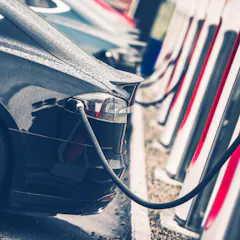
Taxing electric vehicles was always a bad idea. But the High Court’s ruling against Victoria’s law could make state-based road user charges impossible.
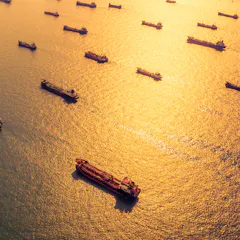
An initial squeeze on demand for Russian oil due to western sanctions was temporary but the country’s oil industry might have bigger problems.
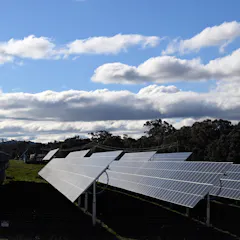
Getting to Zero, a new series in The Conversation starting today, examines how – and whether – Australia can meet its net zero emissions target by 2050.
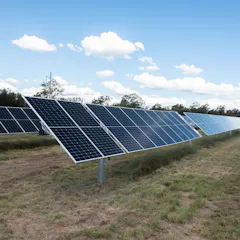
The widespread pessimism about our ability to solve climate change is misplaced. Australia is putting in place the fundamentals of a net zero future. Now we need to go faster.
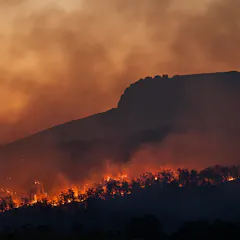
The rising climate crisis presents an existential threat to humanity yet our government and political system are on a go-slow response. Is this issue too hard for humans to solve?

You might look at the task ahead of weaning ourselves off fossil fuels and despair. But we’ve changed energy sources many times before – and it’s never a straightforward process.
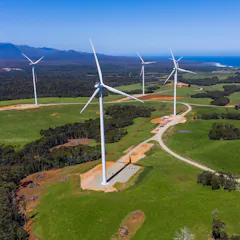
Most people accept our energy system must move from fossil fuels, especially coal, to renewables as soon as practicable. But there are serious obstacles on the ground – literally.
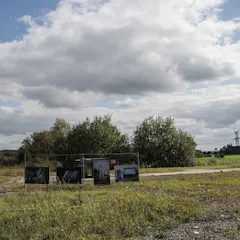
The belly of a desindustrialised region in France could contain one of the world’s largest reserves of a game-changing clean fuel.
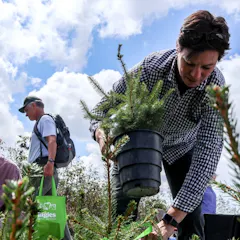
Any smart climate strategy will need to simultaneously move away from fossil fuels and protect biodiversity, including through carbon sink preservation and a shift toward sustainable agriculture.
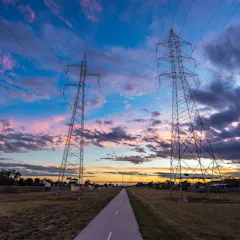
Australia’s grid will likely get through this angry summer without falling to pieces. But our market operator is worried about the summers after that.
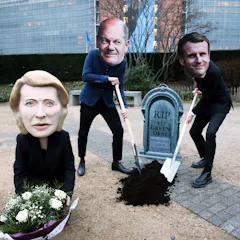
While EU countries are capable of initiating strong joint actions, a divide is emerging between countries with very different, even antagonistic, decarbonisation strategies.
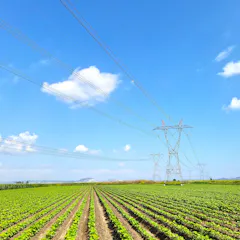
We’ll need some new transmission lines to make Australia’s grid ready for the green energy shift. But there are clever ways of making more use out of our existing network.

In the late 1980s, well diggers in Mali struck a rich source of naturally-created hydrogen. Now prospectors are scouring South Australia, looking for natural hydrogen.

Indigenous economic development corporations can generate income for communities and support the transition to clean energy.

In the fact of economic uncertainty, one question remains: Is it worth investing in a more sustainable Canada, or will it become just another economic burden?
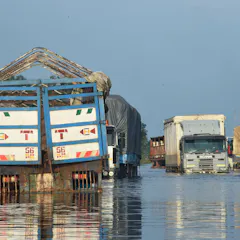
Nigeria’s new President Bola Ahmed Tinubu faces a number of challenges. But climate change cannot be ignored.
Top contributors
-

Professor of Engineering, Australian National University
-
Senior Fellow in Energy and Climate Change, Grattan Institute
-
Professor, Crawford School of Public Policy and Director, Centre for Climate and Energy Policy, Australian National University
-
Research Principal, Institute for Sustainable Futures, University of Technology Sydney
-
Professor of Law, Deakin University
-
Canada Research Chair in Urban Planning for Climate Change, Associate Professor of Geography and Civil Engineering, University of Victoria
-
Professor of Economics, University of Pretoria
-
Professor, School of Economics, The University of Queensland
-
Professor and Director, Victoria Energy Policy Centre, Victoria University
-
Professorial Fellow, University of Canberra
-
Professor of Transport Technology and Sustainability, Swinburne University of Technology
-
Research Fellow, ANU College of Engineering and Computer Science, Australian National University
-
Professor of Public Policy, Crawford School of Public Policy, Australian National University
-
Senior Research Associate, Renewable Energy & Energy Systems Analyst, UNSW
-
Professor of Energy and Environmental Economics and International Affairs, Penn State