
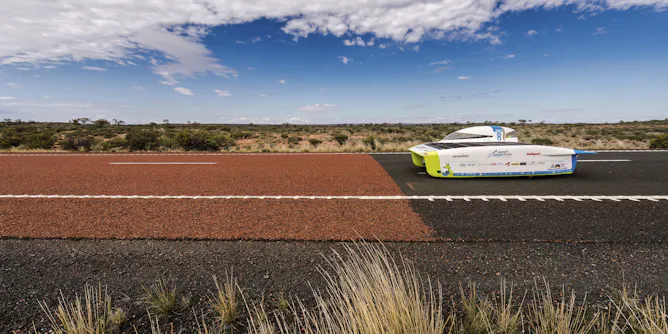
It’s common to see solar panels on rooftops and fields, but they aren’t widespread on cars − yet.
Articles on Energy transition
Displaying 101 - 120 of 291 articles
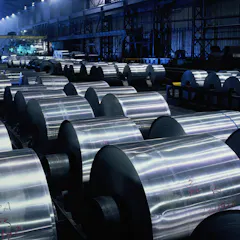
Ghana has spent over 60 years trying to build an aluminium industry.

Solar development isn’t always good for the land, but pairing it with agriculture can produce multiple benefits.
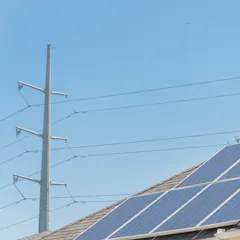
Big changes are needed to create a consumer-centric National Electricity Market that’s able to manage the rise of rooftop solar.
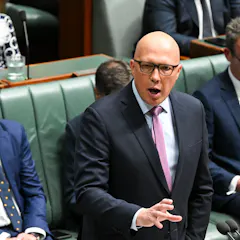
Small modular reactors are popular among conservative politicians and supposedly the Australian public. But they’re nowhere near ready to power Australia in time to replace coal-powered stations.

Australia’s main grid has 40,000 km of transmission lines. Building another 10,000 km quickly is proving hard.

For the green transition to be fair and just to people and communities around the globe, countries must change the way energy is used and governed.
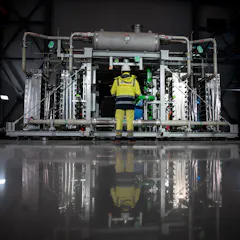
There are two approaches to producing low-emission hydrogen, and public acceptance (or rejection) of each method will be important for hydrogen and its place in the energy transition.

The key to a successful energy transition away from coal is good institutional quality supported by anti-corruption procedures and clear rules.
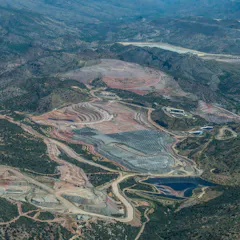
Hard rock minerals like gold, silver, copper and lithium on public lands belong to the American public, but under a 150-year-old law, the US gives them away for free.
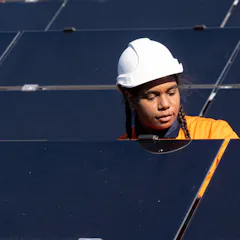
Australia lags the US and Canada when it comes to involving Indigenous people in projects on their land. With the growth of renewable energy we have an opportunity to make a fresh start.
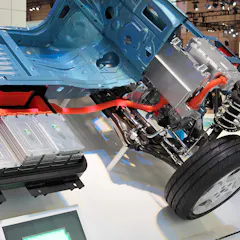
Lithium-ion battery fires are becoming increasingly common as electric vehicles spread, and are hard to extinguish. A new approach uses an electrolyte based on a commercial fire extinguisher.
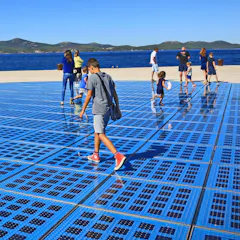
Modellers of the energy transition have tended to neglect fractious international relations in their calculations.
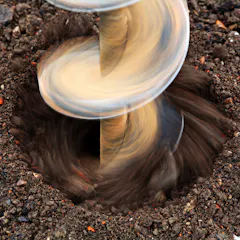
Gold hydrogen is naturally occurring gas trapped in pockets under the ground – in much the same way as oil and natural gas
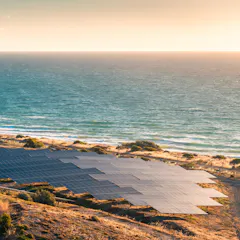
Every two years, we get an updated plan for the future of Australia’s main grid. Under the new plan, coal vanishes even faster.
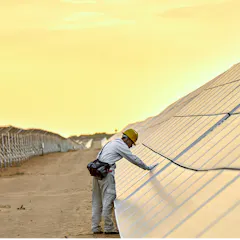
This year, China has built renewables at a truly staggering pace. But can its tech-first approach actually cut emissions – and find common ground at COP28?

COP28 gives Nigeria another chance to fight for financing it needs to adapt to climate change.
The Australian Labor government’s expanded Capacity Investment Scheme gives us a better chance of hitting high renewable energy targets. It’s not without risk but well worth the rewards.
Small modular reactors may hold the key to Canada’s net-zero energy future.
It’s still possible for Australia to cut emissions in line with holding climate change to 1.5°C. Here’s how.
Top contributors
-

Professor of Engineering, Australian National University
-
Senior Fellow in Energy and Climate Change, Grattan Institute
-
Professor, Crawford School of Public Policy and Director, Centre for Climate and Energy Policy, Australian National University
-
Research Principal, Institute for Sustainable Futures, University of Technology Sydney
-
Professor of Law, Deakin University
-
Canada Research Chair in Urban Planning for Climate Change, Associate Professor of Geography and Civil Engineering, University of Victoria
-
Professor of Economics, University of Pretoria
-
Professor, School of Economics, The University of Queensland
-
Professor and Director, Victoria Energy Policy Centre, Victoria University
-
Professorial Fellow, University of Canberra
-
Professor of Transport Technology and Sustainability, Swinburne University of Technology
-
Research Fellow, ANU College of Engineering and Computer Science, Australian National University
-
Professor of Public Policy, Crawford School of Public Policy, Australian National University
-
Senior Research Associate, Renewable Energy & Energy Systems Analyst, UNSW
-
Professor of Energy and Environmental Economics and International Affairs, Penn State