
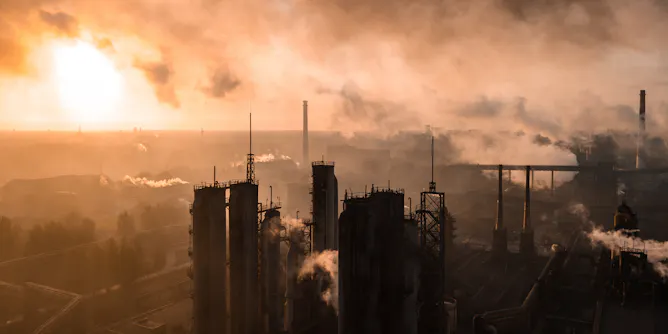
‘Carbon sinks’ like forests and the soil have already been factored into the carbon budget – they should not be double-counted.
Articles on Emissions targets
Displaying 21 - 40 of 115 articles
The long-awaited paper sets a positive tone. But it’s not clear if the government grasps the sheer scale or urgency of the emissions reduction task.
Canada keeps revising and updating its emissions targets, diverting attention from its failures to make any progress at all.
In all the strategies and tactics of the climate wars, the most disturbing development is that the carbon pricing became roadkill.
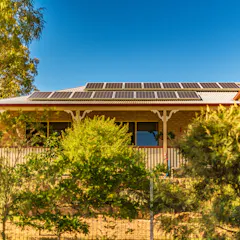
Making better use of existing building space is a neglected but essential way to cut our carbon emissions. The key is human behaviour. Good low-carbon citizens will help create good low-carbon cities.
Australia’s new emissions data for the December 2018 quarter show a rise on the previous quarter, although the raw figures actually dropped. Here’s what that all means.
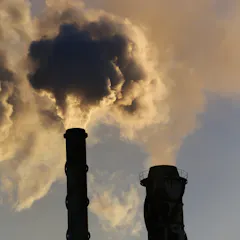
Australia’s international reputation depends on rejecting the use of Kyoto carry-over. More importantly, so does our climate.
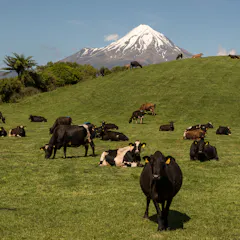
New Zealand’s government has released a bill that sets targets to bring long-lived greenhouse gases to net zero by 2050 and reduce emissions of the shorter-lived methane by 10% within a decade.
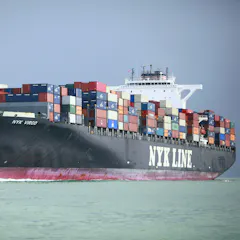
Contrary to the advice of the UK’s climate advisers, aiming for net zero before 2050 is credible – but the country must reassess how much its future is worth.

A new petition is urging state and federal governments to rein in Australia’s rampant land clearing, which worsens the risk of bushfires and threatens to undo the work of the Emissions Reduction Fund.
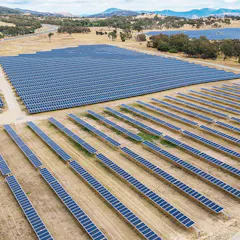
Australia’s government insists it is on track to surpass its emissions reduction commitments under the Paris Agreement. But while that may be true, it will only happen with some clever accounting.
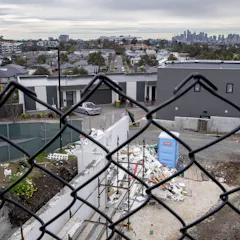
Australia’s commitments to cut emissions are on a collision course with urban growth. We need a much more comprehensive strategy to make the transition to a sustainable built environment.
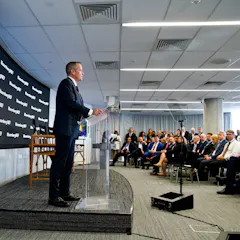
The Labor Party’s newly announced energy policy could finally set Australia’s electricity sector on the path to a renewables-driven future. But policies are still needed to cut emissions elsewhere.
The federal government is primarily to blame for the mess that is Australia’s energy policy. It’s time for the states to step up, to reduce both prices and emissions.

The latest UN climate report makes it clear that the task of limiting climate change is urgent and huge. We must start to transform our economy today, but it will bring rewards as well as challenges.
The world needs to be carbon-neutral by mid-century to give ourselves a chance of holding global warming to 1.5C. With around 1% of the global carbon budget, Australia needs to rapidly do its share.
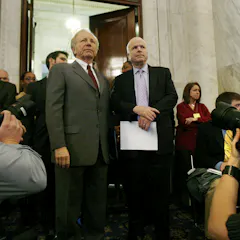
The late Sen. John McCain was an early – and lonely – Republican supporter of action to fight climate change. His challenge was to regulate sources of energy that underlie much of our economy.
Renewable energy investment is gathering steam throughout the world. Australia’s National Energy Guarantee policy should be made agile enough to jump on board, because this runaway train won’t stop.
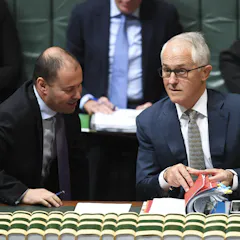
The National Energy Guarantee faces a crunch test this week. And if the climate wars of the past few decades are any guide, Australian policies more often sink than swim when the waters get choppy.

Richer countries import products but not the emissions used to make them.
Top contributors
-

Professor, Crawford School of Public Policy and Director, Centre for Climate and Energy Policy, Australian National University
-
Senior Research Fellow and Associate Professor, Melbourne Climate Futures initiative, The University of Melbourne
-
Former Visiting Fellow, SPRU, University of Sussex Business School, University of Sussex
-
Professor of International Relations, The University of Queensland
-
Professor of Public Ethics, Charles Sturt University
-
Senior Fellow in Energy and Climate Change, Grattan Institute
-
A/Prof., School of Earth Sciences, The University of Melbourne
-
Honorary Associate Professor, The Crawford School of Public Policy, Australian National University
-
Postdoctoral Research Associate in Existential Risk, University of Cambridge
-
Professor Emeritus, Macquarie Business School, Macquarie University
-
Honorary Fellow, The University of Melbourne
-
Associate Professor, The University of Western Australia
-
Senior Research Fellow, School of Geography, Earth and Atmospheric Sciences, The University of Melbourne
-
Faculty of Law, The University of Western Australia
-
Academic position - Research Associate at the Centre for Resources, Energy and Environmental Law, The University of Melbourne