
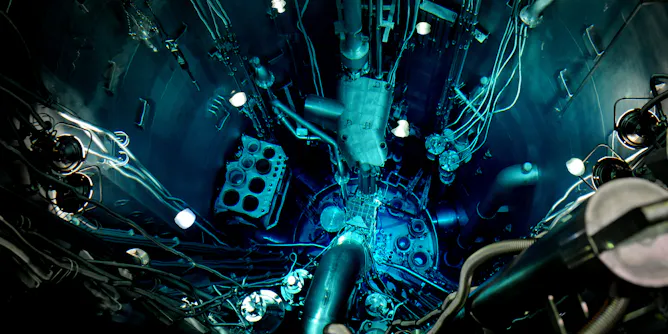
The state of Australia’s energy and climate change policy is reason to despair. But there may be a nuclear solution that keeps both sides happy.
Articles on Emissions reductions
Displaying 81 - 97 of 97 articles

Australia’s new emissions data for the December 2018 quarter show a rise on the previous quarter, although the raw figures actually dropped. Here’s what that all means.

Removing human-related methane from the atmosphere could reduce global warming by 15%.
Labor has ditched its reliance on a single economy-wide climate policy, in favour of a range of different measures that will all help drive down emissions. But some crucial issues remain unaddressed.
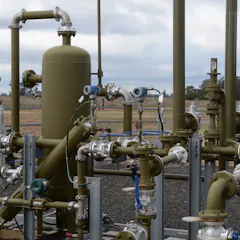
Gas mining is expanding across Australia, and has been touted as part of the answer to cutting emissions. But there is evidence that this rollout will pose significant health and environmental risks.
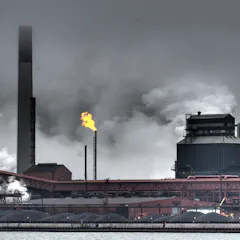
Ontario’s new environment plan scores poorly on conservative ethos.
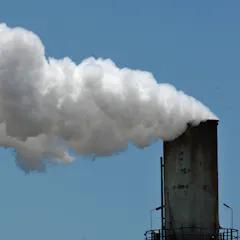
The federal government has signalled its intent to prolong the Emissions Reduction Fund. But surveys of business leaders reveal widespread cynicism about a scheme perceived as politicised and bureaucratic.
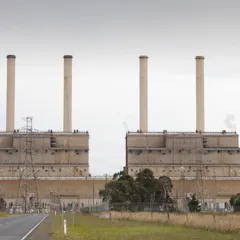
An international report has found there’s no future for Australia’s coal exports.
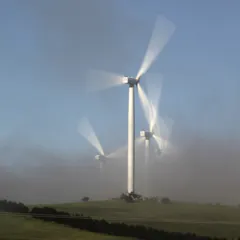
Australia is falling behind on its Paris targets, but we have many options for improvement.
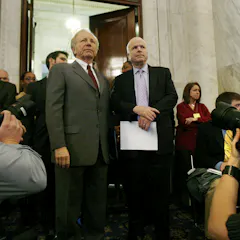
The late Sen. John McCain was an early – and lonely – Republican supporter of action to fight climate change. His challenge was to regulate sources of energy that underlie much of our economy.
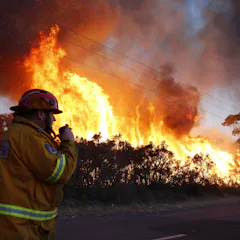
With New South Wales suffering winter bushfires and temperature records tumbling around the globe, our leaders in Canberra have picked a bad time to jettison climate policy in favour of political bickering.

It’s time Australian states took a lesson from US states when it comes to working around obstructive federal climate change policies.

We need to move past biased, opaque models for energy policies.
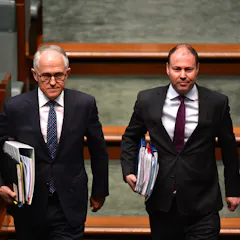
Prime Minister Malcolm Turnbull has abandoned the emissions-reduction component of his signature energy policy, in the latest chapter of a brutal decade-long saga for Australian climate policy.
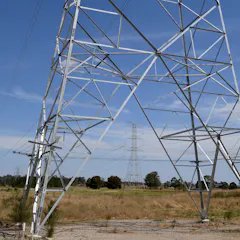
A policy that aims to reshape the electricity sector needs to be judged on its numbers. But the lack of public modelling from the Energy Security Board makes it impossible for analysts to do this.

Australia’s transition to low-emissions energy will rely on what we have now (lots of coal) and what we’ll build in the future (lots of renewables), according to a new report.

The University of Melbourne is the first institution in Australia to have its nitrogen footprint calculated – it’s 139 tonnes per year, mainly because of food production, energy use and transport.
Top contributors
-

Professor, Crawford School of Public Policy and Director, Centre for Climate and Energy Policy, Australian National University
-
Adjunct Professor of Energy, Murdoch University
-
climate campaigner
-
Fellow - Melbourne Law School; Senior Researcher - Climate Council; Associate - Australian-German Climate and Energy College, The University of Melbourne
-
Professor Emerita, Department of Biological Sciences, Macquarie University
-
Senior Fellow in Energy and Climate Change, Grattan Institute
-
Chief Research Scientist, CSIRO Environment; Executive Director, Global Carbon Project, CSIRO
-
Professor, School of Economics, The University of Queensland
-
Chief Scientist, Australian Antarctic Division and Professor of Climate Science, Australian National University
-
Associate Professor, Griffith University
-
Lecturer in the School of Environment, Enterprise and Development, University of Waterloo
-
Professor, Department of Earth System Science, and Chair of the Global Carbon Project, Stanford University
-
Associate Professor, School of Public Administration, University of Victoria
-
Professorial Fellow, University of Canberra
-
A/Prof., School of Earth Sciences, The University of Melbourne