
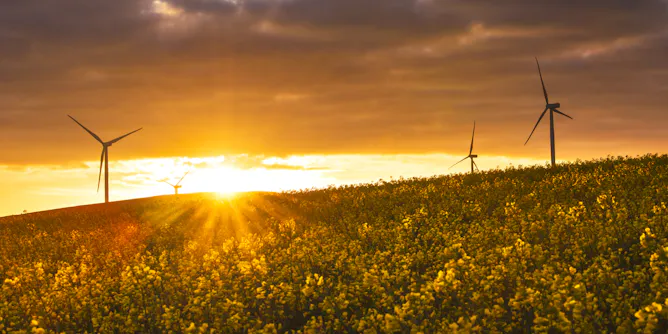
The world is moving away fossil fuels, and there’s nothing Australia can do about it. Racing to dig up and sell whatever fossil fuels we can before the timer stops is not a future-proof strategy.
Articles on Emissions reductions
Displaying 21 - 40 of 97 articles
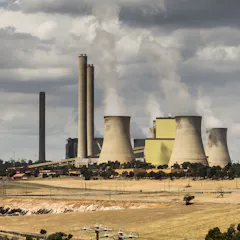
Major coal generators say the proposal will help shore up energy supplies. But opponents say it will pay coal plants for simply existing and delay the clean energy transition.
Academic research can shed light on crucial questions about what life on Earth will be like under the most plausible emissions scenarios. And a warning: the answers are confronting.

IPCC authors go beyond the headlines to explain how 1.5°C warming is measured – and why there’s still reason to hope, and act, if Earth exceeds that limit.
Barnaby Joyce’s pro-mining stance is at odds with the more progressive quarters of the party, and puts the Nationals in a difficult position on global carbon tariffs.
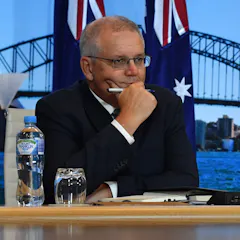
Alarmingly for the Morrison government, the public has well and truly registered its lack of action on climate change.

If problems in such schemes are not addressed, the credibility of soil carbon trading will be undermined. Ultimately the climate - and the planet - will be the loser.

An emissions trading scheme is New Zealand’s main policy to tackle climate change. But to bring down emissions quickly enough, other policies will need to transform transport and agriculture.
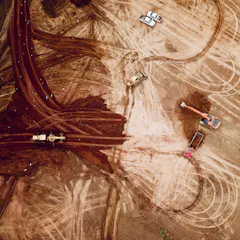
Renewables form an ever-greater share of the electricity mix. But elsewhere in the energy sector – in transport, industry and buildings – emissions reduction is very slow.
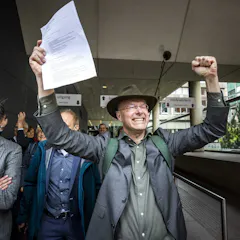
To date, courts have often been reluctant to interfere in what is viewed as an issue best left to policymakers. These recent judgements, and others, suggest things are changing.
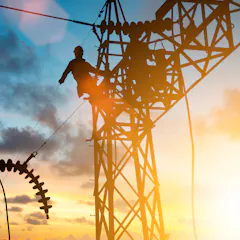
None of Australia’s highest-emitting energy firms are fully or even closely aligned with global climate goals. Just one goes even partway, and five appeared to be taking no action at all.
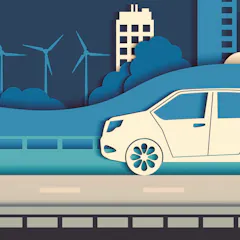
The Morrison government could have backed Australia’s clean energy sector to create jobs and stimulate the post-pandemic economy. Instead, it’s sending the nation on a fool’s errand.

The new commitments of state governments go some way to filling the void left by the lack of a national climate policy. The states should, and can, coordinate their efforts. Here’s how.
To achieve sustainable growth under the constraint that consumption is independent from the use of natural resources, we must move along the path of qualitative growth.
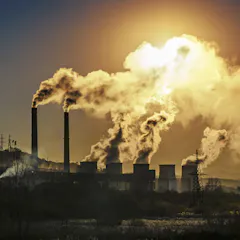
Humanity can still limit global warming to 1.5°C this century. But political action will determine whether it actually does. Conflating the two questions amounts to dangerous, misplaced punditry.
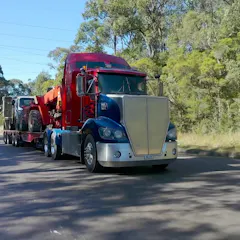
A plan to use swappable batteries in long-haul electric trucks highlights how freight is starting to move away from fossil fuels.
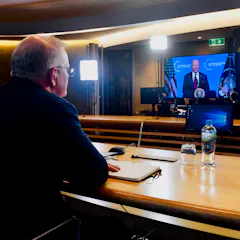
There was palpable relief as Biden brought the US back to the table on global climate action, warning “we have to get this done”. Depressingly, Morrison showed little sign of hearing the message.
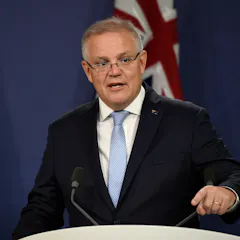
The world, accustomed to Australia’s shifty climate stance, is unlikely to fall for Morrison’s diversion tactics at Biden’s climate summit this week.

History shows how the states and territories can step into a policy breach when the federal government fails. It’s time they band together on electric vehicles.

This is not an imaginary future dystopia. It’s a scientific projection of Australia under 3°C of global warming – a future we must both strenuously try to avoid, but also prepare for.
Top contributors
-

Professor, Crawford School of Public Policy and Director, Centre for Climate and Energy Policy, Australian National University
-
Adjunct Professor of Energy, Murdoch University
-
climate campaigner
-
Fellow - Melbourne Law School; Senior Researcher - Climate Council; Associate - Australian-German Climate and Energy College, The University of Melbourne
-
Professor Emerita, Department of Biological Sciences, Macquarie University
-
Senior Fellow in Energy and Climate Change, Grattan Institute
-
Chief Research Scientist, CSIRO Environment; Executive Director, Global Carbon Project, CSIRO
-
Professor, School of Economics, The University of Queensland
-
Chief Scientist, Australian Antarctic Division and Professor of Climate Science, Australian National University
-
Associate Professor, Griffith University
-
Lecturer in the School of Environment, Enterprise and Development, University of Waterloo
-
Professor, Department of Earth System Science, and Chair of the Global Carbon Project, Stanford University
-
Associate Professor, School of Public Administration, University of Victoria
-
Professorial Fellow, University of Canberra
-
A/Prof., School of Earth Sciences, The University of Melbourne