
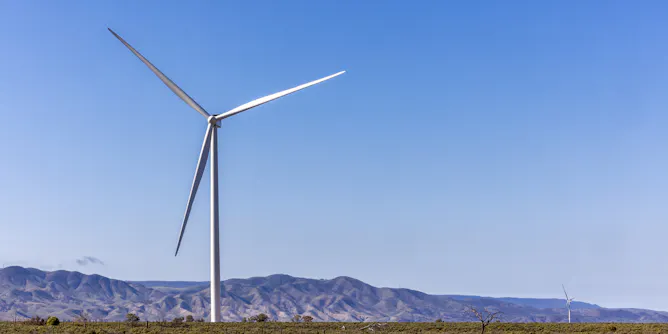
Driven by state governments, Australia’s emissions fell even during the “lost decade” of climate wars at a federal level.
Articles on Emissions reductions
Displaying 1 - 20 of 97 articles

In opposition, the Coalition has pledged to walk away from net zero. That would mean cutting many Labor policies and leaving major gaps.
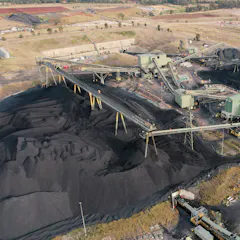
As Australia’s domestic reliance on coal falls, our exports are bigger than ever – and new coal approvals suggest this won’t change soon.
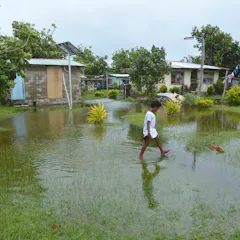
As Climate Change and Energy Minister Chris Bowen lands in Dubai for COP28, Australia has announced an extra A$150 in climate finance with a focus on the Pacific region.

In what’s likely to be the hottest year on record, nations are gathering to try and hash out faster action on climate change. Here are the three main issues facing negotiators.

Both major parties are promising major road projects this election. Meanwhile, the potential for passenger and freight rail to help meet the country’s climate goals seems stuck at the station.

Taxing consumption that contributes to climate change hits the poor the hardest, while overlooking the huge profits tied to greenhouse gas emissions.

Most technologies for CO₂ removal are expensive. But New Zealand could be doing this cheaper than other countries, taking advantage of existing geothermal and forestry industries.
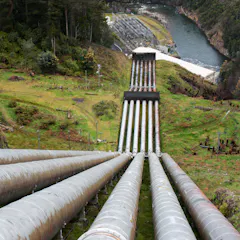
If the proposed pumped hydro scheme at Onslow goes ahead and is managed well, it could be a major asset to diversify a low-carbon, self-resilient economy in Aotearoa New Zealand.
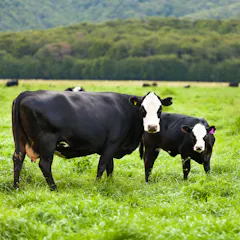
Dairy farming accounts for a quarter of New Zealand’s total emissions. Fermentation technology could help cut agricultural emissions, while also restoring water and ecological quality.
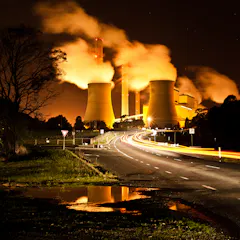
Victoria’s new renewable plan is welcome - but it relies on building unsexy and challenging new transmission lines across the state.
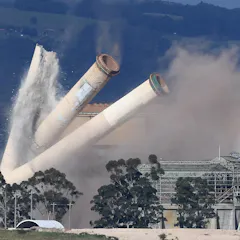
The answer? By closing a highly polluting power station - and ramping up renewables.
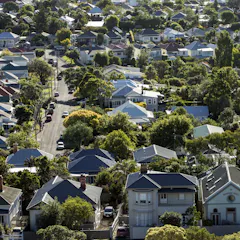
A comparison of 42 urban areas in New Zealand with 500 towns and cities in the US shows how much better local urban design has to be if we’re serious about reducing reliance on cars.
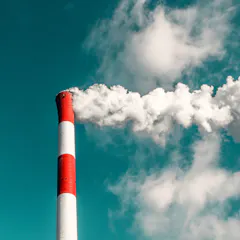
Right now, the safeguard mechanism meant to reduce emissions is not fit for purpose. Labor is exploring ways to fix it - and create a proper pollution market.
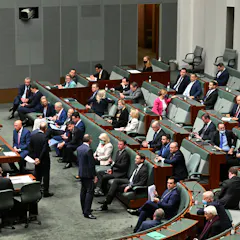
University of Canberra Professorial Fellow Michelle Grattan and Assistant Professor Caroline Fisher discuss the week in politics

Canada has emerged as a leader among its G20 peers in terms of green fiscal stimulus spending and policies.

Canada has neglected to keep up with China’s climate politics, putting the future of the country’s fossil fuel exports at risk.
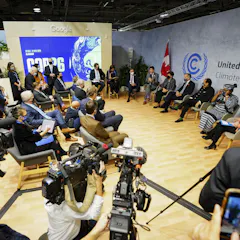
At COP26, governments will have to consider how climate policies help them achieve their emissions targets and affect economies.
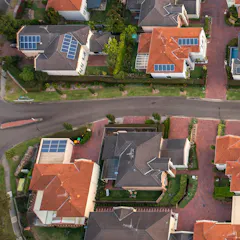
A new analysis shows almost all emissions reductions will be the result of state government policies, and will have virtually nothing to do with the federal government.
The Nationals have tried to link the UK energy crisis to its net-zero climate target. But as an expert advisor to the International Energy Agency tells us, the two are unrelated.
Top contributors
-

Professor, Crawford School of Public Policy and Director, Centre for Climate and Energy Policy, Australian National University
-
Adjunct Professor of Energy, Murdoch University
-
climate campaigner
-
Fellow - Melbourne Law School; Senior Researcher - Climate Council; Associate - Australian-German Climate and Energy College, The University of Melbourne
-
Professor Emerita, Department of Biological Sciences, Macquarie University
-
Senior Fellow in Energy and Climate Change, Grattan Institute
-
Chief Research Scientist, CSIRO Environment; Executive Director, Global Carbon Project, CSIRO
-
Professor, School of Economics, The University of Queensland
-
Chief Scientist, Australian Antarctic Division and Professor of Climate Science, Australian National University
-
Associate Professor, Griffith University
-
Lecturer in the School of Environment, Enterprise and Development, University of Waterloo
-
Professor, Department of Earth System Science, and Chair of the Global Carbon Project, Stanford University
-
Associate Professor, School of Public Administration, University of Victoria
-
Professorial Fellow, University of Canberra
-
A/Prof., School of Earth Sciences, The University of Melbourne