

Teaching approaches should be rooted in learning objectives or students’ experiences, and these considerations aren’t the same as whether course components are online or in-person.
Articles on Emergency remote teaching
Displaying all articles
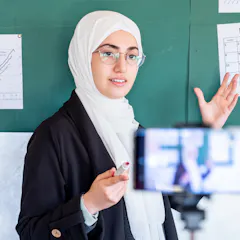
Research by geographers in Canada, the United States and Hong Kong identifies lessons for universities and colleges from the 2020 move to online learning.
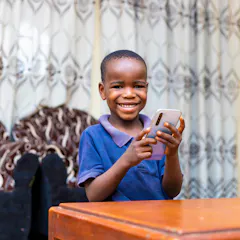
Instruction through mobile phones can provide an effective, scalable method to provide education instruction when schooling is disrupted.
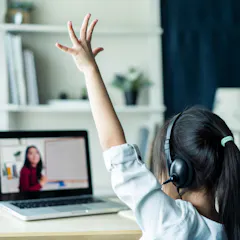
Despite the major challenges lockdown-induced remote learning has presented, teachers, pupils and parents alike have reaped certain benefits. Can school learn from these changes?

The shift to emergency remote teaching and learning enabled academics to start questioning some long-held assumptions about in-person teaching and learning.

Traditional learning formats often fail marginalized students. We should be skeptical of a ‘one-size-fits-all’ or even ‘one-size-fits-most’ model.
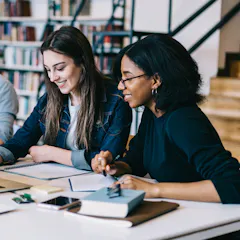
Some promoters of educational technology see COVID-19 as a ‘tech reckoning’ for professors who refused to accept progress. But before the pandemic, many students also preferred in-person classes.
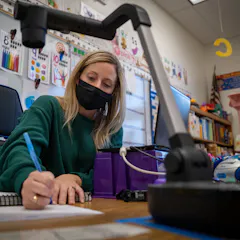
Virtual education piggybacked onto classroom learning demonstrates a lack of respect for teachers, student equity and public education.
Top contributors
-

Adjunct Professor of Geography, Simon Fraser University
-
Associate Professor, Online Pedagogy & Workplace Learning, Faculty of Education, University of Windsor
-
Assistant Dean: Teaching and Learning (Faculty of Commerce, Law and Management), University of the Witwatersrand
-
Associate Professor of Teaching, Geography Department, University of British Columbia
-
Executive Director, Youth Impact, Senior Fellow, University of Oxford
-
Professor, Political Science, McMaster University
-
Associate professor, Department of Pediatrics, McMaster University
-
Academic Director: Digital Learning, Faculty of Commerce, Law and Management, University of the Witwatersrand
-
University of the Witwatersrand
-
Research Fellow, Adjunct Associate Professor, EPPI Reviewer Training & Support Officer, UCL
-
Professor, Education and Technology, Simon Fraser University
-
Postdoctoral Scholar, McMaster Children and Youth University, Department of Pediatrics, McMaster University
-
Research associate, Department of Computer and Systems Sciences, Stockholm University
-
Sessional Lecturer, Department of Geography, University of British Columbia