

For universities, investing in flexible systems is a matter of survival.
Articles on Blended learning
Displaying all articles

COVID-19 radically shifted the way we work and learn. It presented an opportunity for institutions to rethink the future of higher education. But, what does this future look like?

Teaching approaches should be rooted in learning objectives or students’ experiences, and these considerations aren’t the same as whether course components are online or in-person.

The solidarity that emerged between lecturers and students should be preserved.
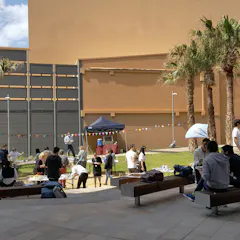
While COVID forced a shift online, that doesn’t mean universities should roll back all the changes. A hybrid model of teaching and learning is now the best way to prepare students for a digital world.

The shift to emergency remote teaching and learning enabled academics to start questioning some long-held assumptions about in-person teaching and learning.

Factors such as not being able to handle their study load and living too far from campus led to students not attending class.

While the pandemic undoubtedly sped up the uptake of educational technology in higher education, it doesn’t point to an entirely online future.

The COVID-19 pandemic isn’t going away any time soon. Kenya’s universities must adapt.

South Africa’s constitution provides for equal access to education and its inclusive education policy exists to make this a reality. But in practice students’ diverse needs are not being met.

The higher education sector has to re-think what the future of higher education looks like and take steps towards this.
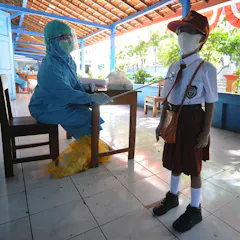
As the Indonesian government reopens schools located in the green and yellow zones, a blended learning approach is being discussed as a solution.
Top contributors
-

Professor, School of Education, Deakin University
-
Assistant Dean: Teaching and Learning (Faculty of Commerce, Law and Management), University of the Witwatersrand
-
Sessional Lecturer, Department of Geography, University of British Columbia
-
Vice-Chancellor and Principal of the University, University of Pretoria
-
Senior lecturer, Flinders University
-
Professor, HOD Education, Tshwane University of Technology
-
Lecturer at the Department of Curriculum and Educational Technology, Faculty of Education and Psychology, Universitas Negeri Semarang
-
Head/Chair, Department of Biomedical Sciences, Jaramogi Oginga Odinga University of Science and Technology
-
Senior Advisor - Learning and Teaching, Centre for Learning, Teaching & Scholarship, Torrens University Australia, Torrens University Australia
-
Director of Institutional Planning, University of Pretoria
-
Professor and Dean for Digital Education, Queen Mary University of London
-
Academic Director: Digital Learning, Faculty of Commerce, Law and Management, University of the Witwatersrand
-
Lecturer, University of the Western Cape
-
Senior Lecturer in Technology Enhanced Learning, Lancaster University
-
Adjunct Associate Professor, Griffith University