

Turns out, changing the way atoms and molecules are arranged in a substance can give it new and fascinating properties.
Articles on Elements
Displaying 1 - 20 of 27 articles

Listen to the The Conversation’s Curious Kids podcast to hear biochemist Mark Lorch explain how scientists are trying to make new elements for the periodic table.
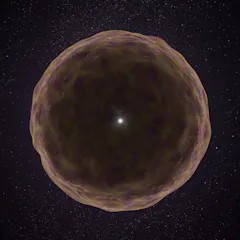
An ‘extremely stripped supernova’ confirms the existence of a key feature of physicists’ models of how stars produce the elements that make up the Universe.
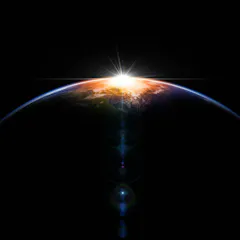
Scientists analyzing isotope ratios have found that many of the elements that make up life could be left over from Earth’s formation.
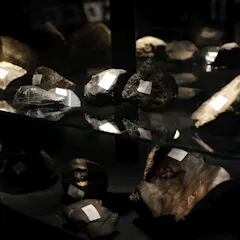
Some space rocks you can get for free – if you know how to identify them. Rarer materials cost more, and the asteroid sample NASA just brought back has a high price tag.

As surface water diminishes in the Western US, people are drilling deeper wells – and tapping into older groundwater that can take thousands of years to replenish naturally.
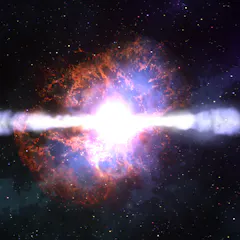
The discovery of an ancient star in the Milky Way’s halo is providing evidence for another source that would have produced the galaxy’s heavy elements.

Manufacturing minerals is an expanding field of study. Making more of them could help alleviate various pressures faced by our growing population. But how are they made, and where can they be used?
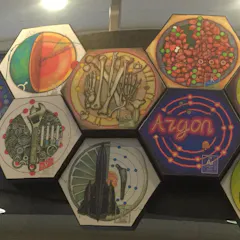
From heavy metal to lighter than air gas, these elements and others from the Periodic Table are transformed into artworks that go on display from today.
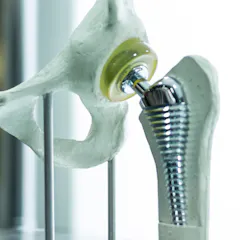
Titanium is a tough but light metal that makes great replacements for bone in our body. But it has plenty of other uses in industry as well.
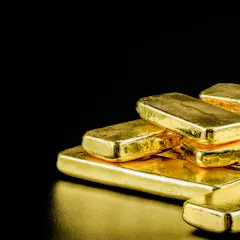
Gold is one of 12 confirmed elements on the periodic table whose discoverer is unknown.
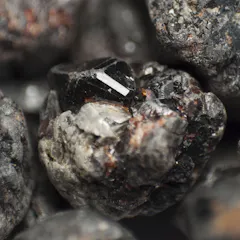
On its own it’s just tin. But mix it with other elements and it turns into a material that helped shape the ancient world.
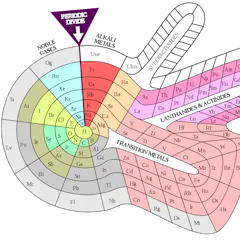
There have been some rather wacky looking suggestions for arranging the chemical elements.
A particle physicist explains just what this keystone theory includes. After 50 years, it’s the best we’ve got to answer what everything in the universe is made of and how it all holds together.
People long assumed all the elements we see now were created during the Big Bang. But on May 2, 1952, an astronomer reported spotting new elements coming from an old star and changed our origin story.
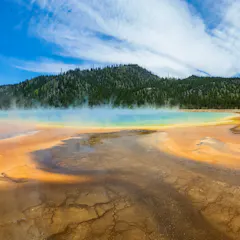
Fill a tank with water, sugar, and old mobile phones. Add bacteria and stir. Result? Rare earth metals. This is biomining, and it’s the way of the future.
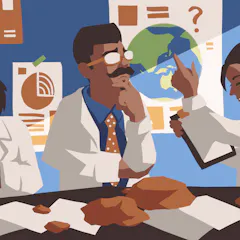
The world is made of tiny building blocks called ‘elements’. Scientists have worked out how fast some elements change into other elements. That gives us a very big clue about how old the Earth is.
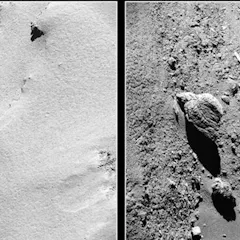
Dust can be instructive. The analysis of those collected around the comet 67P/Churyumov-Gerasimenko provided new information on the history of the solar system.
The precious metal is literally extra-terrestrial, produced in the heart of the stars. How and under what conditions? Scientists know more thanks to a double astrophysical observation.
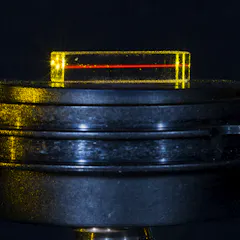
Rare earth elements aren’t actually that rare - but they certainly are useful. Erbium is used right now in the internet’s optical fibre network, and could one day be applied in quantum networks.
Top contributors
-

Professor of Science Communication and Chemistry, University of Hull
-
Professor, The University of Queensland
-
Associate professor, University of Technology Sydney
-
Research Fellow, Laser Physics Centre, Australian National University
-
Emeritus Professor of Astronomy, Australian National University
-
Astrochimiste, Maître de Conférences à l’Institut d’Astrophysique Spatiale (IAS), Université Paris-Saclay
-
Senior Lecturer in Chemistry, University of Birmingham
-
Astrochimiste, post-doctorante au Department of Terrestrial Magnetism (DTM), Carnegie Science
-
PhD Candidate, Geomicrobiology, The University of Melbourne
-
Team Leader, CSIRO
-
Astrochimiste, Professeur au Laboratoire Interuniversitaire des Systèmes Atmosphériques (LISA), Université Paris-Est Créteil Val de Marne (UPEC)
-
Director, Heavy Ion Accelerator Facility, Australian National University
-
Professor of Physics, Syracuse University
-
University Distinguished Professor of Nuclear Astrophysics, Michigan State University
-
Professor of Astronomy, Harvard University