
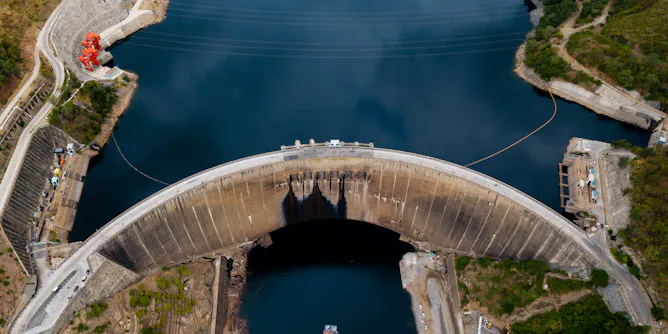
Zimbabwe has a severe energy crisis because its major sources of electricity are struggling to keep up with demand.
Articles on Electricity
Displaying 341 - 360 of 640 articles

A nanotube innovation using waste plastic could help solve one of the world’s energy problems.
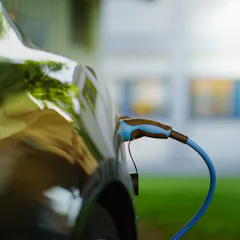
Electricity consumption will grow as more people switch to electric cars – but this could drive up emissions, unless power is sourced from renewables.
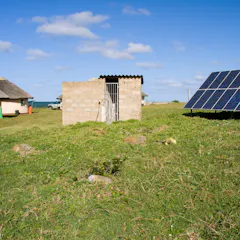
South Africa could become a test bed of technologies that enable households, especially in remote areas, to join electricity trading markets.

Almost 80 million Nigerians do not have access to electricity and its erratic supply is costing the economy an estimated $29 billion annually. Nigeria’s abundant sunlight could be the solution.

Even fridge magnets have magnetic fields approximately 200 times stronger than Earth’s.

The electric utility is seeing rapid changes and threats that affect consumers, from more wind and solar to wildfires. How they react depends in large part on regulators.

Phosphorene nanoribbons are like tagliatelle, but carry the potential to boost battery capacity by 50%.

The transport sector is the fastest growing contributor of greenhouse gases. Electric vehicles are a cost-effective solution.

There’s mounting evidence that increased lighting has a range of negative effects.
Twelve power projects are in the running for federal government dollars: six pumped hydro, five gas and one coal. It’s clear which one shouldn’t be on the list, for economic and environmental reasons.

In sub-Saharan Africa there are more people with mobile phones than access to electricity, and their data could be useful.

The blockchain is creating new opportunities for the electricity sector. The December 2018 Energy Market Barometers looks at where experts think the technology is heading.

Canadians will start paying for their carbon emissions this year, but the cost will depend on where they live.

Eskom, South Africa’s power utility will be unbundled and receive financial support from national treasury. These are the next steps.
There are precedents regarding power generation and ethanol but no nation has ever achieved as comprehensive and dramatic this fast.
Why is thunder so loud? It’s because the amount of electrical energy that flows from the cloud to the ground is so enormous.
There’s no easy way for Eskom to claw its way out of the crisis it’s in.

South Africa’s president has committed to structural reforms in the energy sector.

For many Haitians, blackouts do not just signal a political crisis; they also symbolize feelings of their loss of political power.
Top contributors
-

Senior Industry Fellow, Environment and Planning, RMIT University
-
Senior Research Associate, Renewable Energy & Energy Systems Analyst, UNSW
-
Senior Fellow in Energy and Climate Change, Grattan Institute
-
Honorary Associate Professor, Centre for Climate Economics and Policy, Australian National University
-
Professor of Physics, University of Johannesburg
-
Director of Energy Studies, University of Florida
-
Professor of Energy and Environmental Economics and International Affairs, Penn State
-
Assoc Prof. Renewable Energy, Monash University
-
Professor and Director, Victoria Energy Policy Centre, Victoria University
-
Professorial Fellow, University of Canberra
-
Professor, School of Economics, The University of Queensland
-
Senior Research Associate, University of Johannesburg
-
Associate Professor, Griffith University
-
Visiting Fellow, Crawford School of Public Policy, Australian National University
-
Professor, Discipline of Political Economy, University of Sydney