
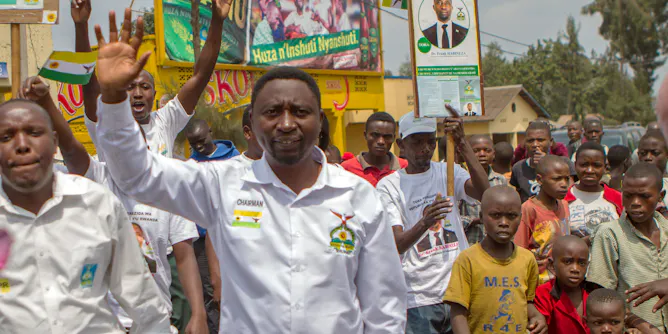
With frequent irregularities, it’s easy to become cynical about elections in Africa. But polls are an essential component of the continent’s growing democracy.
Articles on Elections in Africa
Displaying 141 - 160 of 174 articles
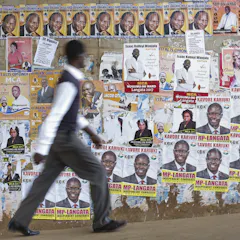
The two main candidates in Kenya’s election are incumbent Uhuru Kenyatta and the opposition’s Raila Odinga. Polls have them neck-and-neck. Here’s what you need to know about the key issues.

President Joseph Kabila remains in office despite upheaval in the DRC. He can still save face and a change of heart could see him become the first Congolese president to relinquish power.
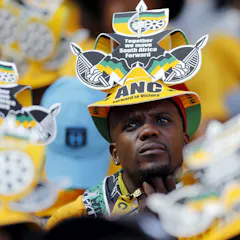
Documents released ahead of the policy conference of South Africa’s embattled governing ANC show it hasn’t the guts or internal balance of forces, for self-correction and renewal.
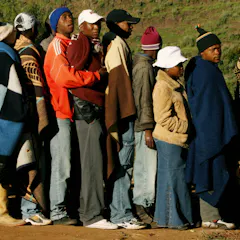
Politics in Lesotho can look incredibly complicated, with a mish-mash of competing political parties and repeated military interventions. It’s a mess, but it’s not that hard to unravel.
As we celebrate Africa Day and reflect on how far the continent has come since the Organisation of African Unity was founded in 1963, it’s a good time to assess whether democracy is working.
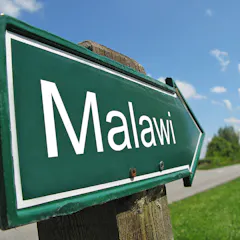
The proposed change to Malawi’s electoral system is straightforward and makes logical sense. Yet it’s more complex and if adopted would revolutionise local politics.

In a political environment where voters are increasingly attuned to instances of polling malpractice, African states are grudgingly adopting technology as a barrier to election fraud.

Attempts to deepen democracy in Africa by limiting presidential terms to two have not entirely quashed a culture of entitlement to rule. Glimpses of it persist, much against citizens’ wishes.
Regional power Ecowas, which has just seen off yet another dictator in Yahya Jammeh, started off with a tame agenda 42 years ago. But it was soon shaped by civil wars, military coups and despots
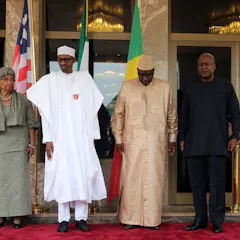
SADC’s credibility is at stake. Its lack of political will in acting decisively against despots is at odds with the African Union’s goal of promoting legitimate governance on the continent.

The Gambian election dispute is not the first that ECOWAS has confronted. Côte d’Ivoire’s 2010 presidential election is a case in point. There it resorted to military action to enforce the outcome.
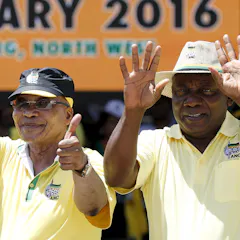
After two decades of political dominance, the electoral performance of the ANC is at its lowest since it became the governing party of South Africa in 1994. But is the party really unraveling?
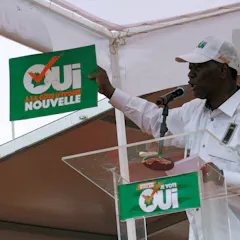
The proposed new constitution would allow Alassane Ouattara to remain as president. Opposition parties see this move as a constitutional “coup” that will also protect his allies.
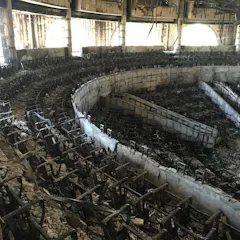
National electoral commissions are crucial in shaping public perceptions of how well democracy is working. Poor electoral management can enable fraud and produce political alienation.

Gabon has the lowest trust ratings of any election commission among the 36 African countries surveyed by Afrobarometer.
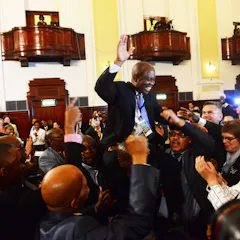
South Africa’s watershed local elections have resulted in upsets for the ANC in key metropoles. But will the new, minority coalition regimes live up to their mandate of providing basic services?
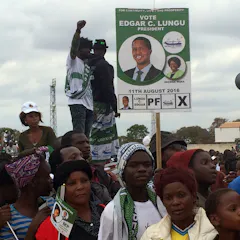
Zambia’s Edgar Lungu shouldn’t consider his presidential victory to mean business as usual in the management of the economy; nor an opportunity to waste and plunder.
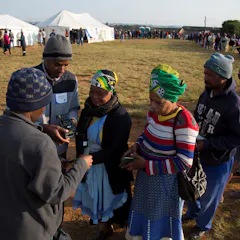
Many municipalities in the South Africa don’t function properly because of poor management and administrative capacity. They don’t have enough appropriately qualified and experienced staff.
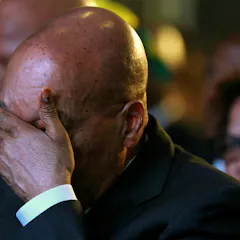
Various commentators have wrongly over the last 22 years said that black people voted blindly for ANC governments. There’s no better example why the academy needs a dramatic post-colonial overhaul.
Top contributors
-

Professor of Democracy, University of Birmingham
-
Lecturer in African History, Queen Mary University of London
-
Professor of Sociology, University of the Witwatersrand
-
Professor in Political Science, University of South Africa
-
Extraordinary Professor, Department of Political Sciences, University of Pretoria
-
Director of the Leaders of Africa Institute and Research Affiliate with Davidson College, Davidson College
-
Chief Research Specialist in Democracy and Citizenship at the Human Science Research Council and a Research Fellow Centre for African Studies, University of the Free State
-
Research Associate, Dept of Anthropology & Development Studies and Fellow, Clare Hall, University of Cambridge, University of Johannesburg
-
Professor of Political Studies, University of Johannesburg
-
Director & SARChI Research Chair: Political Economy of Migration in the SADC Region, University of Pretoria
-
Head of Department, Public and Environmental Law Department, University of Limpopo
-
Professor, Department of Political Sciences, University of South Africa
-
Professor of Public Affairs, Tshwane University of Technology
-
Associate Professor, International Development Studies; Associate Dean, Menno Simons College, University of Winnipeg
-
Professor of Urban Governance, University of the Witwatersrand