
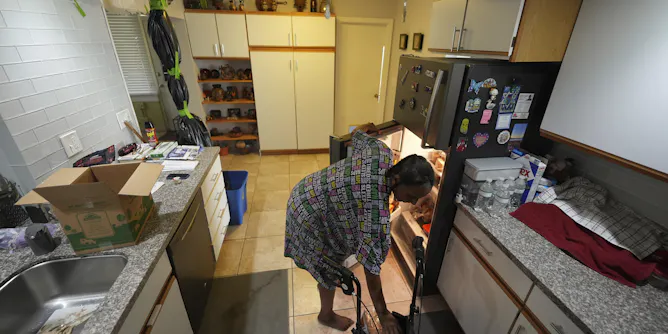
Federal policy changes are likely to make life harder for many Americans of modest means as they age.
Articles on Elder care
Displaying 1 - 20 of 26 articles
As devices get smarter, families and communities bear a heavier burden of technology caregiving for older adults.

Caregivers in Botswana are being asked to do more with less.

A diverse team of researchers, concerned that the global elder care crisis cannot be addressed by the market or the state alone, are seeking creative solutions.
International conventions dictate that families have a right to be together. But Canada’s current parent and grandparent reunification program makes that difficult.

Michigan Gov. Gretchen Whitmer’s proposed tax credit is part of a trend toward public support for family caregiving.

Paid domestic work has a low status in South Africa. The labour of domestic workers is often undervalued and unrecognised.
The law changed older adults’ caregiving behavior because their children became more able to take paid time off work to care for their own newborns.

The number of elderly people in need of support in Africa is projected to grow at annual rates above 3% up to 2050.
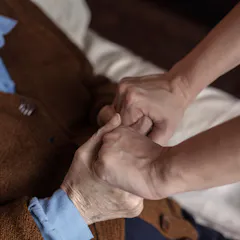
The introduction of ‘care apps’ has been sold as improving efficiency and even pay rates for homecare providers. But a new study suggests it may only be exacerbating existing problems in the industry.

Research shows that violence between patients is prevalent, often overlooked and largely unaddressed.
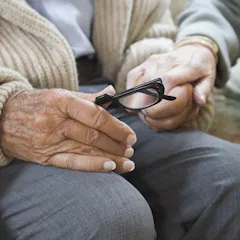
When you prepare to talk about end-of-life decisions and the legacy you want to leave behind, try thinking about them as gifts you bestow to family and friends.

Retirement villages tend to treat older people as a homogeneous group when the reality is they have a hugely diverse range of needs.
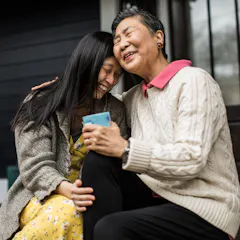
In tough conversations, show your respect for loved ones’ autonomy and dignity.

Universities can have a role forming age-conscious students: those who aren’t ageist, don’t fear aging and are attuned to the aging process.

The quality of life for the elderly in Georgian England was so bad many chose suicide.

Robot pets are marketed as substitutes for living animals. Rather, we should use existing technologies to design robots that provide other services, like health care and lifestyle support.

Older adults in rural areas in Canada are more vulnerable to the effects of COVID-19, including related ones like social connections and public health information outreach.
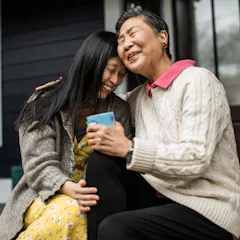
Americans 65 and older are living longer. The change toward longer old age in the U.S. will have profound effects on health care needs, families and what it means to be old.

Older adults are using social robots and apps, but what does it mean for issues of surveillance and privacy?
Top contributors
-

Associate professor, Queen's University, Ontario
-
Professor of Health Law and Bioethics, Case Western Reserve University
-
Professor of Practice in Strategy and Innovation, University of Pennsylvania
-
Professor of Economics, University of Michigan
-
Associate Dean and Chief Academic Officer for Nursing and Director, Project Healthy Grandparents, Byrdine F. Lewis College of Nursing and Health Professions, Georgia State University
-
Kenneth D. Lewis Distinguished Chair in Interdisciplinary Health Studies, Georgia State University
-
PhD student, Institute for Resources, Environment and Sustainability, University of British Columbia
-
Research Impact Officer, School of Nursing and Midwifery, Trinity College Dublin
-
Professor of Politics, Religion and Civil Society, University of Pennsylvania
-
Professor of Nonprofit Management, University of Pennsylvania
-
Assistant Professor of Public Policy, Cornell University
-
PhD Student in History, University of Cambridge
-
Associate Professor of Medicine and Geriatrics, University of Virginia
-
Assistant Research Scientist at the Survey Research Center, University of Michigan
-
Assistant Professor, Department of Information Science, Cornell University