
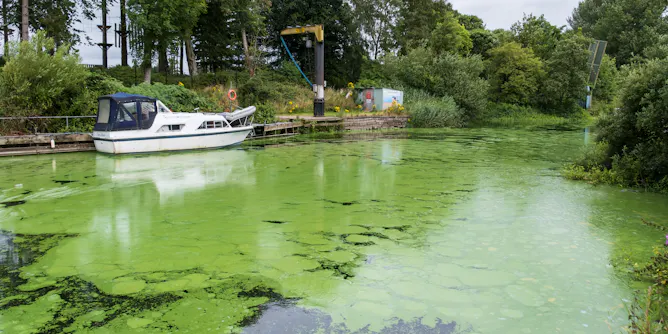
When sediment is stirred up, the effects ripple through the ecosystem.
Articles on Ecosystems
Displaying 21 - 40 of 319 articles
The Mediterranean is one of the world’s most vulnerable ecosystems. A scientific study on shifting distribution dynamics examines how its fish species contend with sea warming.

Many insects in Africa are likely to face dangerous levels of heat stress, with serious consequences for ecosystems.
We’ve committed to protect 30% of our lands and waters by 2030. But our endangered species are still struggling, according to four environmental scientists.
Invasive alien species don’t only drive out other native species, they also dramatically transform soils, water and ecosystems. A new assessment tool aims to pinpoint the negative environmental impacts.
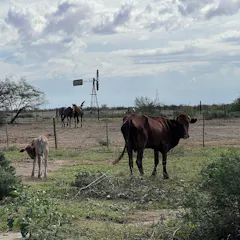
Mesquite tells a story about unintended consequences; but it also shows how careful, collaborative responses can lead to solutions for people and the environment.
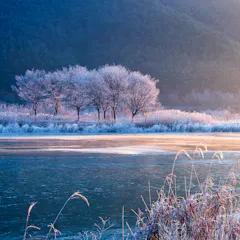
Over a three-decade experiment in the Rocky Mountains, fungi and plant life fundamentally changed. The result has consequences for cattle and wildlife.
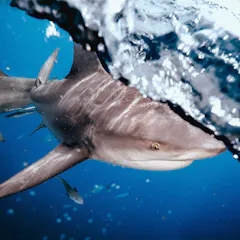
Recent shark attacks may be linked less to shark behaviour – and more to the pollutants, pesticides and parasites humans send into the ocean.
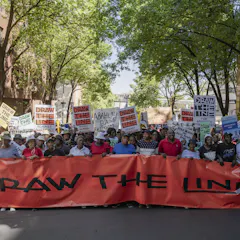
For the first time, countries now have a shared way to understand whether the world is actually improving at adapting to climate impacts.
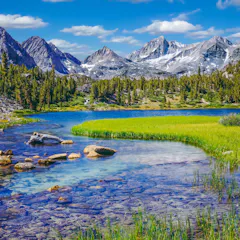
Protecting places that are likely to remain cool and moist as global temperatures rise can save wildlife of all kinds, but first we have to find them.
Decades of experimentation revealed slow ecological processes and long-term interactions that have international scientific value.
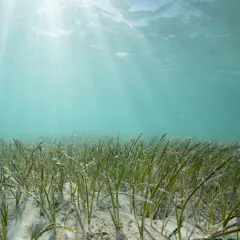
Scientists are using mollusk shells to evaluate the health of Florida’s seagrass ecosystems.
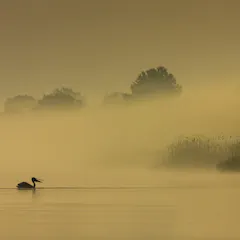
A massive rewilding project in Ukraine is proving helpful for the wellbeing of veterans as well as helping large natural areas recover.
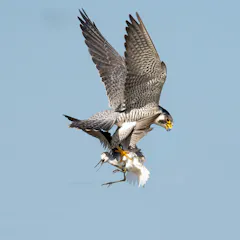
A study reveals that national parks and reserves often support more wildlife but not necessarily the ecological balance that sustains them.
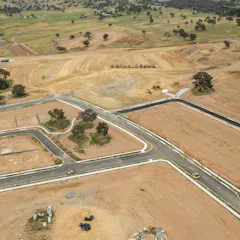
A healthy economy relies on healthy natural systems. But at the economic roundtable, this fact was all but absent.
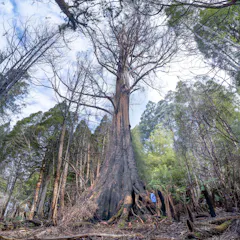
Research on Tasmania’s large old trees has given designers good reason to reflect on the many things about trees that humans don’t value enough. Here’s the top five.
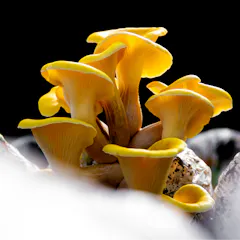
Kits that help people grow their own golden oyster mushrooms at home may be one reason this nonnative species is now spreading in the wild.
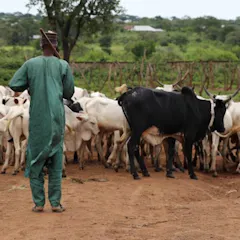
Blending livelihood strategies based on what works at different times in specific environments has been key to human survival for thousands of years.
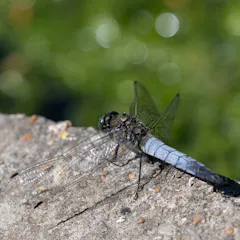
There’s a need for more surveys of macroinvertebrates in African countries.

Subsurface heatwaves are becoming more frequent, longer-lasting and more intense.
Top contributors
-

Professor in Wildlife Ecology and Conservation, School of Life & Environmental Sciences, Deakin University
-
Professor in Conservation Science, School of the Environment, The University of Queensland
-
Associate Professor, Global Ecology, University of Sydney
-
ARC Future Fellow, Queensland University of Technology
-
Honorary Research Fellow, University of Sydney
-
Professor in Ecology, Charles Sturt University
-
Professor, Obafemi Awolowo University
-
Research fellow, Charles Sturt University
-
Professor Emerita, Department of Biological Sciences, Macquarie University
-
Professor, Water and Landscape Dynamics, Fenner School of Environment & Society, Australian National University
-
Matthew Flinders Professor of Global Ecology and Node Leader in the ARC Centre of Excellence for Indigenous and Environmental Histories and Futures, Flinders University
-
Lecturer in Ecology, University of New England
-
Associate Professor in Ecology, Charles Sturt University
-
Ecologist and Researcher, Flinders University
-
Professor in Biodiversity and Conservation, The University of Queensland