
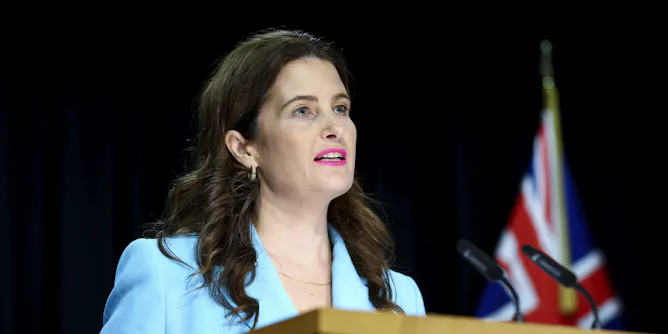
New Zealand has been in a ‘stagflationary spiral’ for years. Pulling out of that takes time, but signs of recovery are real.
Articles on Economic recovery
Displaying 1 - 20 of 54 articles
The US economy has always been a mix of government regulation and market forces. The balance between those has shifted over time, but never has one side or the other been substantively removed.

The market remains deeply uncertain about the future direction of China’s economic policies and what they might mean for the world. But we should still watch closely.

When southeast Chicago’s steel industry collapsed, the loss reverberated through neighborhoods built around the mills. Former mill workers explain why they stayed as the local economy fell.
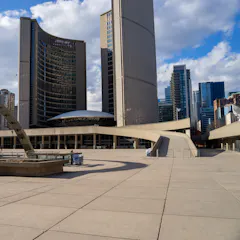
Public health measures during the COVID-19 pandemic precipitated a huge shift to online work, drastically affecting office space and business districts. However, data shows that this may be changing.
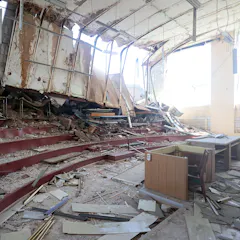
The war in Ukraine has led to the destruction of scientific infrastructure, caused many Ukrainian researchers to leave the country and disrupted the work of those who have stayed.
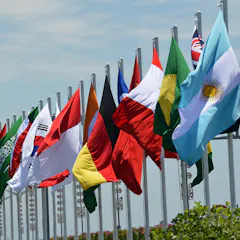
This year’s G20 faces more difficult challenges than ever before.
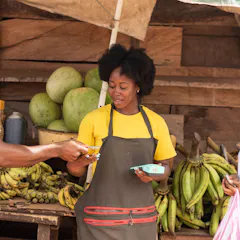
Nigeria’s 2023 budget could worsen the country’s cycle of deficits and debts.

A new report on the ongoing impact of the pandemic on social service providers in Victoria found jobs and labour force participation are far from fully recovered.
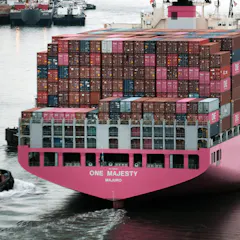
Job creation might well have slowed, but a deeper dive into employment data suggests the picture is actually pretty rosy.
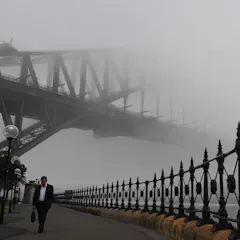
The last time Australia’s unemployment rate was below 5% was June 2011.
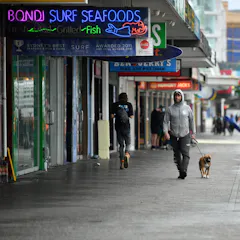
Our research shows the government must help tourism operators address chronic staff shortages, skyrocketing insurance and developing better plans for future shocks.

The Fair Work Commission has shown it can still provide important economic leadership.
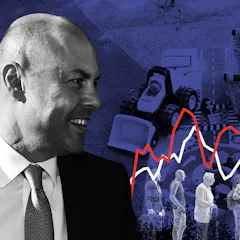
Short on time? Here’s everything you need to know about the 2021-2022 federal budget in 5 nifty charts and infographics.

There’s much more new spending on aged care than there is on infrastructure. That’s a change.
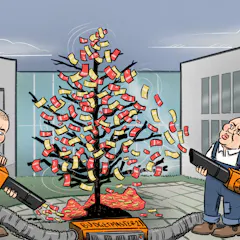
There are plenty of winners and few direct losers in a budget that lays the groundwork for the next election - still more likely to be next year than this.
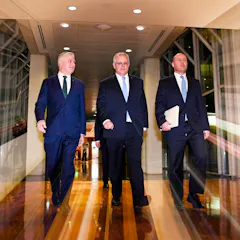
Looking graphically at actual and forecast GDP makes it clear why some speak of a ‘V-shaped recovery’. But even the fairly bullish assumptions reveal a recovery where the V isn’t really sharp enough.
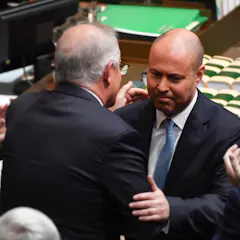
Never before has a budget done so much to supercharge the economy after the worst of a recession has passed.
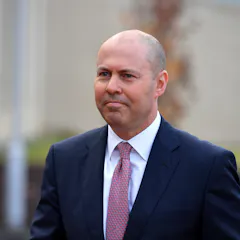
The Morrison government has brought down a big-spending, expansionary budget.
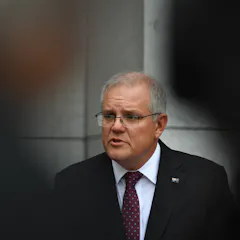
This year is a whole new ball game for pandemic politics. For a prime minister not accustomed to pressure, Scott Morrison is proving far less equipped.
Top contributors
-

Professor of Economics & Business, Allegheny College
-
Professorial Fellow, University of Canberra
-
Scientia Professor of Economics, UNSW
-
Professor of Economics and International Affairs, HEC Paris Business School
-
Professor of Law, University of Waikato
-
Professor in International Relations / International Political Economy, UNSW
-
Dosen Tetap Bidang Politik Pemerintahan dan Kebijakan Publik, Politeknik STIA LAN Jakarta
-
Visiting Fellow, Anglia Ruskin University
-
Professor of Political Communication; Director CAJ, The University of Melbourne
-
John Thwaites is a Friend of The Conversation.
Chair, Monash Sustainable Development Institute & ClimateWorks Australia, Monash University
-
Senior Economic Consultant, CSIRO
-
Associate Professor of Economics, University of South Carolina
-
Stephen JR Smith Chair of Accounting and Auditng, Professor of Business, Queen's University, Ontario
-
Chair in the Economics of Disasters and Climate Change, Te Herenga Waka — Victoria University of Wellington
-
Assistant Professor, Department of Political Science, McGill University