
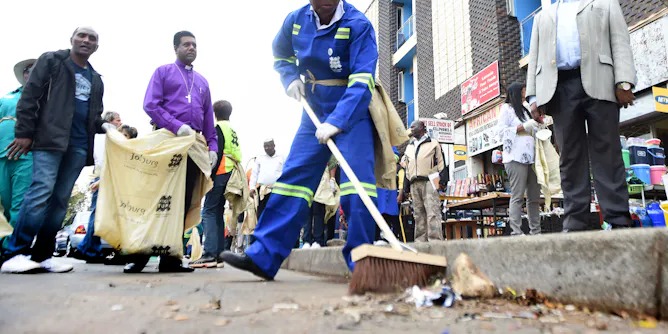
Are different ways of governing emerging from South Africa’s cities governed by opposition coalitions?
Articles on Economic Freedom Fighters
Displaying 41 - 60 of 62 articles
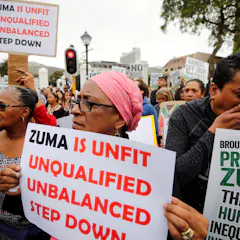
Are those ANC members critical of Zuma willing to stand up and be counted? Will Pravin Gordhan, popular hero of the hour, provide one further great service to the nation?
The planting of messages and countering narratives in the media is not new. It’s part and parcel of contemporary politics especially during elections. The internet simply makes an old problem worse.
It’s vital that the problems at the South African Broadcasting Corporation be fixed in the public interest and for democracy, given its wide media reach in the country.
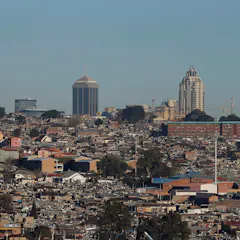
Populations revolt when lives are improving but not fast enough to meet their rising expectations.
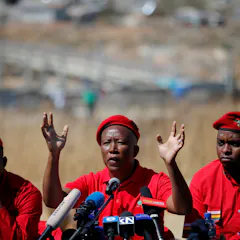
The EFF is sending a strong message to South Africans that it wants to be known as the only political home for radical change.
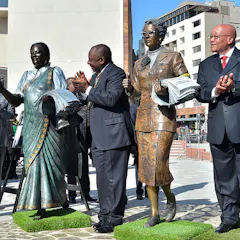
South Africa’s past tells us that, under certain conditions, women mobilise in ways that produce significant political results. But the country’s present shows how easily these gains can evaporate.
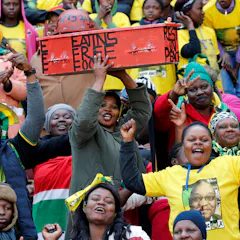
The ANC has faced an inexorable, gradual decline in support since 2004. There is no evidence that it has been able to reverse this trend.
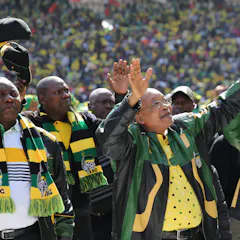
The ANC’s waning urban vote and growing support rural is not a political trend unique to South Africa. Many of Africa’s liberation-movements-cum-governing-parties now depend on rural support for political longevity.
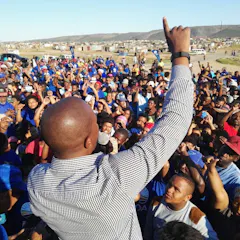
In previous elections speculation in South Africa focused on the likely size of the ruling ANC’s majority. This time the question on people’s minds is: will the ANC win or lose Nelson Mandela Bay?
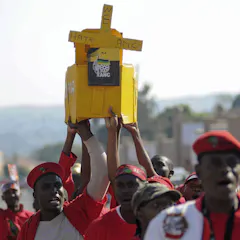
Unscrupulous politicians are adept at using regressive story lines that feed insecurities. That could be dangerous ahead of South Africa’s hotly-contested municipal elections.
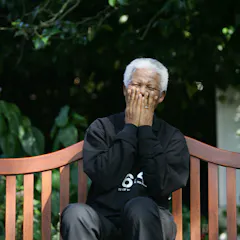
When celebrating Nelson Mandela Day, it would benefit South Africans to reflect on what the statesman’s legacy means for the nation and how they are living up to his dreams for the country.
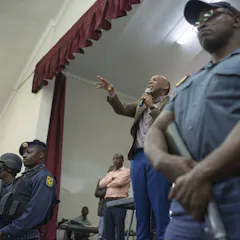
Some of the factors behind the riots by ANC supporters in Tshwane are not new. They include gripes within the governing party about its process for choosing mayors and divisions over Jacob Zuma.
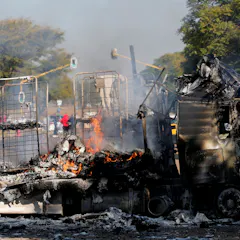
The increase in rioting ahead of municipal elections in South Africa, such as that in Pretoria, suggests that the country’s general election in 2019 could be more violent than previous elections.
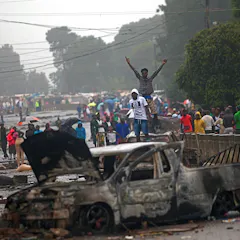
The brouhaha over South Africa’s upcoming high-stakes municipal elections hides critically important questions about the continued relevance of local government amid growing public disaffection.
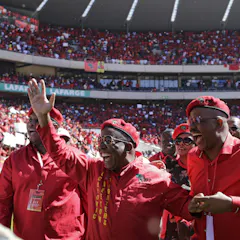
Understandable anger about the excessive inequality in South Africa lies at the heart of the rise of the radical Economic Freedom Fighters. The problem is how the party wants to address these issues.
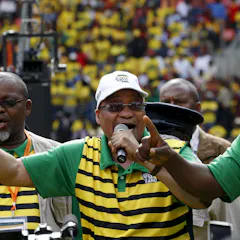
A key question ahead of local government elections in South Africa is whether the African National Congress will retain control of seven of the country’s eight metropolitan municipalities.
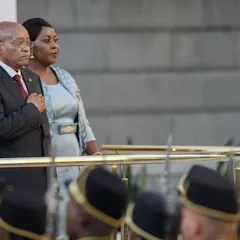
With South African local government elections coming up later in 2016, Jacob Zuma and his governing ANC must ensure that citizens still look to them as a party of hope.
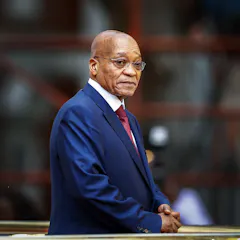
Jacob Zuma has backtracked on two major decisions in under two months – first after he fired his finance minister; now he says he’ll pay back public money spent on his lavish Nkandla homestead.

Since the 1940s, it’s been common for political moderates to move to the fore in South Africa – then, intermittently, to the background. They are replaced by radicals or exclusivist nationalists.
Top contributors
-

Professor of Sociology, University of the Witwatersrand
-
Political Scientist, University of the Western Cape
-
Chief Research Specialist in Democracy and Citizenship at the Human Science Research Council and a Research Fellow Centre for African Studies, University of the Free State
-
Professor in Political Science, University of South Africa
-
Professor of Political Studies, University of Johannesburg
-
Lecturer, Nelson Mandela University
-
Professor of Public Affairs, Tshwane University of Technology
-
Visiting Professor and Professor Emeritus, University of the Witwatersrand
-
Associate Professor in Political Science, Stellenbosch University
-
Professor of Political Science and Chair of the South African Research Initiative in Gender Politics, Stellenbosch University
-
Senior Lecturer, Edge Hill University
-
Professor and Head of Department of Political and Conflict Studies, Nelson Mandela University
-
Associate Professor, UCT School of Economics; South African Reserve Bank Research Chair in Financial Stability Studies, University of Cape Town
-
Research Director: Developmental, Capable and Ethical State (DCES) research division, and Coordinator of the South African Social Attitudes Survey (SASAS), Human Sciences Research Council
-
Director: Dullah Omar Institute, University of the Western Cape