

Julius Malema’s skills at building a party and running a tight ship have been bolstered by his charisma and speech-making capability.
Articles on Economic Freedom Fighters
Displaying 1 - 20 of 62 articles
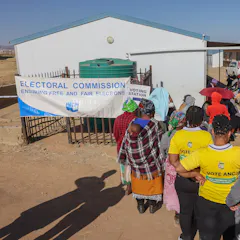
South Africa’s 2024 election was characterised by a shift in power and new threats to democracy – despite the majority still opting for the political centre.
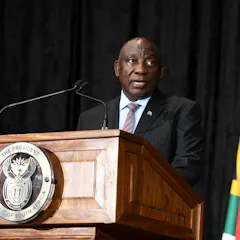
The ANC leads the unity government. If it leads South Africa back to happier times, that is most likely to benefit the ANC, rather than the DA.
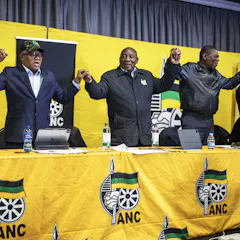
Political parties must show ideological flexibility to foster stability and drive South Africa towards prosperity through creative policy solutions.
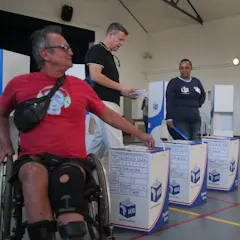
Racial identities continue to shape voter behaviour in post-apartheid South Africa.
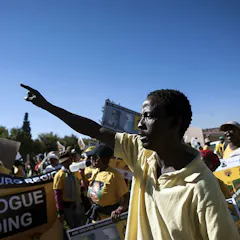
Solutions driven by the private sector are only for those who can pay, and also end up driving public priorities.
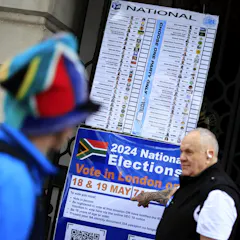
The growing loss of support for the governing ANC raises the possibility of South Africa having its first national coalition government since 1994.
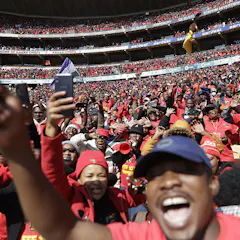
Opinions differ widely about the true character of the EFF and what it really stands for since it gained seats in parliament in 2014.
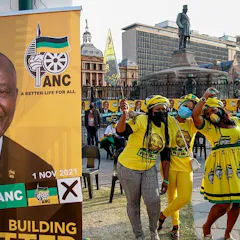
Dissatisfied ANC voters were much more likely to switch their votes if they held positive views of an opposition party. However, the problem for the opposition is that few people held these views.
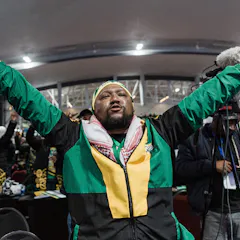
Despite its vagueness, the RET has become central to the contemporary ANC. It is destined to remain a powerful bloc within the party, and a constant constraint on Ramaphosa leadership.
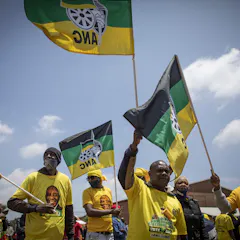
Any ruling party in South Africa has found it hard to maintain internal coherence and unity over an extended time span amid wide national diversity.
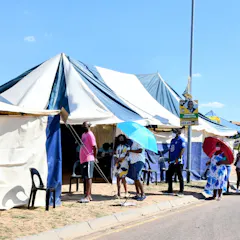
The election results raise the real possibility that the ANC could be looking at another defeat in the 2024 general elections.

Turnout was low. But not equally so across the board. Patterns show it was not a statement by all voters – it was a message from ANC supporters.
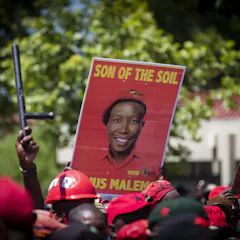
The 2021 election will define for citizens important aspects of South Africa’s political future. What is the governing ANC’s future, and what was the impact of President Ramaphosa on this election?
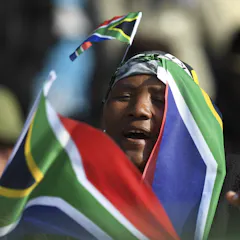
The rise in political parties and the explosion in the number of independents means that it’s no longer simply a race among the three major parties.
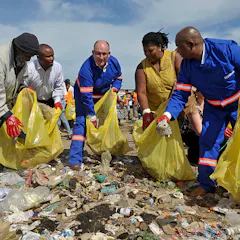
South Africa’s political parties would do well to learn from Ireland, where the three largest political parties negotiated a coalition treaty that stipulated mechanisms for conflict resolution.
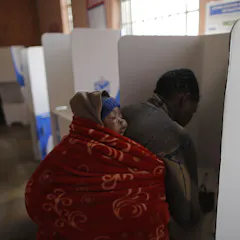
Local government elections in South Africa have traditionally been characterised by low voter turnout.

The stalemate in Tshwane is a manifestation of coalition arrangements that serve the partisan interests of parties, to the detriment of citizens.
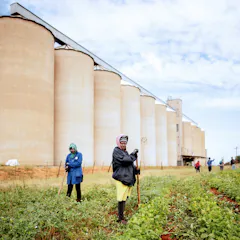
The proposed amendment to the constitution represents a critical juncture in South African constitutional politics.
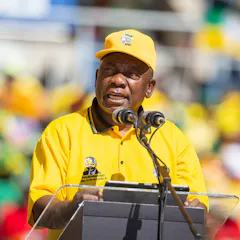
Coalitions work best when parties in the partnership are aligned politically.
Top contributors
-

Professor of Sociology, University of the Witwatersrand
-
Political Scientist, University of the Western Cape
-
Chief Research Specialist in Democracy and Citizenship at the Human Science Research Council and a Research Fellow Centre for African Studies, University of the Free State
-
Professor in Political Science, University of South Africa
-
Professor of Political Studies, University of Johannesburg
-
Lecturer, Nelson Mandela University
-
Professor of Public Affairs, Tshwane University of Technology
-
Visiting Professor and Professor Emeritus, University of the Witwatersrand
-
Associate Professor in Political Science, Stellenbosch University
-
Professor of Political Science and Chair of the South African Research Initiative in Gender Politics, Stellenbosch University
-
Senior Lecturer, Edge Hill University
-
Professor and Head of Department of Political and Conflict Studies, Nelson Mandela University
-
Associate Professor, UCT School of Economics; South African Reserve Bank Research Chair in Financial Stability Studies, University of Cape Town
-
Research Director: Developmental, Capable and Ethical State (DCES) research division, and Coordinator of the South African Social Attitudes Survey (SASAS), Human Sciences Research Council
-
Director: Dullah Omar Institute, University of the Western Cape