
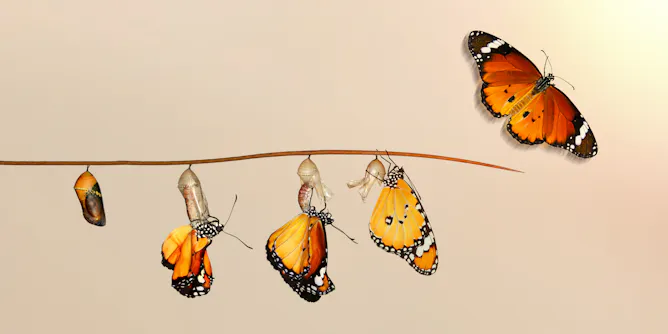
There is more to evolution than the genes species inherit.
Articles on Ecology
Displaying 201 - 220 of 538 articles
Everyone is feeling the heat these days – even species that develop underground.
Invertebrates are the most abundant animals on our planet – and the vast majority are nothing to be afraid of, despite their appearances.

In this week’s episode of The Conversation Weekly, we speak with three scientists who study the ways plants and animals evolve in a world dominated by humans.
Journals, museum collections and other historical sources can provide valuable data for modern ecological studies. But just because a source is old doesn’t make it useful.

Wildfires are remaking western US forests. Decisions about managing forests that have burned should factor in how fires change animal behavior and interactions between predators and prey.

Published in 1962, ‘Silent Spring’ called attention to collateral damage from widespread use of synthetic pesticides. Many problems the book anticipated persist today in new forms.
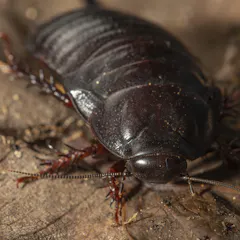
A small congregation of the cockroaches was under the first rock scientists looked under, by sheer accident.

Broken Spectre, an immersive, 74-minute-long moving image work, is having its world premiere at the NGV.

The US Supreme Court opens its 2022-2023 term with a case that could greatly reduce federal protection for wetlands. Here is what makes these ecosystems valuable.
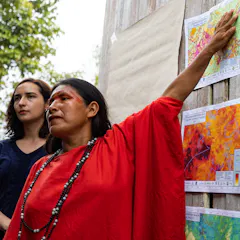
Illegal roads have brought deforestation, fire and other environmental damage to the Amazon. The results of the 2022 presidential runoff could have a major impact for the future.

Farmers who use little or no fertiliser can use ecological practices to increase their yields.
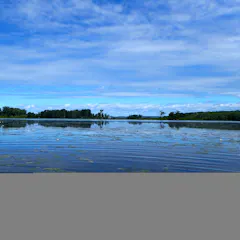
Wetlands can help limit the spread of the voracious round goby, an invasive species that has infiltrated the Great Lakes and has become widespread in the St. Lawrence River.

Rising concern about possible environmental damage from the active ingredients in sunscreens could have ripple effects on public health if it causes people to use less of them.
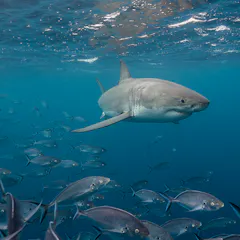
A species that is an “apex” predator in one environment won’t necessarily remain so in another.
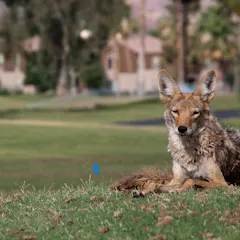
Urban coyotes prey on rodents and spread plant seeds. It’s OK to observe them from a distance, but then you should chase them off.
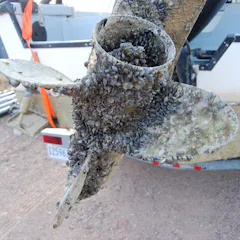
Zebra and quagga mussels entered the Great Lakes in large ships’ ballast water. Now, local boaters and anglers are spreading them into the southern and western US.

Flame retardants are added to consumer products — and end up in the environment and harming aquatic wildlife.
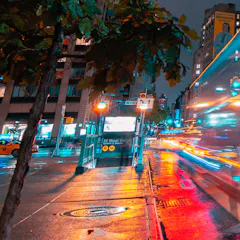
Artificial light is upending trees’ ability to use the natural day-night cycle as a signal of seasonal change.

Once hated, native predators are now credited with limiting invasive prey populations.
Top contributors
-

Matthew Flinders Professor of Global Ecology and Node Leader in the ARC Centre of Excellence for Indigenous and Environmental Histories and Futures, Flinders University
-
Professor of Conservation Biology, School of Life and Environmental Sciences, University of Sydney
-
Associate Professor in Entomology, University of Sydney
-
Professor in Wildlife Ecology and Conservation, School of Life & Environmental Sciences, Deakin University
-
Lecturer in the School of Applied Sciences, Edinburgh Napier University
-
Professor in Ecology, Charles Sturt University
-
Senior Research Scientist of Ecology and Evolutionary Biology, University of Connecticut
-
Associate Professor, Ecology, Northumbria University, Newcastle
-
Professor of Biology, Boston University
-
Associate Professor of Wildlife Ecology, University of Florida
-
Assistant Professor of Ecology and Evolutionary Biology, University of Connecticut
-
Professor of Sustainability, Azim Premji University
-
Emeritus Professor of Ecology, University of Salford
-
Professor of Pyrogeography and Fire Science, University of Tasmania
-
Postdoctoral Researcher in Mycology, West Virginia University