

In the digital age, libraries got creative about how to translate services they’ve always offered into new formats. And they’ve transformed their spaces to have a variety of community uses.
Articles on eBooks
Displaying 21 - 40 of 60 articles
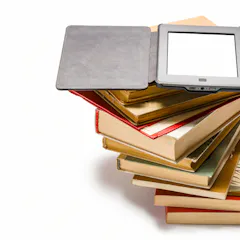
Criticism of ebooks is the last thing you’d expect from the chief executive of global publishing company Hachette Livre.
Few of them are getting rich off their books but the genre is making them more money than it used to.

To counter the unbalanced effects of the digital age, reading literature is the key.
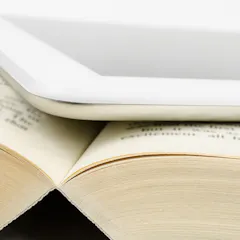
Digital textbooks might be less cumbersome. But a new series of studies finds that reading from screens can hamper our ability to process and retain information.

Despite dire predictions, bookstores are doing well: they are curators of taste and community hubs. But their challenges are many – from the arrival of Amazon Down Under to a ‘post-truth’ climate that devalues knowledge.

Reports of the decline of the eBook are premature. The publishing industry is changing rapidly and data that appears robust tells us less than it once did.
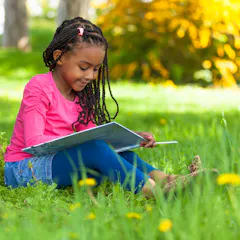
Research shows that providing children with eReading devices can actually inhibit their reading.
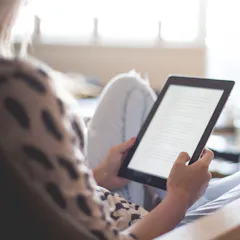
When you borrow a paper book from a library, authors get a small royalty, which is their second most important source of income. Yet if you borrowed an e-book tomorrow, the author would get nothing.
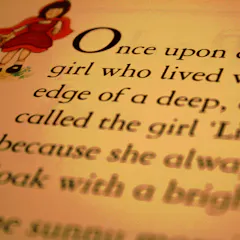
Bedtime stories can be comforting, chilling and mysterious, but new research highlights how emotions change depending on how children are doing it.
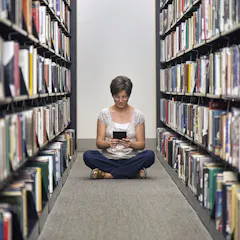
E-book sales are falling, even though many said they would “kill” print books. Computers and television were also supposed to spell the book’s demise. At one point, people even feared the phonograph.

The #bookstagram hashtag on Instagram is changing the way the world looks at reading.
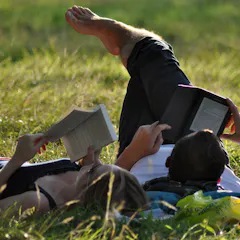
With the surge in e-books and digital devices, one concern has been whether students are learning as much. Research shows that some crucial elements of learning are indeed being lost.
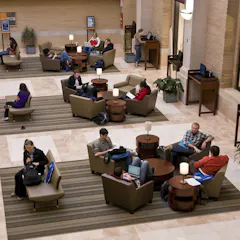
The popularity of libraries has not diminished. Numbers show more people are going to libraries than ever before. Here’s why.
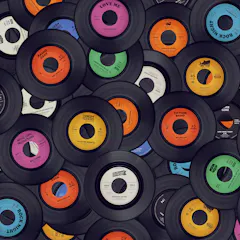
While technological advances have rendered some products obsolete, they’ve also spurred the growth of niche markets that cater to people looking to reject mass-produced goods.
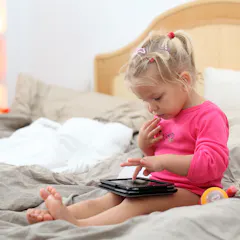
A new study shows how concerned parents of young children are about e-books.
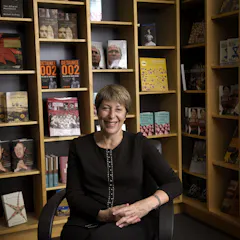
The Book Council of Australia began to take shape last week when MUP director Louise Adler was announced as its chair. But what is its purpose, and how will it embrace the industry’s new voices?
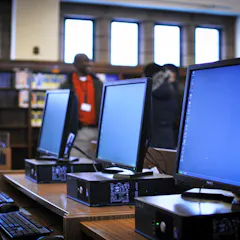
Traditionally, libraries provided a quiet space to read. Today’s libraries are taking on new roles and helping young people gain 21st-century skills.
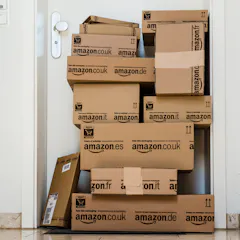
The company is hardly the evil megalomaniac that many have depicted: it’s actually been very good for the book industry.

For the first time, teachers have voted for the best ebooks to use in school.
Top contributors
-

Lecturer, School of Design, University of Technology Sydney
-
Professor of Reading and Children’s Development, The Open University
-
Professor of Print and Digital Cultures, Cardiff University
-
Reader in Marketing, Cardiff University
-
Professor Emerita of Linguistics, American University
-
Associate Professor, University of Southern Denmark
-
Assistant researcher, Cardiff University
-
Professor of Creative Writing and Digital Media, Bath Spa University
-
Independent Researcher, Tampere University
-
Emeritus Professor of English and New Media, Bournemouth University
-
Assistant Clinical Professor of Human Development, University of Maryland
-
Professor in Politics and Journalism, University of Notre Dame Australia
-
Research Fellow, The University of Melbourne
-
RFIEA Fellows 2017-2018, IEA Paris, Researcher in Literary theory, University of Verona
-
Professor of Psychology, University of Maryland