
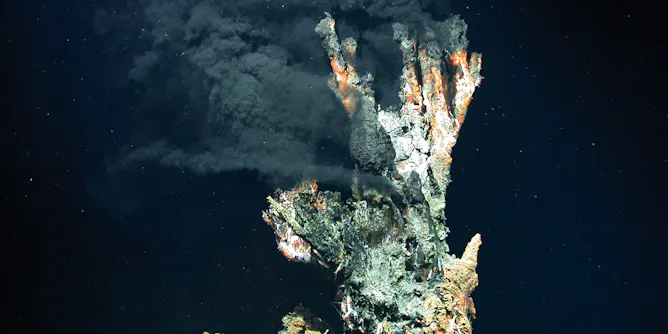
Researchers have discovered that chemical reactions in underwater hydrothermal vents could have produced the necessary ingredients for life on Earth.
Articles on Early Earth
Displaying all articles
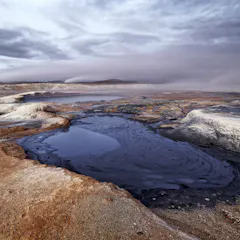
The very early Earth may not have been as inhospitable as scientists thought, with life perhaps starting more than 4 billion years ago.
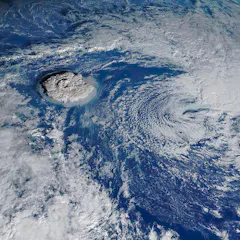
New research comparing the geology of southern Africa with the deep seafloor near New Zealand challenges conventional views of how the planet behaved when it was very young.

Fossil evidence of how the earliest life on Earth came to be is hard to come by. But scientists have come up with a few theories based on the microbes, viruses and prions existing today.
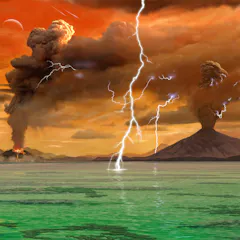
Could tectonic processes in the early Earth have contributed to the rise of oxygen?
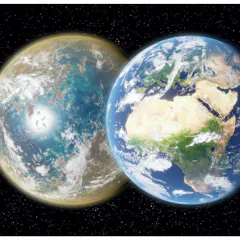
Life doesn’t just need water and oxygen to thrive, it also needs iron.
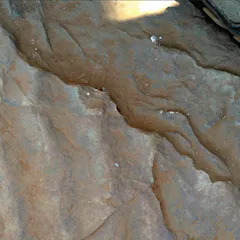
Dating of rocks that once formed some of the world’s first beaches suggests the first large continents grew large enough to rise above sea level roughly 3 billion or so years ago.
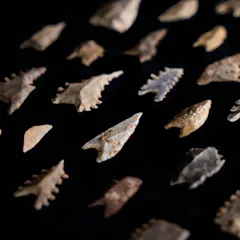
The first ancient human DNA from the Indonesian island of Sulawesi — and the wider Wallacea islands group — sheds light on the early human history of the region.
Evidence from the Pilbara region suggests Earth in its youth behaved very differently to how it does today, and had more water within it than previously thought.
Top contributors
-

Principal Scientist, GNS Science
-
Junior Professor, University of Tübingen
-
Professor, University of Michigan
-
Associate Professor in Geophysics, Te Herenga Waka — Victoria University of Wellington
-
Postdoctoral research fellow, Monash University
-
Professor of Archaeology, Griffith University
-
Professor, Geology, Curtin University
-
Research Associate, The University of Queensland
-
PhD Candidate, Archaeology, Griffith University
-
Arthur F. Thurnau Professor of Earth & Environmental Sciences, University of Michigan
-
Professor of Iron Biology, University of Oxford
-
Associate Professor, Monash University
-
Associate Professor of Planetary Materials, University of Oxford
-
Professor of Geochronology, Curtin University
-
Adjunct Research Fellow, Curtin University