

We use euphemisms about death and dying to soften the blow of the real words, or because we feel awkward being direct. But this can lead to misunderstanding and confusion.
Articles on Dying
Displaying 61 - 78 of 78 articles

Thankfully, defleshing bones has fallen out of fashion.

From the basics of corpse disposal to why your wishes don’t actually count.
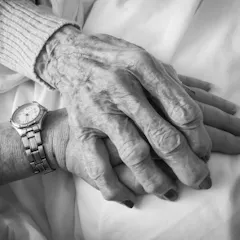
Palliative care should be a time of shared care; when the doctor continues treating their patient’s disease while symptom control and preparation for death track alongside.
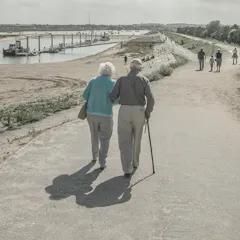
Research shows people who suffer from loss of meaning die earlier than those who maintain purpose. We can help people find meaning again by nurturing their “spirit”.

If presented with a client who has death anxiety, we ask them to tell us what exactly they fear about death. Once we have this information, there are several approaches to treating fear of death.

Let’s consider some of the oft-voiced concerns and whether they’re justified.

Rock and roll is getting old. And with this ageing, we are increasingly seeing different types of death claiming our idols.
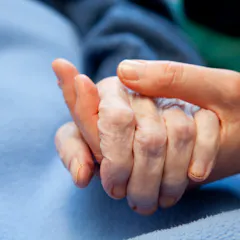
The UK’s palliative care is excellent - but that hasn’t prevented scandals like the Liverpool Care Pathway and Mid-staffs.
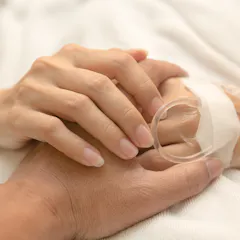
Most people in western societies die in hospital or in institutional care. Keeping death out of sight and out of mind means few people have real experience of death and dying.
We all die eventually, of course, but these days it’s very hard for doctors and loved ones to let patients and relatives die without doing “whatever it takes”.
For most of us, death conjures up strong feelings. We project all kinds of fears onto it. We worry about it, dismiss it, laugh it off, push it aside or don’t think about it at all. Until we have to. Of…
The diagnosis of a palliative illness in a child or adolescent is devastating for all involved: parents, family members and the children themselves, as they grieve for life they had planned and believed…

More than half of Australians have a will (59%) to determine how their property will be divided after they die. And 30% have appointed a power of attorney to make financial decisions if they lose the capacity…
Have you thought about how you would want to be treated if you cannot make your own decisions? You may be unconscious after car accident, you may be so ill you cannot communicate, or you may be dying and…
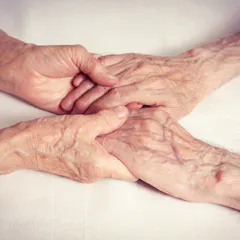
The baby boomers are growing old and in the next 25 years the number of Australians who die each year will double. People want to die comfortably at home, supported by family and friends and effective…
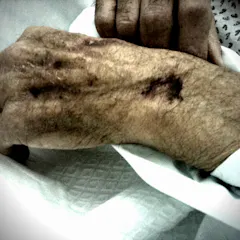
Allowing people with incurable and unsupportable illness to die is ethically acceptable to most people, even though it’s unlikely there will ever be unanimity about when and how we allow such deaths. But…
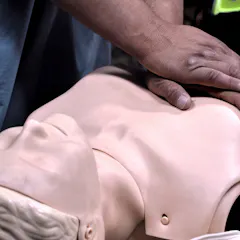
Not content with saving lives, doctors are now credited with (accused of?) bringing the dead back to life. But how true are the stories we hear about people “coming back” from being dead and how does it…
Top contributors
-

Distinguished Professor, Professor of End-of-Life Law and Regulation, Australian Centre for Health Law Research, Queensland University of Technology
-
Professor of Law, Australian Centre for Health Law Research, Queensland University of Technology
-
Professor of Law, Wake Forest University
-
Associate Professor of Medicine, Deakin University
-
Professor Emeritus of Death Studies, University of Bath
-
Senior Specialist in Intensive Care and Head of Clinical Unit in Ethics and Health Law, University of Newcastle
-
Professor of Sociology & Director, Sydney Centre for Healthy Societies, University of Sydney
-
Research Fellow, Australian Centre for Health Law Research, Queensland University of Technology
-
Professor of Medical Anthropology, The Open University
-
Professor of Medicine, Monash University
-
Palliative Care Physician, Barwon Health
-
Emeritus professor, Flinders University
-
Senior Lecturer, Criminology, University of York
-
Research Fellow, Flinders University
-
Honorary Enterprise Professor, School of Population and Global Health, and Department of General Practice and Primary Care, The University of Melbourne