
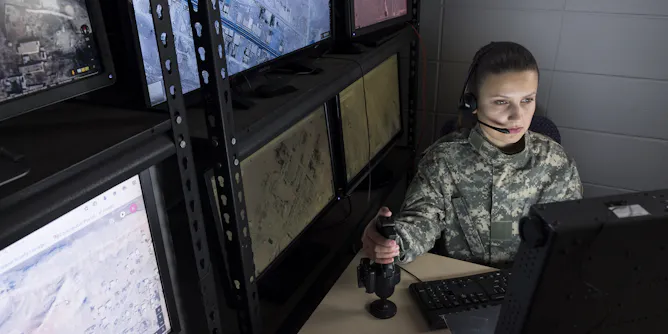
Drones are not the ethical, precise weapons they’re made out to be.
Articles on Drones
Displaying 161 - 180 of 370 articles
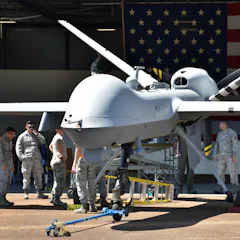
The first modern, lethal drone strike took place one month after 9/11. Twenty years later, our view of warfare and military personnel has completely changed.
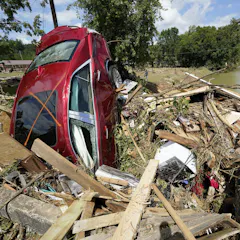
By mimicking the human brain, autonomous drones could locate victims in hard-to-reach places and alert responders to their location within seconds.

Like atomic bombs and chemical and biological weapons, deadly drones that make their own decisions must be tightly controlled by an international treaty.

A new study highlights disparities and proposes research priorities for advancing the use of small aerial drones in disaster management.
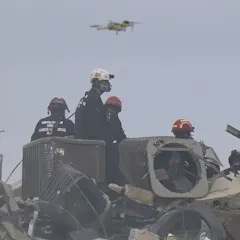
At building collapse sites, aerial drones and ground robots can extend the eyes and ears of search and rescue personnel to places people can’t go – above and inside the rubble pile.
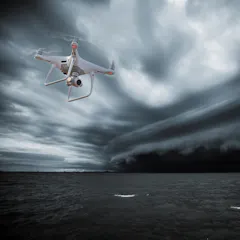
New research uncovers the impact of weather on the safe operation of common commercial drones.

Glacial lakes around the world are expected to flood downstream areas more often as climate change makes them less stable.
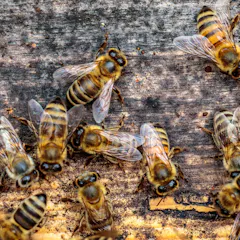
Bees mate in mid-air, where it’s almost impossible to observe them.
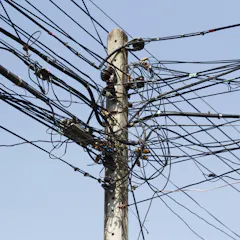
When policymakers reduce electricity scarcity to a few factors like theft and vandalism, to be solved with technology and stiff penalties, they miss other factors that contribute to electricity theft.

We used drones to track the way terns forage around offshore energy structures.
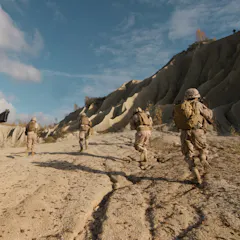
Military lawyers told me how they must make split-second decisions that weigh military variables against real human lives.

From his positions at the United Nations, Professor Heyns made a huge impact on the protection of the right to life and the right of peaceful assembly.
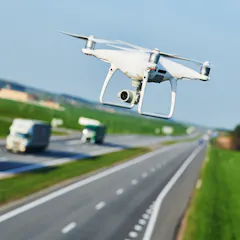
We’ve devised a way to factor in noise annoyance levels in drone design.

As African economies recover from the COVID-19 pandemic, governments should explore technologies like global positioning systems and blockchain for use in the registration of land rights.
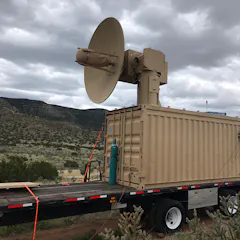
High-power microwave weapons are useful for disabling electronics. A new report says they ‘plausibly explain’ some ailments suffered by US diplomats and CIA agents in Cuba, China and other countries.
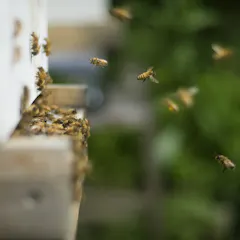
New research suggests individual bees are born with one of two learning styles – either curious or focused. Their genetic tendency has implications for how the hive works together.
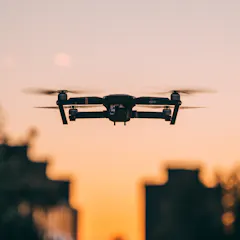
They began as wartime technology, but now drones are changing the way we witness the world, especially when we can’t see it for ourselves.
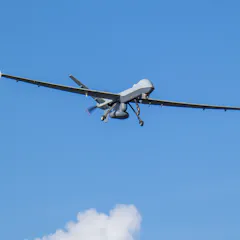
Avoiding drones’ prying eyes can be as complicated as donning a high-tech hoodie and as simple as ducking under a tree.

The COVID-19 crisis highlights the importance of supply chains. But even with the increased recent attention, most supply chains remain murky. Consumers can play a key role in lifting that cloud.
Top contributors
-

Professor of International Security, University of Birmingham
-
Professor of Applied Ethics and Director, Security and Risk Research, University of Portsmouth
-
Associate Professor in Human Geography, University of Reading
-
Senior Lecturer in Design (People, Places, Products), Lancaster University
-
Professor of International Politics in the Department of Political Science and International Studies, University of Birmingham
-
Professor in Robotics, Queensland University of Technology
-
PhD Candidate, Department of War Studies, King's College London
-
Professor, National University of Singapore
-
Visiting Fellow, Strategic Studies, Griffith University
-
Associate Professor (Adj), Griffith Asia Institute; and Fellow, Strategic and Defence Studies Centre, Australian National University
-
Associate Professor of Media, UNSW
-
Professor of Computer Science and Engineering, Texas A&M University
-
Chair in Science Communication & Future Media, University of Salford
-
Ecologist, Adelaide University
-
PhD Candidate in the School of International Relations, University of St Andrews