

Feeling desperate for a hug? You’re not alone. Research suggests positive physical touch benefits our mental health.
Articles on Dopamine
Displaying 41 - 60 of 76 articles

Dopamine fasting has fast become a fad in the Silicon Valley, as a way to reset the brain’s feel-good chemical. Many religions have advocated fasting for some of the same reasons.

Ozzy Osbourne, famous for biting heads off bats, heavy metal music and a reality TV show, announced he has Parkinson’s disease. A Parkinson’s specialist explains the disease and recent advances.
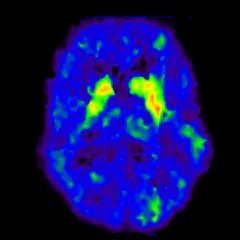
There are more efficient ways to stop addictions than fasting from rewards.

We fall sway to fake news because it grabs our attention through outlandish claims, suggests false memories and contains appeals to our emotions that align with our politics.

Sugar triggers dopamine “hits” in the brain, making us crave more of it. Sugar also disrupts memory formation.

About one in six people who take the most common medication for Parkinson’s disease will develop addictive behaviours. We found whether this happens depends on a person’s unique brain structure.

Parkinson’s disease is twice as common in men than in women. A sex gene called SRY, found only in men, could go some way to explaining this – and might pave the way for potential treatments.

New study challenges traditional view of Parkinson’s disease.

Decades of work with lab rats lead to suggestions on how to stay grounded in the here and now, with benefits for brain health.

Research shows that THC and CBD in cannabis have potential to interrupt the vicious cycle of opioid addiction, dependence, withdrawal and relapse.

Some women get the blues when they breastfeed. Researchers believe the causes might be physiological, not psychological.

When you engage in recreational gambling, you’re not simply playing against the odds – you’re battling an enemy trained in the art of deceit and subterfuge who uses human nature against you.

University course designers are harnessing the addictive quality of video games to develop ‘Serious educational games’ that engage and motivate students.

Why do some people love roller coasters while others hate them?

Unravelling the story of how a simple neurotransmitter led to the development of a drug for Parkinson’s disease.
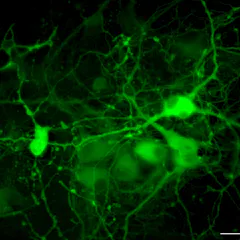
While drugs have been developed to treat HIV and AIDS, the virus can still lie dormant in the brain, increasing the risk for brain disease such as Parkinson’s and Alzheimer’s diseases.

Though the World Health Organization has declared “gaming disorder” an addiction, its – and others’ – concerns about technology use and alleged addiction don’t hold up to scholarly scrutiny.

Our society and culture play a big part in what our brain sees as rewarding.

Scientists are just starting to understand how your parents’ genes and experiences might shape your own susceptibility to dangerous drugs. Could that help to stop addictions before they start?
Top contributors
-

Clinical Psychologist, Lecturer and Research Supervisor, Graduate School of Health, University of Technology Sydney
-
Senior Lecturer in Neurosciences and Neurorehabilitation, Course Leader in the College of Health and Life Sciences, London South Bank University
-
Assistant Professor of Psychology, Concordia University
-
Professor of Neuroscience, University of Florida
-
Professor of Clinical Neuropsychology, University of Cambridge
-
Associate Professor of Health and Wellness Studies, Binghamton University, State University of New York
-
Senior Lecturer (Adjunct), Nutritional neuroscientist, Adelaide University
-
Postdoctoral Research Associate, Cognitive Neuroscience, University of Cambridge
-
Associate Professor in Education & Technology, University of KwaZulu-Natal
-
Professor of Neurology, Norman Fixel Institute, University of Florida
-
Lead, Cognition and Consciousness Imaging Group, Division of Anaesthesia, University of Cambridge
-
Lecturer in Psychology and Neuroscience, University of St Andrews
-
Contract Lecturer in Digital Media, Toronto Metropolitan University
-
PhD Candidate Nutrition and Dietetics, University of Newcastle
-
Postdoctoral Researcher in Neuroscience, University of Sussex