

A home, a springboard, or a safety net? New research finds a surprisingly large number of Australians have lived in social housing since 2000, using it in several very different ways.
Articles on Domestic violence
Displaying 281 - 300 of 586 articles

An expert in domestic violence and abuse explains how you can help those you are worried about.
Psychological abuse and controlling behaviours can be apparent before perpetrators murder their partners. So let’s take these coercive behaviours more seriously and make them a crime.

The ability to prosecute alleged domestic abuse cases without the support of the victim is vital.
Research shows familicides are almost exclusively committed by men and key risk factors include a desire for control, particularly in areas associated with masculinity.
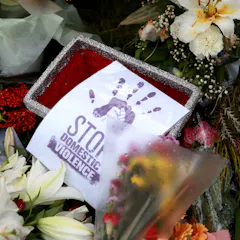
The Australian government has committed funding to men’s behaviour change programs in the wake of the murder of Hannah Clarke and her children – but what are they and do they work?

Women who lived in more deprived neighbourhoods during the first 18 years of their lives were nearly 40% more likely to experience partner violence in early adulthood.
The state of emergency ultimately led to substantial legal changes that should better protect women and girls. But what really happened?

While popular portrayals of hairdressers and beauticians present them as “bimbos”, salons can also provide a refuge for clients to share painful realities.

Evangelical Christian churches say a man’s authority is in God’s plan.

The media presents female victims as culpable for their own brutalisation. For Grace Millane, this meant her sexual preferences were more important than the horror of her death
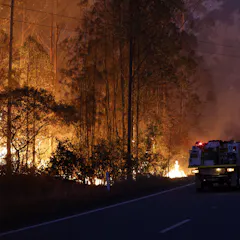
Natural disasters amplify the conditions leading to domestic violence. Yet Australia’s disaster policies are “gender blind”.

The consequences of the parental alienation theory can lead to children getting a court order to visit or live with an abusive parent.
For every 100 men, up to 25 have raped or pressured a woman into sex.

Research shows that abuse, violence and poor relationships in families may have dire consequences for society, and specifically children.
Women and children remain vulnerable to harm even after intimate violence has occurred. Coordinating a community’s response can help avoid educational, employment, social, housing and legal problems.

There have already been two recent inquires into family court, but none of their recommendations have been rolled out.

The region has made progress but efforts must continue to end a harmful practice rooted in poverty and tradition.

While it’s important to protect vulnerable children from exposure to further harm, it’s also important to give them a voice to speak about their own trauma from domestic violence.

Indigenous children are admitted to out-of-home care at 11 times the rate for non-Indigenous children. The lack of safe housing for mothers fleeing family violence is a key factor.
Top contributors
-

Professor (Practice), Faculty of Business and Economics, Monash University
-
Professorial Fellow, University of Canberra
-
Professor of Family and Sexual Violence, RMIT University
-
Professor of Social Work; Leneen Forde Chair in Child & Family Research, Griffith University
-
Professor of Law and Deputy Director of the Centre of Excellence for the Elimination of Violence Against Women (CEVAW), The University of Melbourne
-
Eleanor Rathbone Chair of Sociology, University of Liverpool
-
Associate Professor in Criminal Justice and Criminology, Bond University
-
Director of Monash Indigenous Studies Centre, Chief Investigator for the Australian Research Council Centre of Excellence for the Elimination of Violence against Women (CEVAW), School of Philosophical, Historical & International Studies, School of Social Sciences (SOSS), Monash University
-
Managing Director, Her Story Consulting & Postdoctoral fellow, Australian National University
-
ARC Future Fellow and Professor of Criminology, The University of Melbourne
-
Associate Professor of Social Work, The University of Melbourne
-
Professor of Family Violence Prevention, The University of Melbourne
-
Principal Research Fellow, Griffith University
-
Dean, School of Law, Deakin University
-
Professor of Sociology, School of Justice, Queensland University of Technology