
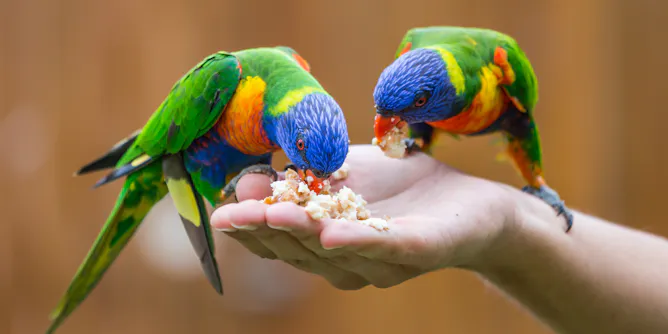
This seemingly harmless hobby could accelerate the spread of the deadly H5N1 strain.
Articles on Disease transmission
Displaying 1 - 20 of 28 articles

Tsetse flies move between a broad range of animals. They connect wildlife, livestock and humans in complex transmission networks.
Air purifiers were meant to save us from COVID. A new systematic review wonders where the evidence for that is.

Quaternary ammonium compounds, also known as QACs or quats, are commonly used antimicrobials also found in many household products. Soap and water may be a safer bet when cleaning surfaces.
Recent research suggests rats may not have played the critical role in keeping plague going in Europe.
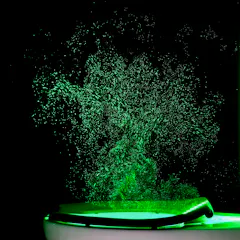
Toilets eject aerosol droplets that may carry disease-causing pathogens. Learning about how these particles move could help reduce exposure in public restrooms.
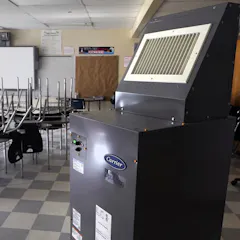
A lot of federal money is now available for making school buildings healthier. Two environmental health experts explain how school districts can best use it.

Scientists exploring the possibility of an animal origin for Covid-19 are still investigating the missing link between bats and human beings.

After a nose swab tests positive for a virus or bacteria, scientists can use the sample’s genetic sequence to figure out where and when the pathogen emerged and how fast it’s changing.
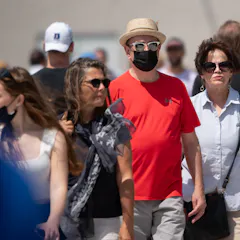
The COVID-19 vaccines are a smash success. But that doesn’t mean they keep every vaccinated person completely free of the coronavirus.
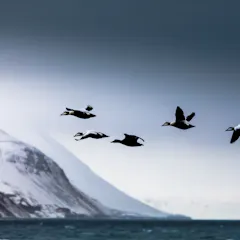
We can learn about the spread of diseases through populations by studying naturally occurring instances of herd immunity. Avian cholera in the Canadian Arctic provides a useful case study.

Nebulisers deliver life-saving medications yet they increase the risk of spreading COVID-19 in hotel quarantine.
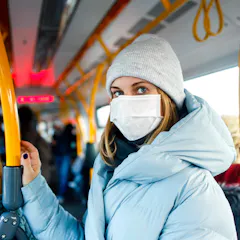
Winter weather forces us to congregate inside but evidence suggests cold, dry air also helps spread respiratory viruses.

As the coronavirus pandemic continues, and the colder weather approaches, new mathematical models are needed to study changing social behaviours and indoor spaces.
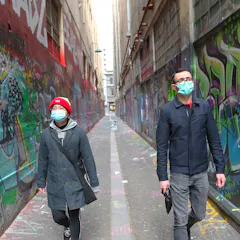
The fines for failing to wear a mask during Melbourne’s lockdown have been criticised as ‘punitive’. But the fact that masks are cheap or free, with huge public health benefits, makes it justifiable.
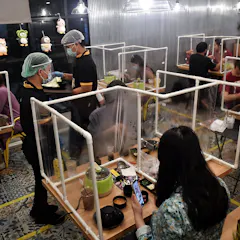
It’s hard to eat while wearing a face mask, and social distancing isn’t easy in restaurants’ normally tight quarters. An infectious disease expert offers some tips on what to look for to stay safe.
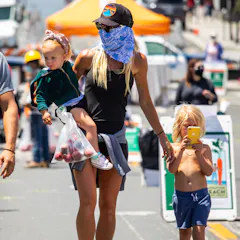
The US is slowly reopening, but the messages from governments are confusing. An expert offers guidance on many people’s first priority – connecting with loved ones.

The awesome power of exponential growth explained.

As scientists frantically try to find drugs to slow COVID-19’s spread, citizen science offers an opportunity for all of us to get involved.
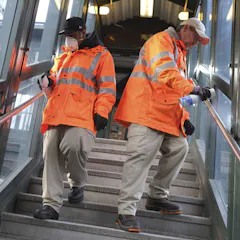
The coronavirus, like many infectious diseases, can live and spread on inanimate objects in the world around us. An epidemiologist explains how and gives some advice on how to minimize the risk.
Top contributors
-

Professor and Chair of Epidemiology, University of Michigan
-
Scientia Professor of Medicine and Director, Kirby Institute, UNSW
-
Senior Scientist at CAPRISA, University of KwaZulu-Natal
-
Adjunct Professor, Institute for Immunology and Infectious Disease , Murdoch University
-
Mark Boyd is a Friend of The Conversation.
Professor, Chair of Medicine, Adelaide University
-
Melbourne Laureate Professor, University of Melbourne; Director, The Peter Doherty Institute for Infection and Immunity
-
Professor and Program Head, HIV Epidemiology and Prevention Program, Kirby Institute, UNSW
-
Director, Founder, Trustee, University of Lincoln
-
Assistant Professor of Food Science and Human Nutrition, Pharmacology and Toxicology, Michigan State University
-
Lecturer, Health Policy, University of Sydney
-
Professor of Medicine, University of East Anglia
-
Veterinarian epidemiologist, Cirad
-
Susan and Isaac Wakil Professor of Healthy Ageing, University of Sydney
-
Professor and Chief, Infectious Disease, Jacobs School of Medicine and Biomedical Sciences, University at Buffalo
-
Infectious Diseases Physician, Senior Lecturer, James Cook University and, The University of Queensland