
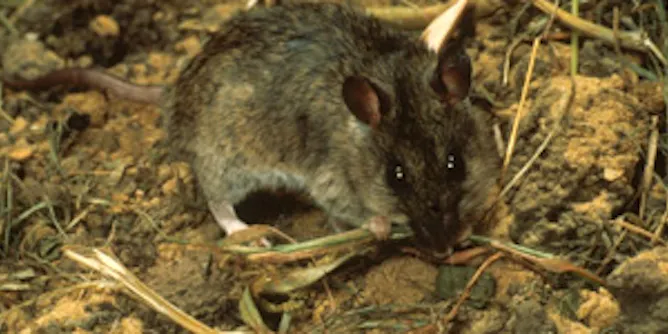
Lassa outbreaks are becoming more widespread in Nigeria but have not been given national emergency status like Ebola.
Articles on Disease control
Displaying 41 - 51 of 51 articles
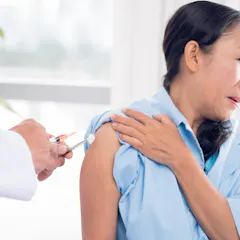
Most immunisation campaigns continue to primarily focus on infants and children, but almost 4 million Australian adults are not vaccinated against preventable diseases.
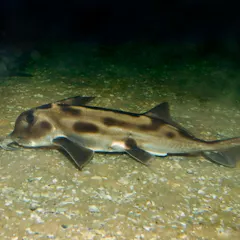
Some things that develop as normal in elephant sharks and other marine life can mimic things we see in human disease. That makes these ‘mutants’ ideal for study to find out why things go wrong in humans.
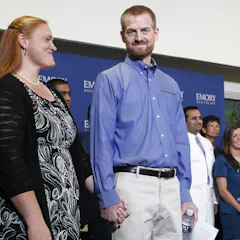
A year ago, Dr Kent Brantly became the first person treated for Ebola in the US. The director of Emory University’s Serious Communicable Disease Unit looks back at we have – and haven’t – learned.

Along with better strategies to respond to outbreaks in human populations, we need a stronger focus on surveillance in animals to identify infectious diseases before they pose a risk to human health.

New technology to tackle biosecurity challenges down the track is one of the five megatrends identified in today’s CSIRO report Australia’s Biosecurity Future: preparing for future biological challenges…
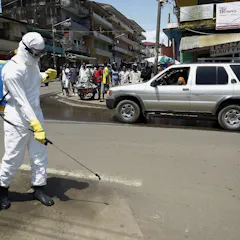
The number of reported Ebola cases is doubling roughly every five weeks in Sierra Leone, and in as little as two to three weeks in Liberia. The number of reported cases globally is projected to reach 10,000…
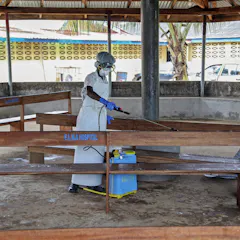
Our understanding of Ebola has increased considerably since outbreaks of a mysterious haemorrhagic fever caused by an unknown virus first occurred in Southern Sudan and the Democratic Republic of Congo…
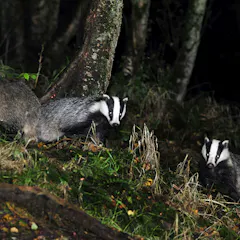
The precise locations and date of the imminent badger cull are secret, but the aim is clear: to see if marksmen can shoot and kill badgers humanely and efficiently. If so, a wider cull will follow. For…
A study conducted by both The City University of New York and Rutgers and the State University of New Jersey has developed…
Sheets of silk dipped in chlorine have been found to quickly kill off almost all bacteria, including the armoured spores…
Top contributors
-

Professor of Public Health, University of Sheffield
-
Professor, Swansea University
-
Fellow, Nigerian Academy of Science
-
Professor of Biostatistics and Epidemiology, Adelaide University
-
Distinguished Research Professor, Emerita, Dalhousie University
-
Visiting Lecturer of History, Georgia State University
-
Senior Lecturer, UNSW
-
Professor, School of Population Health, UNSW
-
Senior Principal Research Scientist, Ecosystem Sciences, CSIRO
-
Professor of Entomology and Disease Epidemiology, Penn State
-
Program Leader Effective Detection and Response, Plant Biosecurity Cooperative Research Centre
-
Senior Lecturer in Communicable Disease Epidemiology, University of Sydney
-
Infectious Diseases Lead, King's Sierra Leone Partnership, King's College London
-
Associate Professor, School of Mathematical Sciences, Monash University
-
Professor of Global Biosecurity, NHMRC L3 Research Fellow, Head, Biosecurity Program, Kirby Institute, UNSW