

The study suggests BPA, an ingredient in some plastics, might play a role in oestrogen levels in infant and school-aged boys. But we have much to learn about what this means.
Articles on Disability coverage
Displaying 61 - 80 of 291 articles

The taskforce advice on NDIS provider registration has been published at last. And now the public is being consulted on what should be covered under NDIS supports.

The national response to the disability royal commission provides yet more uncertainty over the future of special schools in Australia.
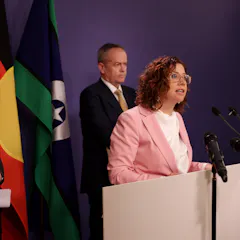
The federal government has only fully accepted 13 recommendations of 172 for which it has primary or shared responsibility with the states.
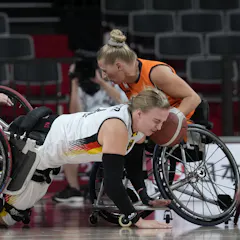
The genius TikTok account for the Paralympics draws on the comedic beauty of disabled bodies. It is a relief to see a promotion of the Paralympics that avoids the usual stereotypes.

In a new study, we interviewed 59 Year 10 students with language or attention disorders about their English classrooms.

Here’s where the NDIS reforms are up to.
By exploiting their victim’s disability, perpetrators increase their power and coercive control, thereby intensifying the abuse.

Autism and ADHD frequently overlap and the combination can create internal conflict and unmet needs.

Dual sensory loss means loss of sight or hearing where one sense can’t compensate for the loss of the other. It can happen at any age but the risk increases with age.

An unintentional consequence of NDIS supports has been an emphasis on clinical settings. But children with autism are served better by naturalistic supports.

Meals can be a recipe for distress when children find recognising feelings of hunger and thirst, completing tasks, processing sensory input or social interactions challenging.
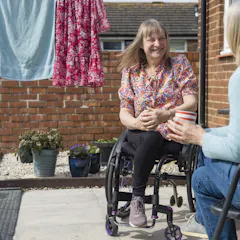
The number of younger people living in aged care is down – but that’s mostly due to them becoming older than 65 or passing away.

ABC’s new comedy series Austin is a unique show in its depiction of autism and neurodiversity, as it follows an autistic man connecting for the first time with his biological father.

Better provider records, more NDIA staff and well-funded disability advocacy could stem fraud in our national disability scheme.

Children can have big emotions and sometimes struggle to process them. Here’s what it means for a child to be ‘dysregulated’.

The film’s focus on Furiosa’s amputation exploits disability, and closes down the related commentary and critique previously expanded in each progressive Mad Max film.

Although the link between sugar and hyperactivity is murky, there is a proven link between the neurotransmitter dopamine and increased activity.

Some devices simply block sound. Others cancel out noises using sound engineering. There is positive, but limited, research that suggests they might be useful for autistic or ADHD people.

An ACCC taskforce may well prove effective in controlling unfair overcharging and NDIS costs. But the scheme’s pricing model could also use a redesign.
Top contributors
-

Professor, Public Service Research, UNSW
-
Deputy Director, The Kids Research Institute Australia, Professor of Autism Research, The University of Western Australia
-
Adjunct Professor, Summer Disability Research Centre, La Trobe University
-
Professorial Fellow, University of Canberra
-
Disability Program Director, Grattan Institute
-
Professor, University of Sydney; RMIT University
-
Postdoctoral Research Fellow, UniSA Creative, Adelaide University
-
Professor and Clinical Psychologist, Michael Crouch Chair in Child and Youth Mental Health, University of Sydney
-
Psychologist and Research Associate in the Department of Paediatrics, Monash University
-
Professor, Director, Griffith Inclusive Futures, Griffith University, Griffith University
-
Senior Research Fellow, Crawford School of Public Policy, Australian National University
-
Head of Autism Research and Senior Principal Research Fellow, The Kids Research Institute Australia
-
Senior Lecturer of Wellbeing Science, The University of Melbourne
-
Research Fellow, Dignity Project, Griffith University
-
Financial Markets Foundation Chair of Developmental Mental Health, The University of Melbourne