

Children with more than one developmental condition – such as ADHD, autism or others – are at risk of depression or anxiety too. And health systems need to adapt.
Articles on Disability coverage
Displaying 21 - 40 of 291 articles

Instead of collecting evidence and submitting reports, participants will have an interview with an assessor that lasts up to three hours.

Autism spectrum disorder is a lifelong neurodevelopmental condition, with support needs often changing over time.

Researchers spoke to 16 autistic young people about their experiences of school. One lamented some teachers think ‘there’s something wrong with me in their eyes’.

There are lots of myths about autistic people who don’t talk. Here are three and why they’re so wrong.

Autistic kids need love, to learn through everyday activities and strong connections with family, culture and community. Here’s what’s best practice to support them.

New bulk-billed health checks for three-year-olds would refer them for additional support – including psychosocial therapy.

Developmental delay might mean a toddler isn’t using sentences when expected, or not meeting milestones such as walking or feeding themself.

With children over-represented on the NDIS, it’s hoped this new program could divert pressure from the scheme. Here’s what we know about it so far.

Researchers heard from students who described ‘being picked last for everything’, as well as teasing and physical pushing at school.

Some NDIS participants use all their funds before their plan clicks over, while others don’t use all of theirs. But will shorter funding periods address this?

Here’s how the government can fund these vital supports and save the NDIS – without spending more money.

Up-skilling GPs to treat ADHD will benefit many patients, some people with more complex cases will still need to see a specialist.
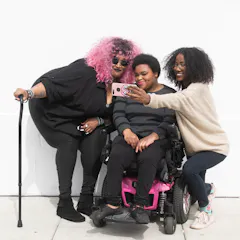
People with disability are more likely to die from cancer than the overall population. Here’s how we can shift this striking inequity.

Parents of autistic children have much higher levels of stress than parents of children with other disabilities. And it’s not just about the autism itself.

As the government seeks to moderate growth of the scheme budget, some NDIS participants are finding they are no longer eligible for the scheme.

A new strengths checklist aims to help parents, carers and clinicians more easily identify a child’s skills, talents and positive qualities.

The strategy’s success will depend on maintaining a clear focus on implementation, equity and inclusion.
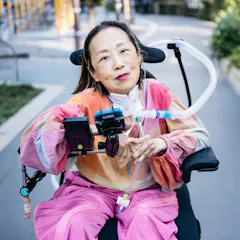
Alice Wong’s Disability Intimacy is anchored in authentic experiences of disabled people, rather than stereotypes.

Lots of digital tools promise to assist children with neurodevelopmental conditions such as autism and ADHD. But it’s hard to know what is and isn’t useful.
Top contributors
-

Professor, Public Service Research, UNSW
-
Deputy Director, The Kids Research Institute Australia, Professor of Autism Research, The University of Western Australia
-
Adjunct Professor, Summer Disability Research Centre, La Trobe University
-
Professorial Fellow, University of Canberra
-
Disability Program Director, Grattan Institute
-
Professor, University of Sydney; RMIT University
-
Postdoctoral Research Fellow, UniSA Creative, Adelaide University
-
Professor and Clinical Psychologist, Michael Crouch Chair in Child and Youth Mental Health, University of Sydney
-
Psychologist and Research Associate in the Department of Paediatrics, Monash University
-
Professor, Director, Griffith Inclusive Futures, Griffith University, Griffith University
-
Senior Research Fellow, Crawford School of Public Policy, Australian National University
-
Head of Autism Research and Senior Principal Research Fellow, The Kids Research Institute Australia
-
Senior Lecturer of Wellbeing Science, The University of Melbourne
-
Research Fellow, Dignity Project, Griffith University
-
Financial Markets Foundation Chair of Developmental Mental Health, The University of Melbourne