
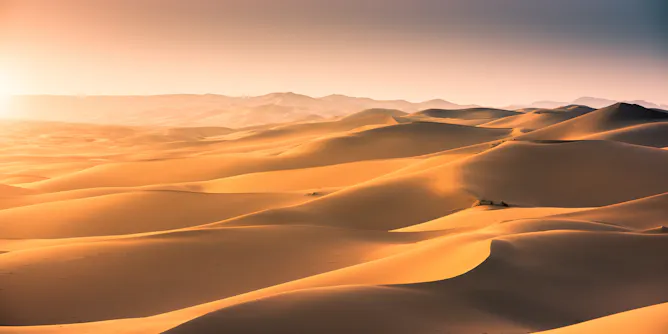
Dunes can preserve a record of historic climate changes and shifting continents.
Articles on Deserts
Displaying 21 - 40 of 52 articles
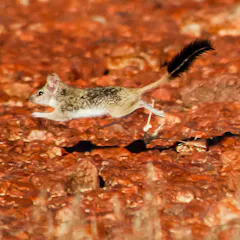
Blink and you’ll miss it. The kowari is a charismatic marsupial carnivore that needs our help.
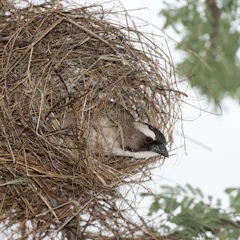
The study shows that bird mothers can adjust egg size depending on their social conditions. This counters the idea that, with more help, mothers lay smaller eggs.
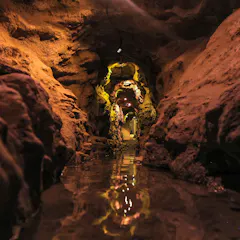
Qanats are an ancient system which could be a useful way of getting water to farms in arid areas.
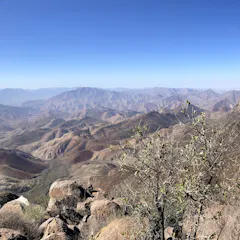
Mountain flora in the Kaokoveld deserve priority conservation efforts.
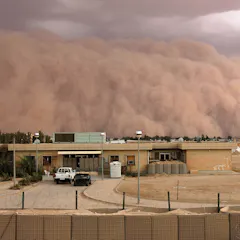
Desert dust storms are increasingly picking up materials like sewage, herbicides and other human-made waste and transporting them on tiny particles that are easy to inhale.
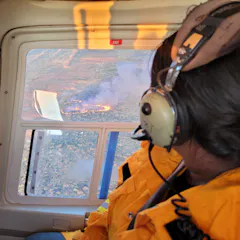
Deserts in Australia burn – and burn big – if fuel is left to build up. But this year, Indigenous rangers across the deserts have burned huge tracts early to make Country healthier.

The Pulitzer Prize-winning author was always willing to experiment with his prose, pacing and narration, crafting an oeuvre that varied wildly in style and structure.
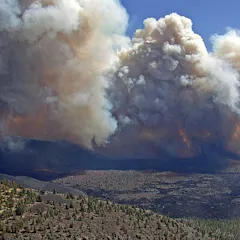
Fire season is getting longer, and the result is transforming iconic desert ecosystems. The start to 2022 has been so dire, one governor called for a federal disaster declaration.
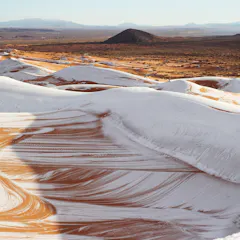
In order for snow to form, two distinctive weather properties are needed: cold temperatures and moist air. The Sahara can tick these boxes.
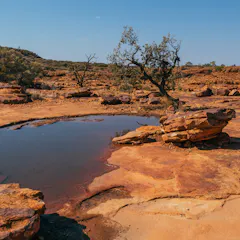
As climate change worsens, their findings highlight the importance of conserving natural river flows to enable freshwater species to respond and adapt.

Extreme heat over 50°C is likely to become more common, giving us yet another reason for Australia to act fast on climate change.
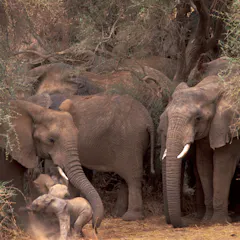
Elephants avoided areas where others were poached.

Africa’s Great Green Wall must immediately speed up to meet the needs of people along the edges of the Sahara Desert.
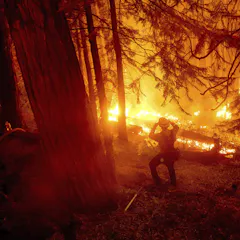
Not all forests respond to hotter and drier conditions in the same way.
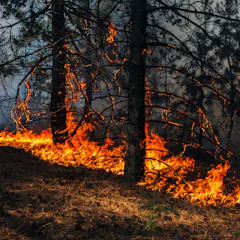
A future of heat and strife or humanity’s finest hour – our response to climate change today will define the 21st century.
Incredibly, once the wells dried up some became nurseries for the germination and establishment of wetland trees.

Advanced techniques allowed our research team to build an open database of billions of individual trees and challenge some common perceptions about vegetation in arid and semi-arid zones.
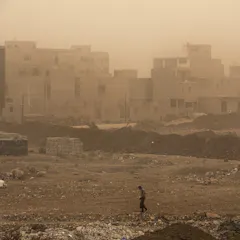
Dust storms are not unusual, but intense ones have a wide range negative impacts upon multiple socioeconomic sectors. How do we address them?

The dingo fence is the longest fence in the world. The environment looks almost identical on either side — until you view it from space.
Top contributors
-

Senior research fellow, Charles Darwin University
-
Postdoctoral Fellow in Entomology, Adelaide University
-
Associate Professor Natural Resource Management, Namibia University of Science and Technology
-
Future Fellow in Ecology, Queensland University of Technology
-
Associate Professor and Director, Centre for Compassionate Conservation, University of Technology Sydney
-
Research Fellow, University of Canberra
-
Professor of Geography, University of Oxford
-
Senior Research Fellow, Molecular Ecology Lab, Flinders University
-
Emeritus Professor of Archaeological Science, University of Oxford
-
Board Chair, Global EverGreening Alliance & Distinguished Senior Fellow, World Agroforestry (ICRAF), Center for International Forestry Research – World Agroforestry (CIFOR-ICRAF)
-
Postdoctoral Fellow in Ecology, University of Alberta
-
Professor of Aeolian Geomorphology, King's College London
-
Senior Research Scholar, Max Planck Institute for the History of Science
-
Lecturer in China and Sustainable Development, King's College London
-
Lecturer in Biological Sciences, University of Wollongong