
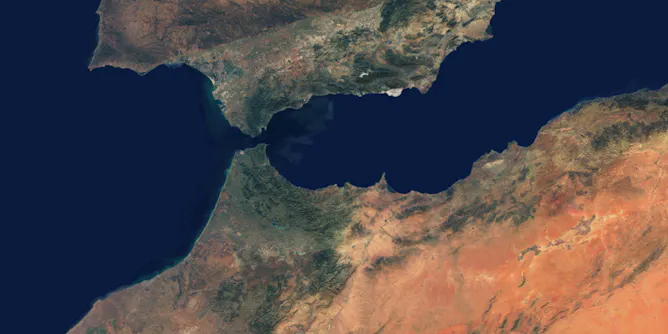
New research shows northwest African communities actively shaped connections and exchange between many cultures.
Articles on Sahara
Displaying 1 - 20 of 39 articles
Rising temperatures and shifting winds are changing how dust travels from the Sahara to Europe.
Why climate models struggle to simulate this special kind of desert thunderstorm.
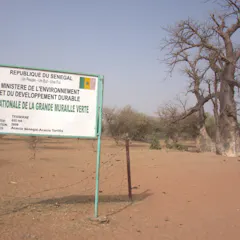
Africa’s Great Green Wall of 6,000km of trees was launched 18 years ago, promising to halt desertification. But in Senegal, it’s been very slow to progress.

A ritual and funerary landscape is emerging in northwestern Africa, revealing connections with the Mediterranean, Atlantic and the Saharan regions.

NOAA’s preseason forecast is the 30,000-foot view of what’s likely. Here’s what forecasters will be watching for over the weeks and months ahead.
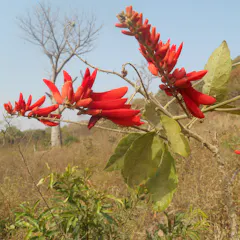
A new publication sheds light on the plants of Burkina Faso and Mali.
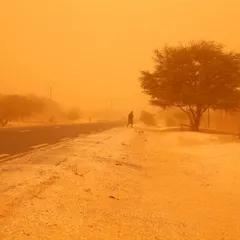
The Harmattan is linked to a range of conditions that affect the skin and mucous membranes of humans and animals.
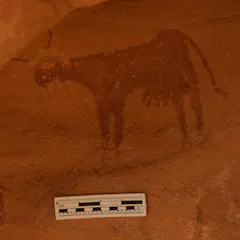
The theme of cattle in ancient rock art is one of most important pieces of evidence for a bygone age of the “green Sahara”.
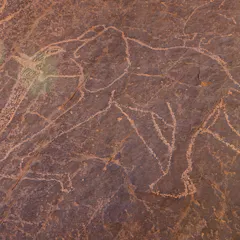
The Sahara Desert is green and vegetated every 21,000 years. A climate model shows why.
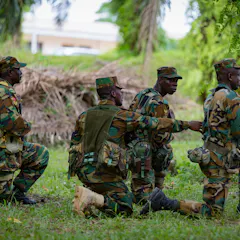
The terrorism discourse in Ghana shows how flawed views of the war on terror continue to shape thinking about security.
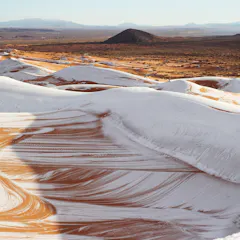
In order for snow to form, two distinctive weather properties are needed: cold temperatures and moist air. The Sahara can tick these boxes.

Africa’s Great Green Wall must immediately speed up to meet the needs of people along the edges of the Sahara Desert.
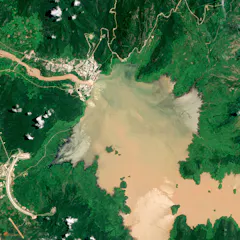
Nile communities carefully monitored and recorded the river’s flow. Centuries later these records are still being used by water resource managers around the world to analyse unpredictable river flows.
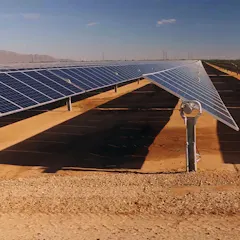
In a bid to ditch fossil fuels, some countries are considering carpeting deserts with solar panels.
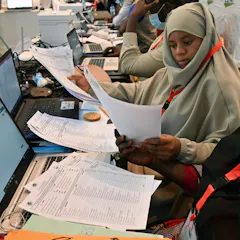
Although Niger’s quest for entrenching democracy is a good development, poverty and insecurity are obstacles.

The EU has already poured billions of euros into its assistance programs for the Sahel countries. The fundamental principles of this aid need to be rethought if it is to be truly effective.
From June through October, it’s not unusual for huge Saharan dust plumes to blow across the Atlantic. They can darken skies but also bring calmer weather and electric sunsets. Here’s how they form.

Martian meteorites allow scientists here on Earth to decode that planet’s geology, more than a decade before the first missions are scheduled to bring rocks back home from Mars.
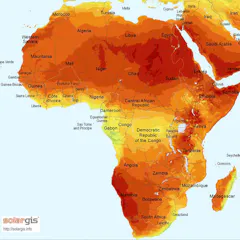
Could a small and sunny patch of the Earth’s surface power the rest of the world? Here’s what the experts say.
Top contributors
-

Research Associate, McDonald Institute for Archaeological Research, University of Cambridge
-
Adjunct Research Scientist, Swedish University of Agricultural Sciences
-
Associate professor in Politics and International Relations, Leeds Beckett University
-
Research fellow, Institute on Comparative Regional Integration Studies (UNU-CRIS), United Nations University
-
Adjunct Research Fellow, Curtin University
-
Postdoctoral Researcher in Archaeology, University of Bristol
-
Maître de conférences sur les conflits internationaux, University of Kent
-
Doctoral candidate in African History, Columbia University
-
Visiting Research Fellow in Mineral Chemistry, University of Derby
-
Lecturer in Energy Storage Systems Dynamics, Lancaster University
-
Professor of Planetary Geosciences, The Open University
-
Professor of International Law, University of Pretoria
-
Professor of Atmospheric Science, University of Leeds
-
Professor of Archaeology, Conservation and History, University of Oslo
-
Professor of Energy and Environmental Sciences, Lancaster University