

Although artificial intelligence does not cause psychosis, the conversational, responsive and seemingly empathic design of chatbots can intensify psychotic symptoms in vulnerable people.
Articles on Delusions
Displaying all articles
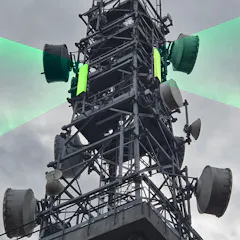
The delusions of people with thought disorders have had consistent themes of persecution for decades. But new technology provides fresh material for the content of delusions.

It’s no surprise these lifelike AI companions are attractive to lonely people. But for some, these relationships are harmful and even dangerous.

What are the risks of seemingly innocuous behaviours such as sharing posts, giving likes, making oneself look good in pictures, and, in general, interacting virtually rather than physically?

The creation of delusions may involve a fair bit of rational thinking.

Alison Watt’s grandmother was diagnosed with ‘puerperal insanity’ and institutionalised not long after giving birth to her father. He didn’t meet her – or know she was alive – until his early 20s.

How hallucinations are depicted in the movies perpetuates myths and harmful stereotypes, rather than encouraging people to seek support.

Some people believe their hand doesn’t belong to them. Others think bugs are crawling under their skin.

Is the distinction between insanity and religion a mere semantic quibble?
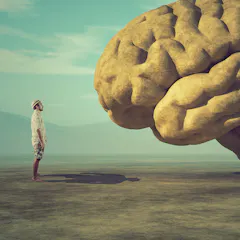
Those with a diagnosis of schizophrenia may be more likely to interpret metaphorical thoughts literally.

As many as one in ten people will have a psychotic experience in their lifetime – and researchers now know your genes play a role.

Sociologists know what conditions make it more likely a mass delusion will take hold and spread through a group – whether adherence to a fashion fad or belief in a doomsday cult.

A strange delusion which may have its origins in damage to a particular process in the brain, is also one that can help us to understand how we recognise each other.

A study in the 1960s brought together three people who believed they were Christ – the results still tell us much today about how well we recognise our own delusions.
Alternate realities don’t just exist in politics – and not all falsehoods are lies. Distortions of the truth can range from a normal part of human nature to pathological.
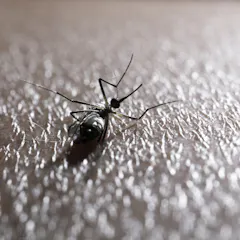
Some people have terrifying delusions they are infested with insects, spiders or even small animals. But help is available.

We cannot think thoughts that are not ours - but there are still those who claim to have external thoughts being put into their heads.

We need personalised treatments rather than blanket medical diagnoses to help those suffering from delusions.
In the film Invasion of the Body Snatchers aliens invade earth by replicating individuals. While the idea that we could be duped by shape-shifting aliens is a great idea for a film, the story echoes a…
Top contributors
-

PhD Researcher, Cardiff University
-
Distinguished Professor Emeritus of Sociology, University of South Carolina
-
Senior Lecturer of Psychology, University of Westminster
-
Professor Emeritus of Clinical Psychology, The University of Melbourne
-
Research fellow of Psychology, University of Hertfordshire
-
Professor in Cognitive Neuropsychology and Rehabilitation, Keele University
-
Psychologist, The University of Melbourne
-
Professor, Southern Cross University
-
Emeritus Professor of Psychiatry, Lecturer on Bioethics & Humanities at SUNY Upstate Medical University; and Clinical Professor of Psychiatry, Tufts University School of Medicine; Editor-in-Chief Emeritus, Psychiatric Times., Tufts University
-
Cardiff University
-
Research Fellow, Aston University
-
Associate Professor, School of Nursing, University of Wollongong
-
Professor, Cardiff University
-
Cardiff University
-
Professor and Chair: Mental Health Nursing, Adelaide University