

How psychedelics induce intense visuals.
Articles on Hallucinations
Displaying 1 - 20 of 32 articles
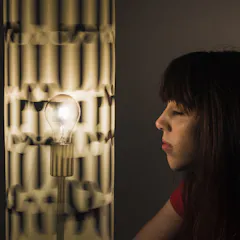
Specific rhythms of flickering light can synchronise brain activity, offering clues about perception and possible future therapies.
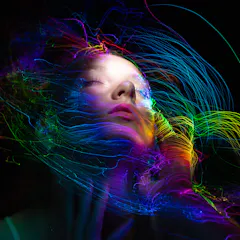
Celebrity-backed devices promise meditative ‘sober trips’. Researchers are studying how rhythmic light reshapes visual experience and mood.
The cure is likely to be worse than the disease.
Nightmares and day-time hallucinations often precede lupus flare-ups.

ChatGPT and other AI writing tools can make researchers more productive – but quality control is essential.
Large language models have been shown to ‘hallucinate’ entirely false information, but aren’t humans guilty of the same thing? So what’s the difference between both?

Sedative-hypnotic drugs can distort a patient’s perception of reality. Some patients wake up from a procedure believing they have been sexually assaulted.

How hallucinations are depicted in the movies perpetuates myths and harmful stereotypes, rather than encouraging people to seek support.
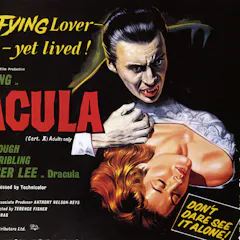
Dracula’s power is not in his fangs, but in the way he disturbs the sleep of his victims.
Society has very different attitudes to near-death experiences and psychedelics.
Experiment that creates altered states of consciousness sheds light on an old problem.

It’s possible that low oxygen levels in caves produced hallucinations – but that doesn’t explain the majority of prehistoric art.
Research suggests mediums possess a proclivity for hallucinatory experiences.
A new review assesses the potential long-term psychological impact of COVID-19.
Charles Bonnet syndrome refers to visual hallucinations in people with acquired vision loss, and symptoms can last for many years.

As many as one in ten people will have a psychotic experience in their lifetime – and researchers now know your genes play a role.

Playing with imaginary friends in childhood is linked to being more creative as an adult.
A safety committee convened by the FDA has declared esketamine safe for severe depression. But isn’t this drug the same as ketamine, an illegal street drug? A medical anthropologist explains.
Depression, an altered sleep cycle, and hallucinations are some of the effects of living alone in total darkness.
Top contributors
-

Research Fellow (Informatics), School of Engineering and Informatics, University of Sussex
-
Director of the International Gaming Research Unit and Professor of Behavioural Addiction, Nottingham Trent University
-
Cornelia H. Dudley Professor of Psychology, Knox College
-
Senior Lecturer of Psychology, University of Westminster
-
Senior lecturer, Australian National University
-
Associate Dean of School for Psychology and Humanities, University of Lancashire
-
Reader in Cognitive Neuroscience, Director of the Sheffield Autism Research Lab, University of Sheffield
-
Sackler research fellow in clinical medicine, University of Sussex
-
Consultant Geriatrician, PhD Candidate, The University of Melbourne
-
Research Assistant Professor, University of Michigan
-
Associate Professor in Clinical Psychology and Neuropsychology, Trinity College Dublin
-
Professor of Cognitive Neuroscience, UNSW
-
Lecturer in Bioethics, Monash University; The University of Melbourne
-
Associate Professor of Developmental Psychology & Psychopathology, University of Leeds
-
Senior Lecturer of Addiction, Edith Cowan University