
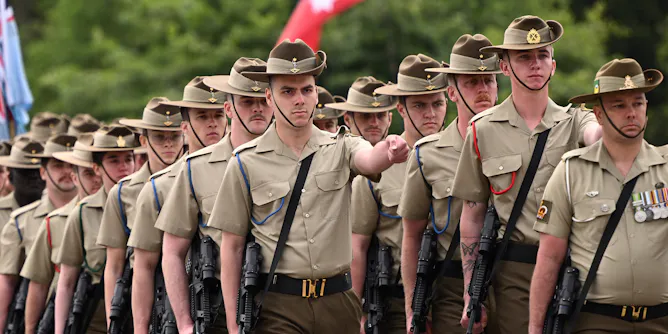
Australia currently spends 2% of GDP on defence. Donald Trump wants it to be 3%. What is the magic number? We asked five experts
Articles on Defence spending
Displaying 21 - 40 of 47 articles

European nations are caught in a conversation about spending as a percentage of GDP instead of focusing on what to do with the money.
Europe depends heavily on US and Nato military support for its defence.

Aid is now set to shrink from 0.5% of gross national income to 0.3%.

Donald Trump wants US allies to spend more on defence and has threatened NATO members with coercion. But allies have agency too, and are already planning their responses.
Trump’s demand that the Nato allies spend significantly more on defence is the opening salvo in a new era of transatlantic tensions.
A closer look at Canada’s announcement that it’s buying 12 new submarines makes clear that it’s ‘business as usual’ in terms of defence spending. Canada is doing the bare minimum.
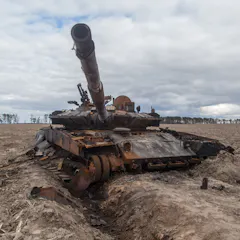
Ukraine in talks with its western lenders to restructure its debt as it finds itself on the brink of default.
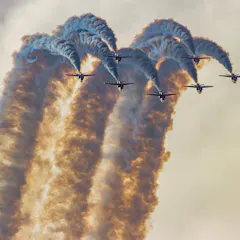
The surging cost of military equipment will make it increasingly difficult for national defence giants like BAE and Rolls-Royce to remain independent.

The 20-year timeline of Canada’s new defence policy, and the fact that several proposed investments will “be explored,” raises serious questions about its commitment to pull its weight in NATO.
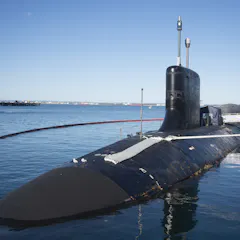
Potential economic gains are partly driving interest in joining pillar two of AUKUS. The risks and rewards need to be more widely debated before any decision is made.
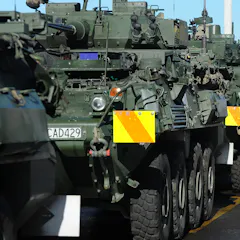
With geopolitical tension and uncertainty rising, New Zealand’s ruling coalition faces urgent questions about defence spending, alliances and its independent foreign policy.
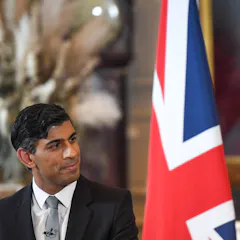
The reality is that cooperation has deepened, but one side seems reluctant to acknowledge that with a formal deal.
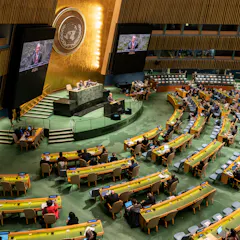
A lack of political will has impeded any progress on disarmament for nearly four decades.

Canadians are dubious about boosting defence spending for an array of reasons. It’s time for politicians and pundits not to admonish them, but to listen to them.

Canadians were shocked by how fragile their health-care system was under the stresses of the COVID-19 pandemic. But our military is under similar stresses and only a major disaster will open our eyes.
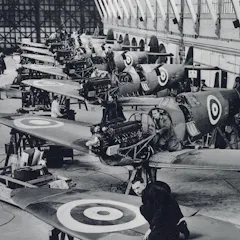
Both eras are seeing technological advancement on a unique scale.

Canada’s military faces financial, procurement, human resources and culture challenges. The federal government has known about them for years, so why another defence policy review?
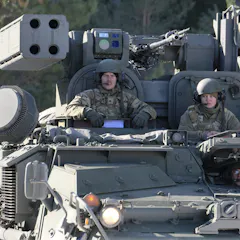
The post-cold war peace dividend has been spent. The west must prepare to allocate more funds for defence budgets.
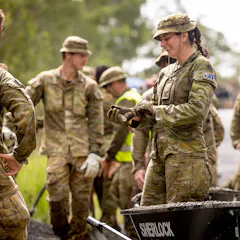
While there has been a big spend on cyber capabilities, many other aspects of defence and security have been neglected. The budget highlights the lack of a comprehensive national security policy.
Top contributors
-

Professorial Fellow, University of Canberra
-
Director, Foreign Policy and Defence, United States Studies Centre, University of Sydney
-
Professor of Defence Studies, Canadian Forces College
-
Adjunct Professor, Defence and Security Institute, The University of Western Australia; UNSW
-
Professor of Law, University of Waikato
-
Visiting Fellow, Strategic Studies, Griffith University
-
Teaching Fellow in Strategic and Air Power Studies, University of Portsmouth
-
Assistant Professor, Public Administration, Queen's University, Ontario
-
Researcher at SCRAP Weapons, SOAS, University of London
-
Senior Research Economist, Institute for Fiscal Studies
-
Tony Walker AM is a Friend of The Conversation.
Director, La Trobe University
-
Professor in International Political Economy, University of Glasgow
-
PhD Candidate, SOAS, University of London
-
Postdoctoral Fellow, Political Science and International Relations, University of Canterbury
-
Founding Director, Centre for Britain and Europe, Department of Politics and International Relations, University of Surrey