
Tighter regulation and a lack of high-quality, authentic training data are just some of the problems AI developers will need to grapple with next year.
Articles on DeepMind
Displaying 1 - 20 of 25 articles
We’ve only just scratched the surface of what AI can achieve in science.
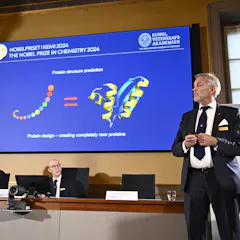
AI will feature in future Nobel prizes as scientists exploit the power of this technology for research.
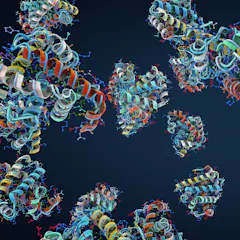
The prize honors innovation at Google DeepMind and in academia. Three researchers share the award for using machine learning to predict proteins’ 3D shapes and design the molecules from scratch.

Science has a need to verify results, but DeepMind’s protein prediction tool doesn’t work this way.

The AI model can predict structures for a vast array of the proteins used by living organisms.
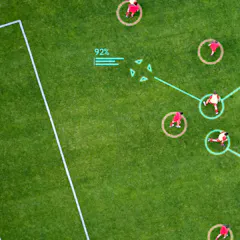
A new AI system may improve soccer tactics in 90% of corner kicks – but is it ready for the big leagues?
I study artificial general intelligence, and I believe the ongoing fearmongering is at least partially attributable to large AI developers’ financial interests.

A puzzle over the identity of an extinct bird that laid eggs across Australia has been solved.
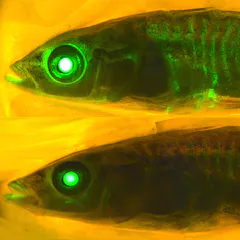
The AI AlphaFold can figure out the three-dimensional protein structure any string of amino acids will become. It has now exceeded its training by figuring out what makes some proteins glow.
Machine learning systems can now aid human intuition to create mathematical conjectures and proofs.
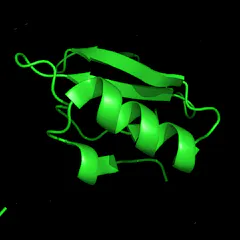
Scientists in an artificial intelligence lab have made a breakthrough in solving the problem of how proteins fold into their final three-dimensional shape. The work could speed up creation of drugs.
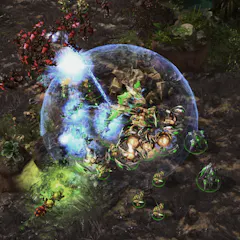
StarCraft II is the latest complex game to be conquered by artificial intelligence. But if robots now reign supreme at virtual war, where does that leave us when it comes to real conflict?

To be sustainable, the NHS needs to invest in AI and other advanced technologies.

It’s time programmers looked out old computer text adventures like Zork and Colossal Cave from the 1970s and 1980s.
DeepMind’s machine learning collaboration with another NHS trust (this time, it’s applying the tech to breast cancer) kicks up more questions of trust.
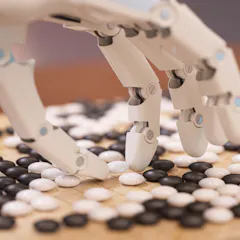
The new AlphaGo Zero artificial intelligence took just days to learn to play Go from scratch, with no human intervention. It even learned strategies never seen before in human play.

The artificial intelligence that beat a world master at the game of Go is now to be directed at more complex global problems. So what can we expect?
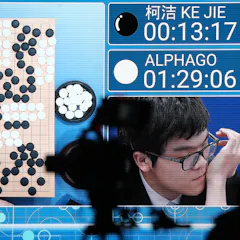
Google’s AlphaGo victory over the human world champion shows how far things have come since DeepBlue.
Twenty years after Deep Blue beat Garry Kasparov at chess, artificial intelligence can make games more fun, and perhaps even endlessly enjoyable, if it learns to adapt.
Top contributors
-

Professor of Chemistry, Connecticut College
-
Professor of Cybersecurity, Head of School of Computer Science and Informatics, De Montfort University
-
Professor of Artificial Intelligence, University of Bath
-
Professor of Neuroscience and Mathematics, The University of Queensland
-
Lecturer in eHealth, University of Kent
-
Assistant Professor of Galaxy & Black Hole Astrophysics, ETH Zurich
-
Professor of Palaeoproteomics, University of Cambridge
-
Associate professor, Università di Torino
-
Associate Tutor and PhD Candidate in Philosophy of Science, Manchester Metropolitan University
-
Distinguished Professor of Geological Sciences, University of Colorado Boulder
-
Professor of AI, Research Group Leader, UNSW
-
Director of the Institute of Global Health Innovation, Imperial College London
-
Senior Research Fellow, University of York
-
Professor of Mathematics, University of Sydney
-
Professor of Molecular Medicine, School of Molecular and Cellular Biology, University of Leeds